
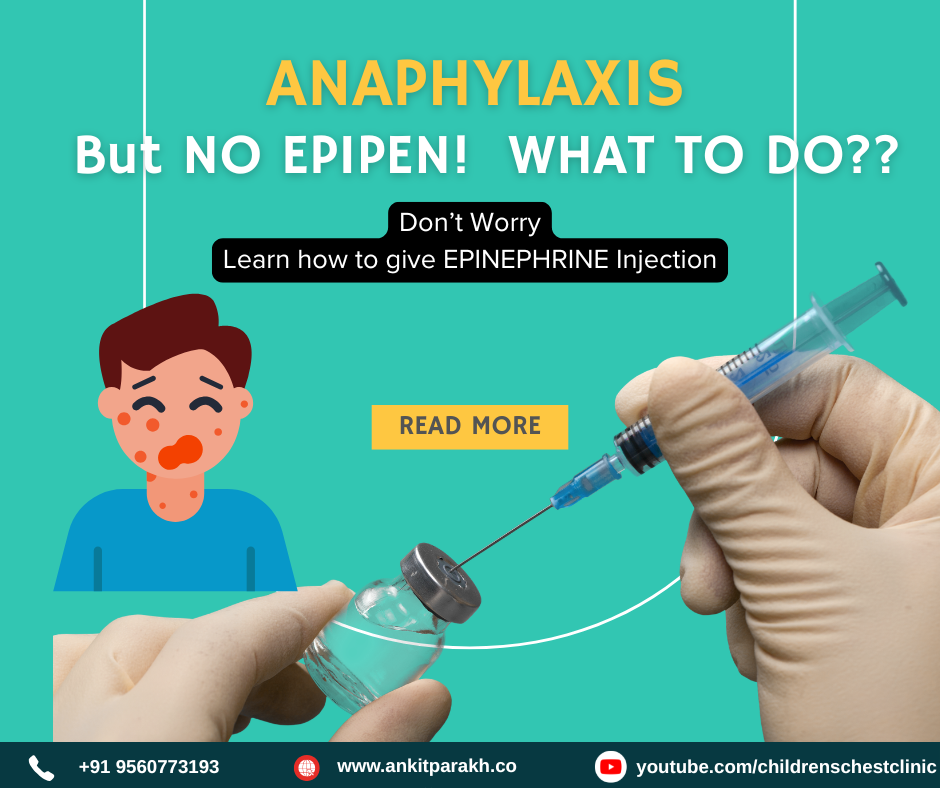
How to Administer Epinephrine in India When EPIPEN Is Not Available?
In India, commercially available Epinephrine auto-injectors (EPIPEN etc) are not routinely available in the market. This often causes concern for parents of children at risk of severe allergies. However, Anaphylaxis can still be treated effectively using injectable adrenaline (epinephrine), which is widely available across India. With proper guidance and preparation, families can safely manage emergencies even without an EPIPEN device.
Understanding Anaphylaxis in Children
Common triggers in Indian children:
- Food allergies (peanuts, tree nuts, milk, egg, seafood)
- Insect stings
- Certain medications (antibiotics, pain relievers)
- Latex
Warning symptoms:
- Widespread hives or itching
- Swelling of lips, eyelids, or throat
- Difficulty breathing or wheezing
- Persistent cough
- Vomiting or abdominal pain
- Dizziness or fainting
If breathing difficulty or throat swelling occurs, treat it as an emergency.
Why EPIPEN Is Not Easily Available in India
While Epinephrine auto-injectors (EPIPEN etc) are standard in many Western countries, they are not commonly stocked in Indian pharmacies due to supply and regulatory limitations.
However, Adrenaline Injection IP (1 mg/mL, 1:1000 concentration) is widely available in:
- Emergency rooms
- Nursing homes
- Larger pharmacies
- Ambulance services
With correct dosing and training, this form of epinephrine is equally effective in treating Anaphylaxis.
How to Administer Epinephrine Without EPIPEN in India
 Parents should receive prior hands-on training from a healthcare professional before attempting this at home.
Step 1: Use Adrenaline (Epinephrine) 1:1000 Injection
Epinephrine is available as an ampule with a concentration of 1:1000. This is most suitable for usage.
Correct Pediatric Dose
- 0.01 mg per kg body weight
- Maximum dose:
- 0.3 mg in children
- 0.5 mg in adolescents
Since the concentration is 1 mg/mL:
- Draw 0.01 mL per kg
- Examples:
- 10 kg child → 0.1 mL
- 20 kg child → 0.2 mL
- 30 kg child → 0.3 mL
Injection Site
- Outer mid-thigh (vastus lateralis muscle)
- Intramuscular injection only
Important Addition: Keeping Two Prefilled Syringes Ready
Because Anaphylaxis can require a repeat dose, high-risk families in India may be advised (after medical consultation) to:
 Keep Two Prefilled Syringes
 Keep Two Prefilled Syringes
- Pre-drawn with the exact weight-based dose
- Clearly labeled with child’s name and dose
- Stored in an opaque, light-protected container
- Kept at room temperature (avoid heat exposure)
Why Opaque Container?
Adrenaline is light-sensitive and can degrade when exposed to sunlight. An opaque container helps maintain stability.
Why Two Syringes?
- Some children may require a second dose after 5–15 minutes
- It provides backup if the first syringe malfunctions or spills
Important precautions:
- Check solution regularly — it should be clear and colorless
- Discard if it turns brown or cloudy
- Replace as per expiry date
- Never freeze or refrigerate unless specifically advised
This preparation acts as a practical substitute where EPIPEN is unavailable.
After Giving Epinephrine
- Call emergency services immediately (Dial 108 in most parts of India).
- Lay the child flat (unless severe breathing difficulty).
- Do not allow sudden standing.
- Monitor breathing and consciousness.
- Repeat dose after 5–15 minutes if symptoms persist.
Hospital observation for at least 4–6 hours is recommended due to risk of biphasic reaction.
What Not to Do
- Do not rely only on antihistamines
- Do not delay epinephrine
- Do not inject subcutaneously
- Do not wait for severe symptoms before acting
 Do not rely only on antihistamines
When in doubt, give epinephrine.
Is Epinephrine Safe?
Yes. When given intramuscularly in the correct dose, it is extremely safe.
Temporary side effects may include:
- Fast heartbeat
- Tremors
- Anxiety
- Paleness
These are mild compared to the life-saving benefits during Anaphylaxis.
When Should You Consult a Specialist?
Seek evaluation if your child has:
- Previous Anaphylaxis
- Food allergy with asthma
- Severe insect sting reactions
- Recurrent unexplained allergic episodes
Asthma increases the severity risk of allergic reactions, so respiratory evaluation is important.
Final Message for Indian Parents
The absence of commercially available Epinephrine auto-injectors (EPIPEN etc) in India does not mean your child is unprotected. With proper education, correct dosing, and preparedness—including keeping two prefilled syringes in an opaque container—families can manage Anaphylaxis safely and effectively. Early recognition, immediate intramuscular adrenaline and prompt hospital care can save lives. If your child is at risk of severe allergy, schedule a consultation with a child allergy specialist to develop a personalized emergency action plan.