
Asthma in Children is one of the most common chronic respiratory conditions seen in pediatric practice. Recurrent cough, wheezing, breathlessness, and night-time symptoms often raise suspicion—but diagnosis should never be based on symptoms alone.
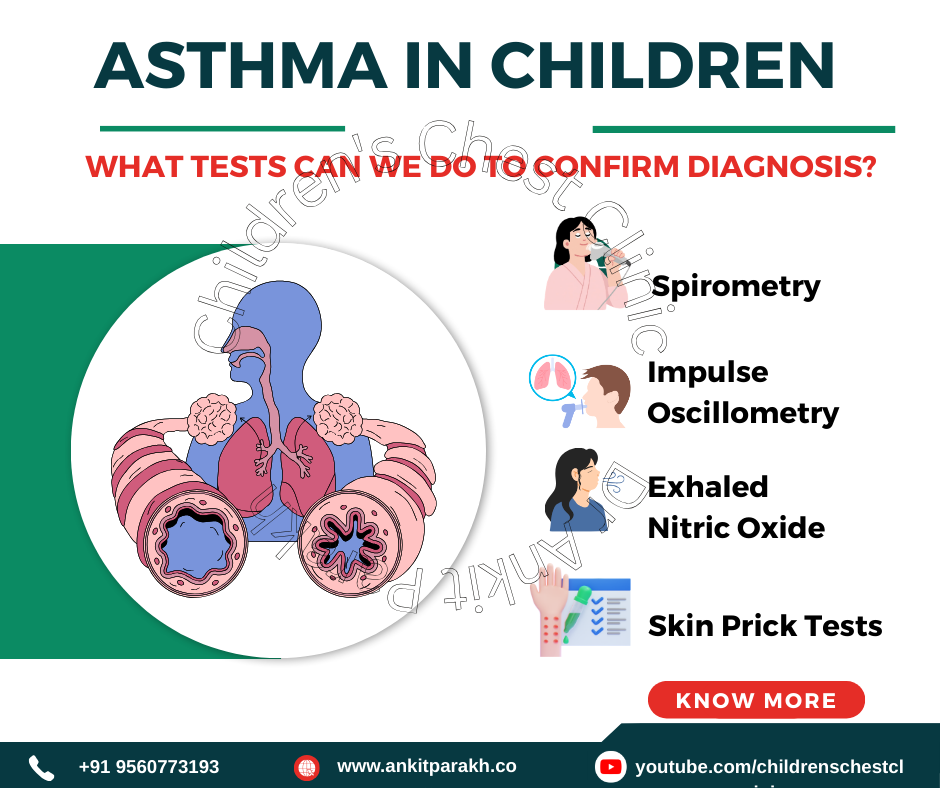
Safe, child-friendly investigations that help confirm asthma, assess severity, and guide treatment decisions are available with pediatric pulmonologists. In this article, I will explain the most important tests used to diagnose Asthma in Children, including Spirometry, Impulse Oscillometry, Skin Prick Tests, and Exhaled Nitric Oxide.
Why Are Tests Important in Asthma Diagnosis?
Many children are treated for “allergies” or “recurrent bronchitis” without objective confirmation. Proper testing helps:
- Confirm the diagnosis
- Differentiate asthma from other lung conditions
- Assess severity
- Monitor response to treatment
- Identify allergic triggers
Objective testing ensures that your child receives the right treatment—not too much and not too little.
1. Spirometry: The Gold Standard Test
What is Spirometry?
Spirometry is the most commonly used lung function test to diagnose Asthma in Children (usually above 5–6 years of age). It measures how much air a child can blow out and how fast.
What Does It Measure?
- FEV1 (Forced Expiratory Volume in 1 second)
- FVC (Forced Vital Capacity)
- FEV1/FVC ratio
In asthma, airways are narrowed, causing reduced airflow.
Bronchodilator Reversibility Test
After the initial test, a bronchodilator inhaler is given. If lung function improves significantly, it supports a diagnosis of asthma.
Advantages
- Non-invasive
- Quick (10–15 minutes)
- Reliable for diagnosis and monitoring
2. Impulse Oscillometry (IOS): Ideal for Younger Children
What is Impulse Oscillometry?
Impulse Oscillometry is an advanced lung function test that measures airway resistance during normal breathing.
Unlike spirometry, the child does not need to blow forcefully.
Why Is It Useful?
- Ideal for children aged 3–6 years
- Helpful in uncooperative or very young children
- Detects small airway dysfunction
- Useful in early asthma diagnosis
For preschool children suspected of Asthma in Children, this test is extremely valuable.
3. Exhaled Nitric Oxide (FeNO Test)
What is Exhaled Nitric Oxide?
Exhaled Nitric Oxide (FeNO) measures the level of nitric oxide in breath, which reflects airway inflammation.
Why Is It Important?
- Detects allergic (eosinophilic) airway inflammation
- Helps confirm asthma when diagnosis is uncertain
- Predicts response to inhaled steroids
- Monitors treatment compliance
Higher FeNO levels often suggest uncontrolled allergic asthma.
4. Skin Prick Testing for Allergy Triggers
What is a Skin Prick Test?
Skin Prick Tests identify allergic triggers that may worsen Asthma in Children.
A small amount of allergen (dust mites, pollen, pet dander, mold) is introduced into the skin. If a raised bump appears, it indicates allergy.
Why Is It Useful?
- Identifies triggers to avoid
- Helps guide environmental control
- Supports diagnosis of allergic asthma
- Assists in considering immunotherapy
Asthma and allergies often go hand in hand.
How Do We Decide Which Test to Do?
The choice depends on:
- Child’s age
- Symptom pattern
- Ability to cooperate
- History of allergies
- Severity of symptoms
Often, a combination of Spirometry, Impulse Oscillometry, Exhaled Nitric Oxide, and Skin Prick Tests gives the most accurate picture.
Are These Tests Safe?
Yes. All these investigations are:
- Non-invasive
- Safe
- Painless (except minor skin discomfort in allergy testing)
- Performed in specialized pediatric pulmonology settings
When Should Parents Consider Testing?
Testing for Asthma in Children should be considered if your child has:
- Recurrent cough lasting more than 3 weeks
- Wheezing episodes
- Night-time cough
- Breathlessness during exercise
- Frequent bronchitis
- Family history of asthma or allergy
Early diagnosis prevents long-term lung damage.
Final Takeaway
Diagnosing Asthma in Children requires more than listening to the chest. Objective tests like Spirometry, Impulse Oscillometry, Exhaled Nitric Oxide, and Skin Prick Tests provide clarity, precision, and better long-term outcomes. If your child has persistent respiratory symptoms, early evaluation by a pediatric pulmonologist ensures accurate diagnosis and personalized treatment.
FAQs About Dental Problems in Children with OSA
At what age can Asthma in Children be diagnosed with tests?
Spirometry is usually reliable after 5–6 years of age. Impulse Oscillometry can be done even in children as young as 3 years.
Is Spirometry painful?
No. Spirometry is completely painless. It only requires blowing forcefully into a mouthpiece.
What is the difference between Spirometry and Impulse Oscillometry?
Spirometry requires forceful breathing, while Impulse Oscillometry measures airway resistance during normal breathing. IOS is better suited for younger children.
Why is Exhaled Nitric Oxide important?
Exhaled Nitric Oxide helps detect airway inflammation and predicts how well a child may respond to inhaled steroid therapy.
Do all children with asthma need Skin Prick Tests?
Not always. However, if allergies are suspected, Skin Prick Tests help identify triggers and improve asthma control.