
In recent years, e-cigarettes and vaping have rapidly gained popularity among teenagers and even pre-teens. Marketed as a “safer alternative” to traditional smoking, these devices are often perceived as harmless. However, as a child pulmonologist, I am increasingly concerned about the harmful effects of vaping on growing lungs and developing brains.
This article aims to help parents understand the risks associated with e-cigarettes, why vaping is dangerous for children, and when to seek medical guidance.
What Are E-Cigarettes or Vaping Devices?
E-cigarettes, also known as vape pens, pods, or electronic nicotine delivery systems (ENDS), are battery-operated devices that heat a liquid into an aerosol that users inhale.
The liquid usually contains:
- Nicotine (highly addictive)
- Flavoring agents (fruit, mint, candy flavors)
- Propylene glycol or vegetable glycerin
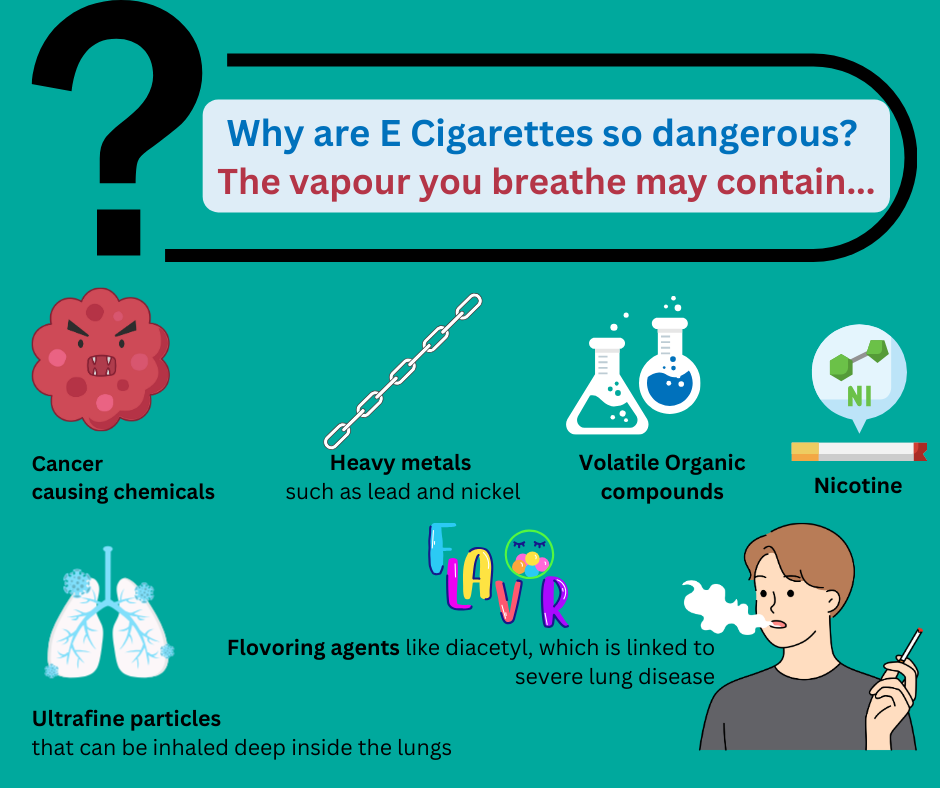
- Various toxic chemicals and heavy metals
Unlike traditional cigarettes, vaping does not burn tobacco—but that does not make it safe.
Why Is Vaping So Popular Among Teens?
Several factors contribute to the growing use of e-cigarettes among children:
- Attractive flavors (mango, bubblegum, chocolate, mint)
- Peer pressure and social media influence
- Easy availability
- Misconception that vaping is harmless
- Sleek, concealable devices
Unfortunately, many adolescents underestimate the harmful effects of vaping on their health.
Harmful Effects of E-Cigarettes on Children
1. Lung Damage and Breathing Problems
Children’s lungs are still developing. Exposure to vaping aerosols can cause:
- Chronic cough, wheezing, worsening of asthma, increased risk of lung infections and reduced lung growth. In severe cases, vaping has been linked to EVALI (E-cigarette or Vaping Associated Lung Injury), a serious condition that can lead to hospitalization and even death.
2. Nicotine Addiction
Most e-cigarettes contain nicotine—even when labeled “low nicotine.”
Nicotine:
- Alters brain development in adolescents, affects memory and attention, increases anxiety and mood disorders, Creates strong addiction, often leading to traditional smoking.
- The teenage brain is particularly vulnerable. Early exposure increases the risk of long-term substance dependence.
3. Heart and Blood Vessel Effects
Vaping can:
- Increase heart rate, raise blood pressure, damage blood vessels and increase long-term cardiovascular risk
- These changes may not be immediately visible but can have lasting consequences.
4. Chemical Exposure and Toxicity
E-cigarette aerosols may contain:
- Formaldehyde, Acrolein, Heavy metals like lead and nickel, Diacetyl (linked to “popcorn lung”), etc.
- These chemicals contribute significantly to the harmful effects of vaping on the respiratory system.
5. Gateway to Smoking and Other Substances
Research suggests that children who use e-cigarettes are more likely to transition to traditional cigarettes or experiment with other addictive substances.
Vaping is not a safe substitute—it may be a gateway.
Signs Your Child May Be Vaping
Parents should watch for:
- Sweet or fruity smells
- Increased thirst or nosebleeds
- Unexplained cough
- Small USB-like devices
- Behavioral changes
- Secrecy about phone or online purchases
Early intervention makes a significant difference.
What Should Parents Do?
- Start open conversations without judgment.
- Educate children about the harmful effects of vaping.
- Monitor online exposure and peer influences.
- Seek professional evaluation if your child has breathing symptoms.
- Encourage sports and healthy coping strategies.
If your child has asthma or recurrent cough and is vaping, early pulmonary consultation is strongly advised.
When to See a Child Pulmonologist
Consult a specialist if your child has:
- Persistent cough lasting more than 2–3 weeks
- Wheezing or breathlessness
- Chest pain
- Recurrent bronchitis
- Asthma that suddenly worsens
Timely evaluation can prevent long-term lung damage.
Final Conclusions
The rise of e-cigarettes and vaping among children is a serious public health concern. The harmful effects are real, especially for developing lungs and brains. Awareness, early discussion, and medical guidance can prevent long-term consequences.
If you are concerned about your child’s respiratory health or vaping exposure, consult a qualified child pulmonologist for timely evaluation and support.
FAQs About Dental Problems in Children with OSA
Are e-cigarettes safer than traditional cigarettes?
No. While they may contain fewer combustion-related toxins, e-cigarettes and vaping still expose children to nicotine and harmful chemicals. “Less harmful” does not mean safe.
Can vaping cause permanent lung damage?
Yes. Severe cases of vaping-related lung injury have resulted in lasting respiratory impairment. Early exposure may also affect normal lung growth in adolescents.
Do nicotine-free vapes have harmful effects?
Even nicotine-free e-cigarettes contain chemicals and flavoring agents that can irritate and damage lung tissue. They are not risk-free.
Can vaping worsen asthma in children?
Absolutely. Vaping can trigger asthma attacks, increase airway inflammation, and reduce response to inhaled medications.
How can I help my teenager quit vaping?
Support works better than punishment. Seek guidance from a pediatric pulmonologist, consider behavioral counseling, and address peer or emotional triggers.