
On this page 4 sections
Cystic fibrosis or CF is a genetic condition that is caused by mutations in the gene that produces the cystic fibrosis transmembrane conductance regulator (CFTR) protein. In children with cystic fibrosis (CF), mutations in the CFTR gene disrupt the normal functioning of the CFTR protein found in the lungs and other parts of the body like pancreas and reproductive organs.
How do we diagnose cystic fibrosis?
Cystic fibrosis is suspected based on the signs and symptoms of the child. Some basic blood investigations and Chest Xray are done. If the suspicion of cystic fibrosis is high the child would need to undergo few investigations for confirming the diagnosis and associated complications.

There are three investigations available for diagnosis of cystic fibrosis in children: newborn screening, sweat chloride test and genetic testing. Children suspected to have cystic fibrosis also require a sputum test which might be done as an induced sputum test, cough swab or sometimes using a flexible bronchoscopy. This helps to assess the infections inside the lungs which are very common in children with cystic fibrosis.
Newborn screening
Neonatal screening for cystic fibrosis involves taking a blood sample on a filter paper. It is usually done for multiple genetic problems simultaneously. For cystic fibrosis the blood is checked for higher than normal levels of immunoreactive trypsinogen (IRT). Immunoreactive trypsinogen (IRT), is a chemical called by the pancreas. Immunoreactive trypsinogen (IRT) is a screening test and requires to be confirmed by a sweat test or a genetic test. Many western countries have introduced routine newborn screening for cystic fibrosis. As the incidence of cystic fibrosis is considered to be not as high in the Indian population, newborn screening for cystic fibrosis is still not a routine in India.
Sweat Chloride Test
The sweat test measures the amount of chloride in a child’s sweat. In a sweat test, the sweat glands in the skin are stimulated by a medicine called pilocarpine to produce sweat. Sweat is then collected into a filter paper or microcapillary. The chloride levels are then analyzed in an automated analyzer. In children with cystic fibrosis chloride levels in sweat are raised more than 60 mmmol/l (normal values are <40 mmmol/l). Sweat chloride ≥60 mmol/L is consistent with a diagnosis of cystic fibrosis, although some other conditions can cause elevated sweat chloride.
Genetic Testing for Cystic Fibrosis
Cystic fibrosis (CF) is a genetic disease. Children with cystic fibrosis (CF) have inherited two copies of the defective cystic fibrosis (CF) gene — one copy from each parent. Both parents would have one copy of the defective gene. People having one defective gene are cystic fibrosis carriers and do not have any symptoms of cystic fibrosis.
Genetic tests are now increasingly used for diagnosis of cystic fibrosis (CF) and are now available in commercial labs in India as well. Genetic testing can tell if the person carries a mutation of the CFTR gene. There are many mutations which lead to cystic fibrosis (CF), the most common CF mutation being F508del. Cystic fibrosis (CF) screening panels are available which screen the most common genes causing Cystic fibrosis (CF). Clinical or whole exome sequencing is also used in some cases.
Related conditions & services
Medical Advice & Clinical Disclaimer
The educational medical guidance provided in this guide is for informational purposes only. It should not be used as a substitute for direct pediatric consultation, physical diagnosis, or clinical prescription. For individualized medical assessment of your child, schedule an appointment with Dr. Ankit Parakh.

Related articles
 Jun 20, 2025
Chest Physiotherapy for Children with Cystic Fibrosis (CF): A Vital Tool for Airway Clearance
Read article
Jun 20, 2025
Chest Physiotherapy for Children with Cystic Fibrosis (CF): A Vital Tool for Airway Clearance
Read article
 May 3, 2025
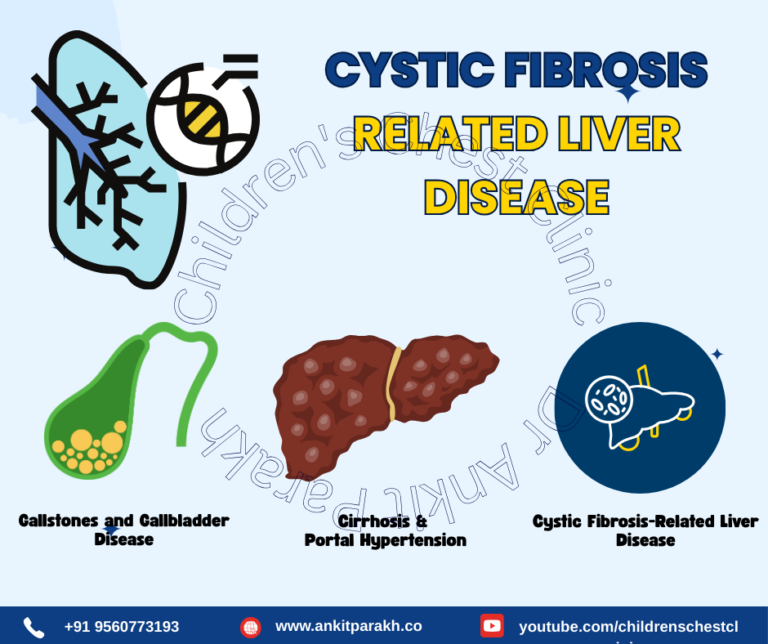
Cystic Fibrosis-Related Liver Disease: Causes, Symptoms, and Management
Read article
May 3, 2025
Cystic Fibrosis-Related Liver Disease: Causes, Symptoms, and Management
Read article
 May 19, 2025
Cystic Fibrosis-Related Diabetes: Causes, Symptoms, and Management
Read article
May 19, 2025
Cystic Fibrosis-Related Diabetes: Causes, Symptoms, and Management
Read article