Long Term Complications of Foreign Body Aspiration in Children
Foreign body aspiration is a potentially serious condition that occurs when a child accidentally inhales a small object into the airway or lungs. While some cases are recognized immediately because of choking or sudden breathing difficulty, others may go unnoticed for weeks or even months. These “forgotten” foreign bodies can lead to significant long term complications if not diagnosed and treated early.
Children with an undiagnosed foreign body aspiration are often treated repeatedly for cough, wheezing, or pneumonia without lasting improvement. Recognizing the warning signs and understanding the role of bronchoscopy is essential to prevent permanent lung damage.
In this article, Dr. Ankit Parakh, Child Pulmonologist and Allergist, explains the long term complications of foreign body aspiration, symptoms of a retained foreign body, and why bronchoscopy remains the gold standard for diagnosis and treatment.
What Is Foreign Body Aspiration?
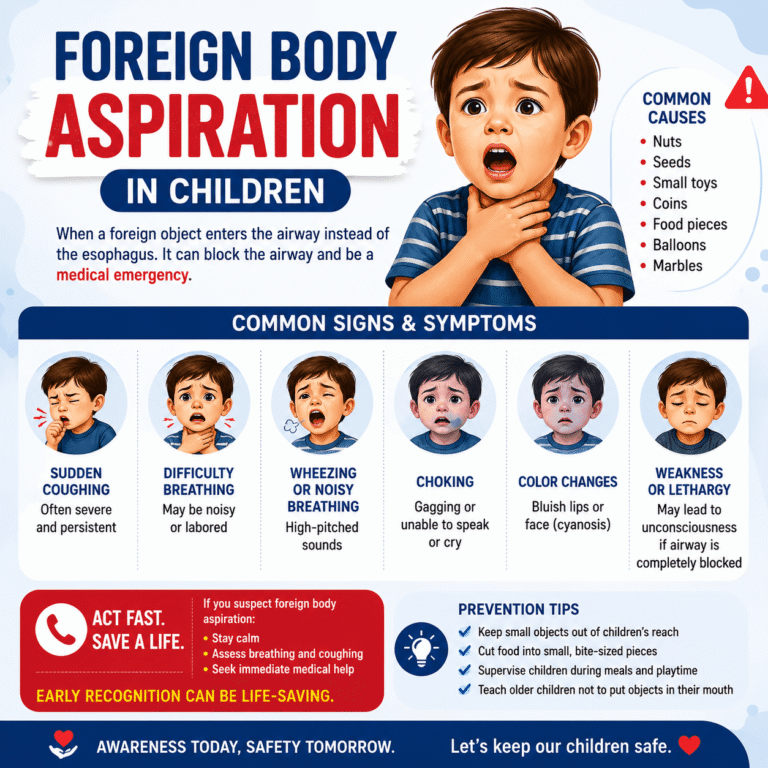
Foreign body aspiration happens when food particles or small objects accidentally enter the airways instead of the food pipe.
Commonly inhaled objects include:
- Peanuts and nuts
- Seeds
- Small toy parts
- Pen caps
- Beads
- Popcorn etc
Young children are particularly vulnerable because they often place objects in their mouths and may not chew food properly.
What Happens When a Foreign Body Is Forgotten?
Sometimes the initial choking episode may be mild or unnoticed. The child may appear better after coughing for a short time, leading parents to assume the problem has resolved.
However, the foreign body may remain trapped inside the airway, causing:
- Persistent inflammation
- Airway obstruction
- Recurrent infections
- Progressive lung damage
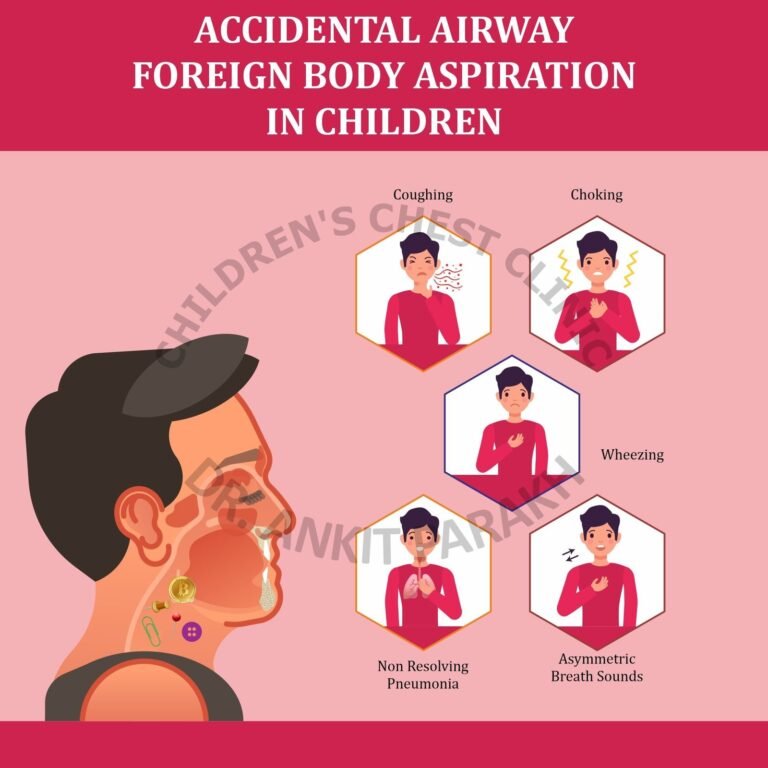
A forgotten foreign body can mimic asthma, chronic cough, or repeated chest infections.
Signs and Symptoms of a Forgotten Foreign Body
Parents and doctors should suspect foreign body aspiration if respiratory symptoms start suddenly or fail to improve with standard treatment.
Persistent Chronic Cough
One of the most common signs is a cough that: Lasts for weeks or months, Does not improve with medicines or Recurs repeatedly.
Recurrent Wheezing
A retained foreign body can cause wheezing similar to asthma.
Important clues include: Wheezing affecting one side of the chest, Poor response to inhalers, Recurrent breathing difficulty despite asthma treatment.
Children are sometimes incorrectly treated for asthma for long periods before the actual diagnosis is made.
Repeated Pneumonia
Foreign body aspiration may lead to recurrent pneumonia, especially in the same part of the lung. This happens because the blocked airway traps mucus and bacteria, increasing infection risk. Repeated antibiotic treatment without identifying the underlying cause can delay proper management.
Bad Breath and Persistent Phlegm
Children with long-standing foreign body aspiration may develop: Foul-smelling breath, Excess mucus production and Persistent chest congestion
These symptoms occur because of chronic infection around the retained object.
Reduced Air Entry on One Side
Doctors may notice reduced breath sounds or abnormal chest findings on examination.
This is an important clue suggesting airway blockage.
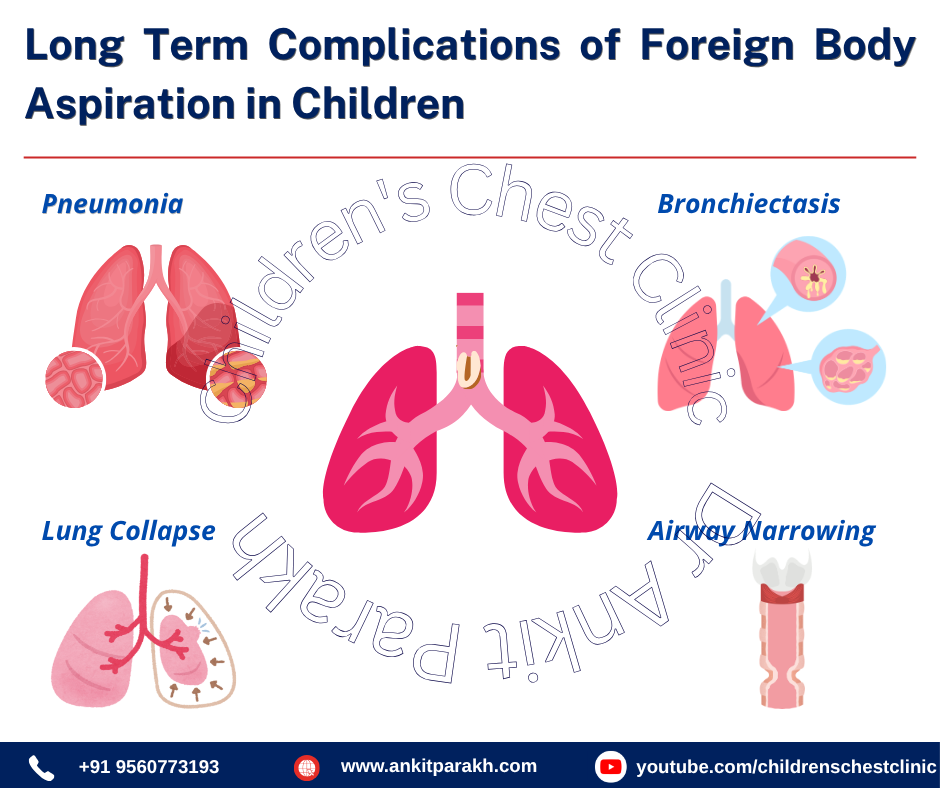
Long Term Complications of Foreign Body Aspiration
If foreign body aspiration is not diagnosed early, it can result in serious long term complications.
Chronic Lung Infection
Persistent obstruction allows bacteria to grow inside the lungs, leading to repeated infections. Children may require frequent antibiotics and hospital visits.
Bronchiectasis
Long-standing inflammation can permanently damage the airways, causing bronchiectasis.
This condition leads to: Chronic cough, Excess mucus production, Recurrent infections and Long-term breathing problems
Bronchiectasis may sometimes become irreversible if diagnosis is delayed.
Lung Collapse (Atelectasis)
A blocked airway may prevent normal airflow, causing part of the lung to collapse. This reduces lung function and increases infection risk.
Airway Scarring and Narrowing
Retained foreign bodies can cause chronic irritation leading to airway narrowing or scarring. This may result in persistent respiratory symptoms even after the foreign body is removed.
Why Is Bronchoscopy Important?
Bronchoscopy is the most important procedure for diagnosing and treating foreign body aspiration.
It allows doctors to:
- Directly visualize the airways
- Confirm the presence of a foreign body
- Safely remove the object
- Assess airway damage
Even when chest X-rays appear normal, bronchoscopy may still be necessary if suspicion remains high.
What Is Bronchoscopy?
Bronchoscopy is a specialized procedure performed using a bronchoscope — a thin instrument inserted into the airway under sedation
Bronchoscopy is considered the gold standard for:
- Diagnosing foreign body aspiration
- Removing retained foreign bodies
- Preventing long term complications
Most children recover quickly after successful removal.
When Should Bronchoscopy Be Considered?
Bronchoscopy may be recommended if a child has:
- Sudden unexplained coughing episode
- Persistent cough not responding to treatment
- Recurrent wheezing
- Repeated pneumonia in the same lung area
- Unilateral wheezing
- Suspicion of inhaled foreign body
Early bronchoscopy can prevent permanent lung damage.
Final Thoughts
Foreign body aspiration in children can sometimes be missed or forgotten, leading to serious long term complications such as recurrent infections, bronchiectasis, lung collapse, and chronic breathing problems.
Persistent cough, recurrent wheezing, or repeated pneumonia should never be ignored, especially if symptoms began suddenly. Early diagnosis and timely bronchoscopy are essential for safe removal of the foreign body and prevention of permanent lung damage.
If your child has unexplained chronic respiratory symptoms, consult Dr. Ankit Parakh, Child Pulmonologist and Allergist, for expert evaluation and bronchoscopy services.
Frequently Asked Questions (FAQs)
Frequently Asked Questions
What are the long term complications of foreign body aspiration?
Long term complications may include recurrent pneumonia, bronchiectasis, chronic cough, airway narrowing, lung collapse, and reduced lung function.
Can foreign body aspiration be mistaken for asthma?
Yes. Persistent wheezing and cough caused by a retained foreign body may resemble asthma and sometimes do not respond to inhalers.
What are the signs of a forgotten foreign body in the airway?
Common signs include chronic cough, recurrent wheezing, repeated pneumonia, bad breath, and breathing difficulty.
Why is bronchoscopy important in foreign body aspiration?
Bronchoscopy helps directly identify and safely remove the foreign body from the airway while preventing long term lung damage.
Can chest X-rays miss foreign body aspiration?
Yes. Some foreign bodies may not appear clearly on X-rays, which is why bronchoscopy is often needed when clinical suspicion remains high.
Related conditions & services
Medical Advice & Clinical Disclaimer
The educational medical guidance provided in this guide is for informational purposes only. It should not be used as a substitute for direct pediatric consultation, physical diagnosis, or clinical prescription. For individualized medical assessment of your child, schedule an appointment with Dr. Ankit Parakh.