Introduction
Spinal Muscular Atrophy (SMA) is a genetic neuromuscular disorder characterized by progressive muscle weakness due to degeneration of motor neurons in the spinal cord. While SMA was once considered a condition with limited therapeutic options, recent advances in disease-modifying therapies have dramatically improved outcomes. However, optimal care goes far beyond medications—it requires a multidisciplinary treatment approach.
This blog explores how coordinated care involving multiple specialties can significantly enhance survival, function, and quality of life in children with Spinal Muscular Atrophy (SMA).
Understanding Spinal Muscular Atrophy (SMA)
SMA is caused by mutations in the SMN1 gene, leading to deficiency of survival motor neuron (SMN) protein. This results in progressive muscle atrophy, affecting:
- Respiratory muscles
- Bulbar muscles (swallowing and speech)
- Limb muscles
The severity varies across SMA types (Type 1–4), but respiratory complications remain a major cause of morbidity and mortality, especially in children.
Why a Multidisciplinary Approach is Essential
Managing Spinal Muscular Atrophy (SMA) requires addressing multiple organ systems simultaneously. No single specialist can provide comprehensive care. A multidisciplinary team ensures:
- Early detection of complications
- Timely interventions
- Comprehensive patient-centered care
- Improved long-term outcomes
Key Components of Multidisciplinary Treatment
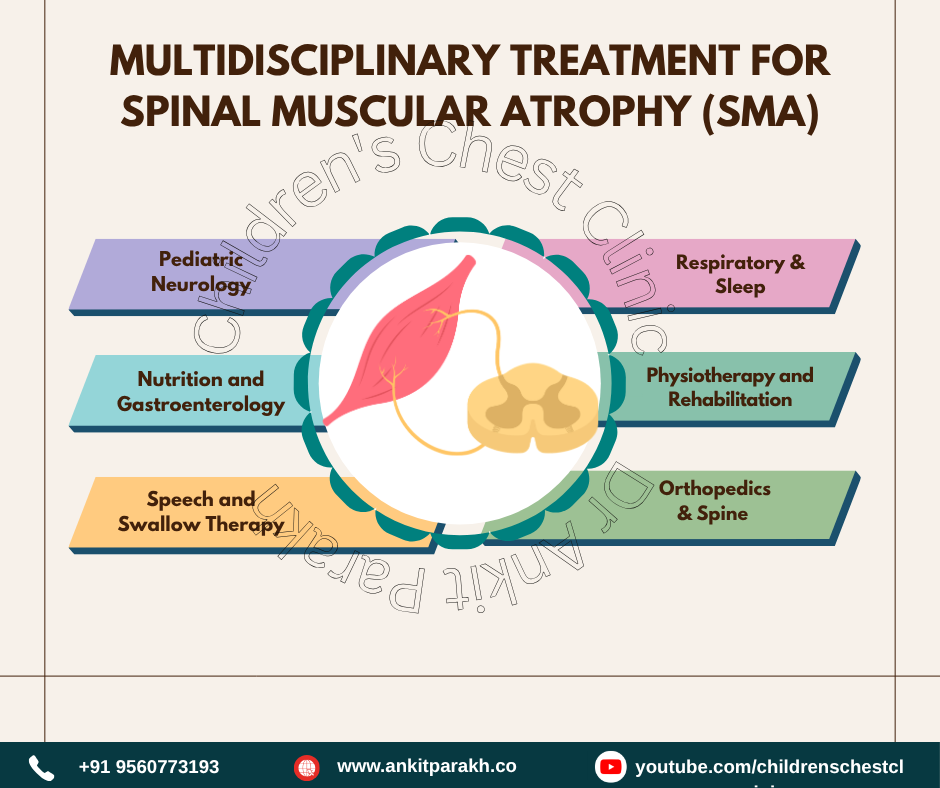
1. Pediatric Neurology: Core Disease Management
The neurologist plays a central role in diagnosis and initiation of disease-modifying therapies such as:
- Nusinersen
- Onasemnogene abeparvovec (gene therapy)
- Risdiplam
These treatments aim to increase SMN protein levels and slow disease progression.
2. Pulmonology: Respiratory Care (Critical Role)
Respiratory complications are the leading concern in Spinal Muscular Atrophy (SMA).
As a child pulmonologist, key interventions include:
- Regular pulmonary function monitoring
- Non-invasive ventilation (BiPAP)
- Airway clearance techniques (e.g., cough assist devices)
- Prevention and management of respiratory infections
Sleep-related breathing disorders are also common, making sleep evaluation essential.
3. Nutrition and Gastroenterology
Children with SMA often face feeding difficulties and poor weight gain.
Management includes:
- Swallowing assessment
- High-calorie nutritional plans
- Gastrostomy feeding in severe cases
- Prevention of aspiration
4. Physiotherapy and Rehabilitation
Physiotherapy helps maintain mobility and prevent complications:
- Range-of-motion exercises
- Postural management
- Prevention of contractures
- Assistive mobility devices
Early and consistent rehabilitation is crucial to preserve function.
5. Orthopedics: Skeletal Health
Muscle weakness leads to orthopedic issues such as:
- Scoliosis
- Joint deformities
Management may include:
- Bracing
- Surgical interventions when necessary
6. Speech and Swallow Therapy
Bulbar involvement can affect:
- Speech clarity
- Swallowing safety
Speech therapists help improve communication and reduce aspiration risk.
7. Psychological and Family Support
Chronic conditions like Spinal Muscular Atrophy (SMA) impact not just the child but the entire family.
Support includes:
- Counseling services
- Caregiver training
- Emotional and mental health support
Role of Early Intervention
With newborn screening and early diagnosis, initiating multidisciplinary care early can:
- Delay disease progression
- Improve motor milestones
- Reduce hospitalizations
- Enhance survival
Early treatment combined with coordinated care is a game-changer in SMA management.
The Future of SMA Care
Advances in gene therapy and targeted treatments are transforming the outlook for Spinal Muscular Atrophy (SMA). However, even with newer therapies, multidisciplinary care remains the backbone of effective management.
Integration of telemedicine, home-based respiratory care, and personalized rehabilitation plans will further improve outcomes.
Conclusion
Spinal Muscular Atrophy (SMA) is no longer a condition managed by a single specialty. A multidisciplinary approach—involving neurologists, pulmonologists, nutritionists, physiotherapists, and other experts—is essential for comprehensive care.
As a child pulmonologist and sleep specialist, I emphasize the importance of proactive respiratory care and sleep evaluation in improving both survival and quality of life in children with SMA.
If your child has been diagnosed with SMA, early and coordinated intervention can make a profound difference.
Frequently Asked Questions (FAQs)
Frequently Asked Questions
What is the main cause of Spinal Muscular Atrophy (SMA)?
SMA is caused by a genetic mutation in the SMN1 gene, leading to deficiency of the SMN protein necessary for motor neuron survival.
Can Spinal Muscular Atrophy (SMA) be cured?
Currently, there is no complete cure, but disease-modifying therapies can significantly slow progression and improve outcomes.
Why is respiratory care important in SMA?
Respiratory muscle weakness can lead to breathing difficulties and infections, making pulmonary care a critical component of SMA management.
At what age should treatment for SMA begin?
Treatment should begin as early as possible—ideally soon after diagnosis or through newborn screening—to achieve the best outcomes.
What specialists are involved in SMA care?
A multidisciplinary team typically includes a neurologist, pulmonologist, nutritionist, physiotherapist, orthopedic specialist, and speech therapist.
Related conditions & services
Medical Advice & Clinical Disclaimer
The educational medical guidance provided in this guide is for informational purposes only. It should not be used as a substitute for direct pediatric consultation, physical diagnosis, or clinical prescription. For individualized medical assessment of your child, schedule an appointment with Dr. Ankit Parakh.

Related articles
 Apr 24, 2025
Respiratory and Sleep Problems in Children with Duchenne Muscular Dystrophy
Read article
Apr 24, 2025
Respiratory and Sleep Problems in Children with Duchenne Muscular Dystrophy
Read article
 Dec 24, 2022
Sleep Problems in children with Spinal muscular atrophy (SMA)?
Read article
Dec 24, 2022
Sleep Problems in children with Spinal muscular atrophy (SMA)?
Read article
 Jun 10, 2025
Chest Physiotherapy for Children with Spinal Muscular Atrophy (SMA): Enhancing Airway Clearance and Breathing
Read article
Jun 10, 2025
Chest Physiotherapy for Children with Spinal Muscular Atrophy (SMA): Enhancing Airway Clearance and Breathing
Read article