Foreign Body Aspiration: When Kids Inhale Small Objects
Children are naturally curious and often explore the world by putting objects into their mouths. While this behavior is common, it can sometimes become dangerous when a child accidentally inhales a small object into the airway. This condition is known as foreign body aspiration and can quickly become a medical emergency if not recognized and treated promptly.
Foreign body aspiration is one of the most important causes of sudden coughing and breathing difficulty in children, especially in toddlers and preschool-aged kids. Early diagnosis and timely bronchoscopy can be life-saving.
In this article, Dr. Ankit Parakh, Child Pulmonologist, explains the signs and symptoms of foreign body aspiration, why it is dangerous, and the critical role of bronchoscopy in diagnosis and treatment.
What Is Foreign Body Aspiration?
Foreign body aspiration occurs when a child accidentally inhales food particles or small objects into the airways or lungs instead of swallowing them into the food pipe.
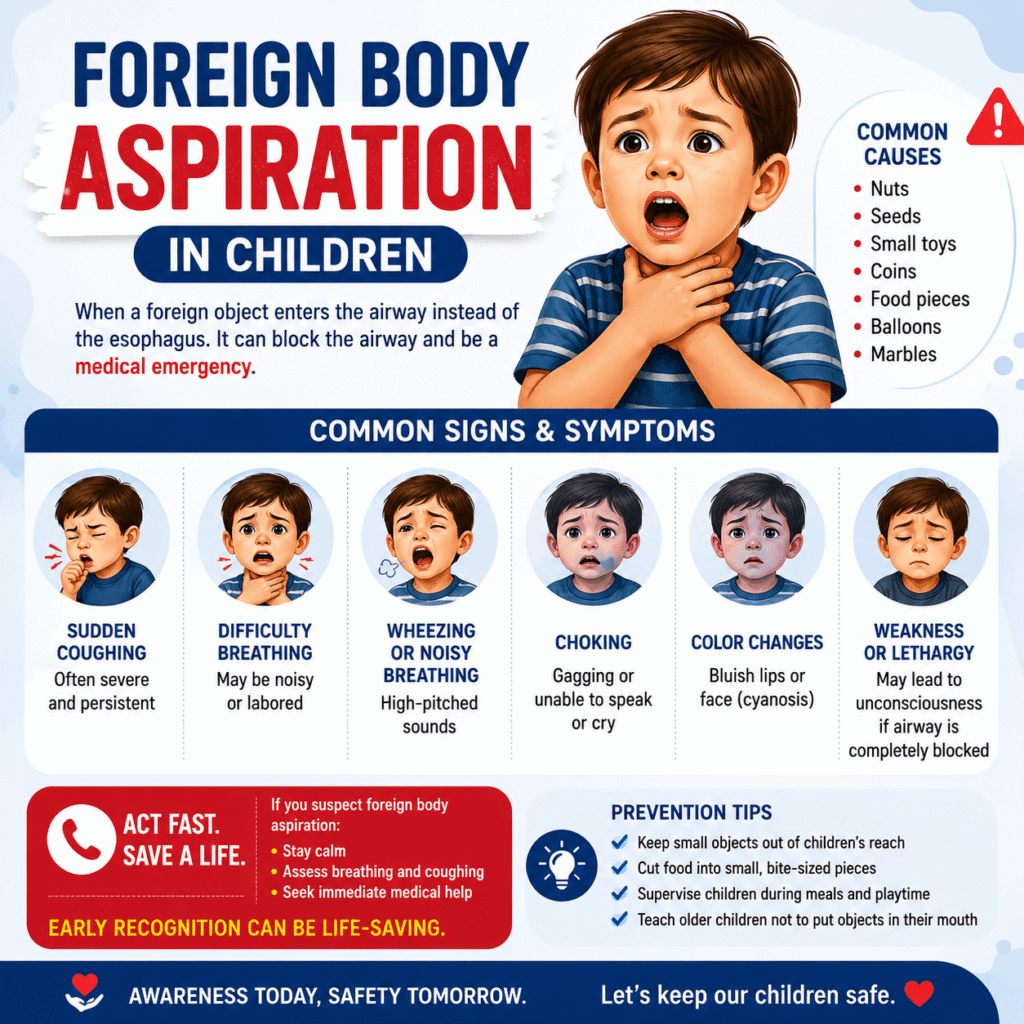
Commonly aspirated objects include:
- Peanuts and nuts
- Seeds
- Small toy parts
- Beads
- Pen caps
- Popcorn
- Buttons
Young children are at higher risk because:
- They often put objects in their mouths
- Their chewing and swallowing coordination is still developing
- They may laugh, cry, or run while eating
Why Is Foreign Body Aspiration Dangerous?
When an object enters the airway, it can partially or completely block airflow to the lungs.
This may lead to:
- Sudden choking, Severe breathing difficulty, Persistent coughing, Lung infection, Collapse of part of the lung and Life-threatening airway obstruction
Some foreign bodies remain undetected for weeks or months, causing chronic respiratory symptoms.
Common Signs and Symptoms of Foreign Body Aspiration
Recognizing the symptoms early is extremely important.
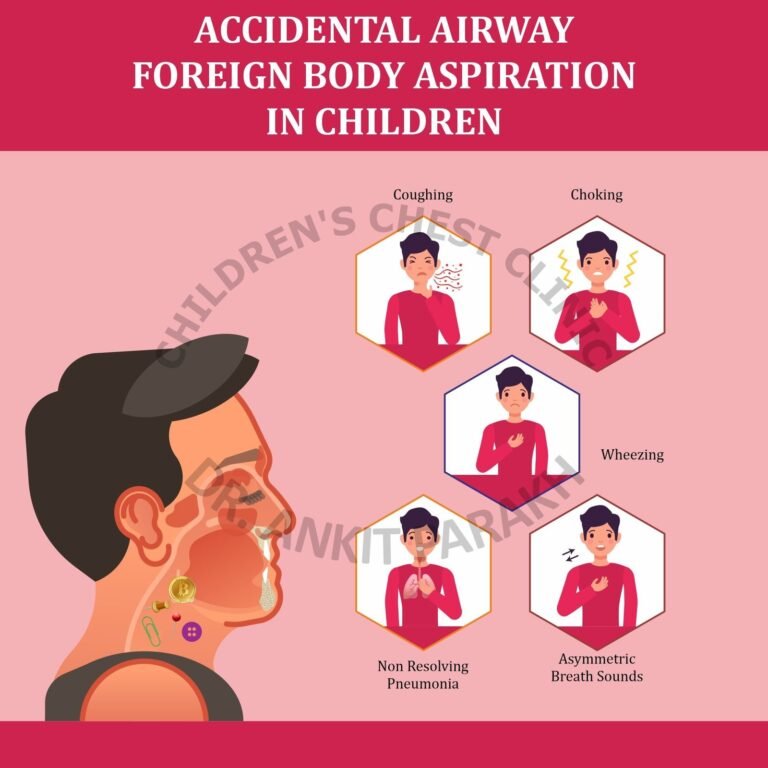
Sudden Coughing Episode
A sudden onset of severe coughing while eating or playing is one of the most important warning signs.
Parents often describe:
- Sudden choking
- Gagging
- Violent coughing
This episode may improve temporarily even though the object remains stuck inside the airway.
Persistent Cough
A child may continue to have: Recurrent cough, Night-time cough, Chronic cough not improving with medicines. This is especially concerning if the cough started suddenly.
Wheezing
Foreign body aspiration can cause wheezing that may resemble asthma. However, unlike asthma: wheezing may affect only one side of the chest and symptoms may not respond to asthma medications
Persistent one-sided wheezing should always raise suspicion.
Difficulty Breathing
Children may develop: Fast breathing, Noisy breathing, Chest retractions and Breathlessness
Severe airway blockage can become an emergency.
Recurrent Pneumonia
An undiagnosed foreign body can lead to repeated lung infections in the same area of the lung. Children may repeatedly receive antibiotics without lasting improvement.
Reduced Breath Sounds
Doctors may notice reduced air entry on one side of the chest during examination. This is an important clue suggesting airway obstruction.
When Should Parents Suspect Foreign Body Aspiration?
Parents should seek immediate medical evaluation if:
- A child suddenly coughs or chokes while eating or playing
- Symptoms start abruptly without fever
- Wheezing affects one side of the chest
- Cough persists despite treatment
- Recurrent pneumonia occurs in the same lung area
Even if symptoms appear mild initially, the object may still be present inside the airway.
How Is Foreign Body Aspiration Diagnosed?
Diagnosis begins with:
- Detailed history
- Physical examination
- Chest X-ray
However, chest X-rays can sometimes appear normal even when a foreign body is present.
Because of this, bronchoscopy is often required for accurate diagnosis.
What Is Bronchoscopy?
Bronchoscopy is a specialized procedure that allows doctors to look directly inside the airways using a thin instrument called a bronchoscope.
It plays a critical role in:
- Confirming foreign body aspiration
- Locating the object
- Safely removing the foreign body
Bronchoscopy is considered the gold standard for diagnosis and treatment of foreign body aspiration.
Why Is Bronchoscopy Important?
Bronchoscopy helps prevent serious complications by enabling early removal of the object.
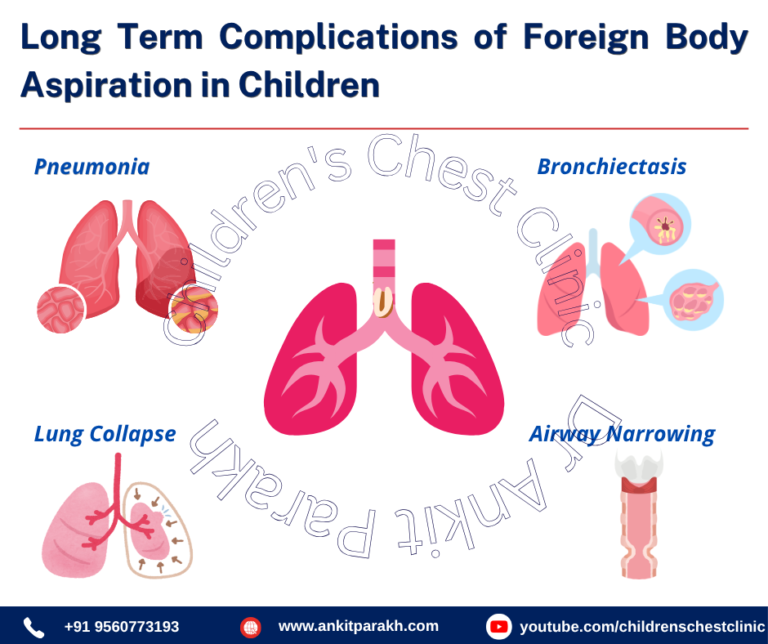
Without treatment, retained foreign bodies may cause:
- Chronic lung infection
- Airway damage
- Lung collapse
- Persistent wheezing
- Breathing problems
Early bronchoscopy significantly improves outcomes.
Is Bronchoscopy Safe in Children?
Yes. When performed by experienced pediatric specialists, bronchoscopy is generally safe and highly effective. The procedure is usually done under sedation to keep the child comfortable and ensure safe removal of the object. Most children recover quickly after successful foreign body removal.
How Can Parents Prevent Foreign Body Aspiration?
Prevention is extremely important, especially in younger children.
Parents should:
- Avoid giving nuts and hard foods to toddlers
- Keep small objects out of reach
- Supervise children during meals
- Encourage children to sit calmly while eating
- Avoid toys with tiny detachable parts for young children
Simple precautions can greatly reduce the risk.
Conclusions
Foreign body aspiration is a serious but often preventable condition in children. A sudden cough, choking episode, persistent wheezing, or unexplained recurrent pneumonia should never be ignored.
Early recognition and timely bronchoscopy are essential for accurate diagnosis and safe removal of the foreign body. Prompt treatment can prevent long-term lung damage and life-threatening complications.
If your child develops sudden breathing symptoms or persistent cough after choking, seek immediate evaluation from a child pulmonologist.
Frequently Asked Questions (FAQs)
Frequently Asked Questions
What is foreign body aspiration in children?
Foreign body aspiration occurs when a child accidentally inhales a small object or food particle into the airway or lungs.
What are the common symptoms of foreign body aspiration?
Common symptoms include sudden coughing, choking, wheezing, breathing difficulty, persistent cough, and recurrent pneumonia.
Can foreign body aspiration look like asthma?
Yes. Foreign body aspiration may cause wheezing similar to asthma, especially if the object partially blocks the airway.
Why is bronchoscopy needed in foreign body aspiration?
Bronchoscopy helps doctors directly see and safely remove the foreign body from the airway.
Is bronchoscopy safe for children?
Yes. Bronchoscopy is generally safe when performed by experienced pediatric specialists and is the standard treatment for foreign body aspiration.
Related conditions & services
Medical Advice & Clinical Disclaimer
The educational medical guidance provided in this guide is for informational purposes only. It should not be used as a substitute for direct pediatric consultation, physical diagnosis, or clinical prescription. For individualized medical assessment of your child, schedule an appointment with Dr. Ankit Parakh.