On this page 28 sections
- Why Is Moisturiser So Important in Atopic Dermatitis or Eczema?
- So, Which Is the Best Moisturiser for a Child with Eczema?
- 1. Choose a fragrance-free moisturiser
- 2. Prefer a cream or ointment over a lotion
- What Is the Difference Between a Lotion, Cream and Ointment?
- Lotion
- Cream
- Ointment
- Does the Moisturiser Need to Be “Specially Made for Eczema”?
- What Ingredients Should Parents Look For?
- How Often Should You Apply Moisturiser?
- A simple routine:
- When Should You Apply Moisturiser After a Bath?
- How Much Moisturiser Should You Apply?
- Should You Stop Moisturiser When the Eczema Looks Better?
- No.
- What About Ceramide-Based Moisturisers?
- A Simple Rule for Choosing the Best Moisturiser
- Can Moisturiser Prevent Eczema Flares?
- When Should You See a Doctor?
- Key Take-Home Message
- Remember the 4 golden rules:
- 1. Fragrance-free
- 2. Cream or ointment
- 3. Generous application
- 4. Regular application
- Frequently Asked Questions (FAQs)
- Frequently Asked Questions
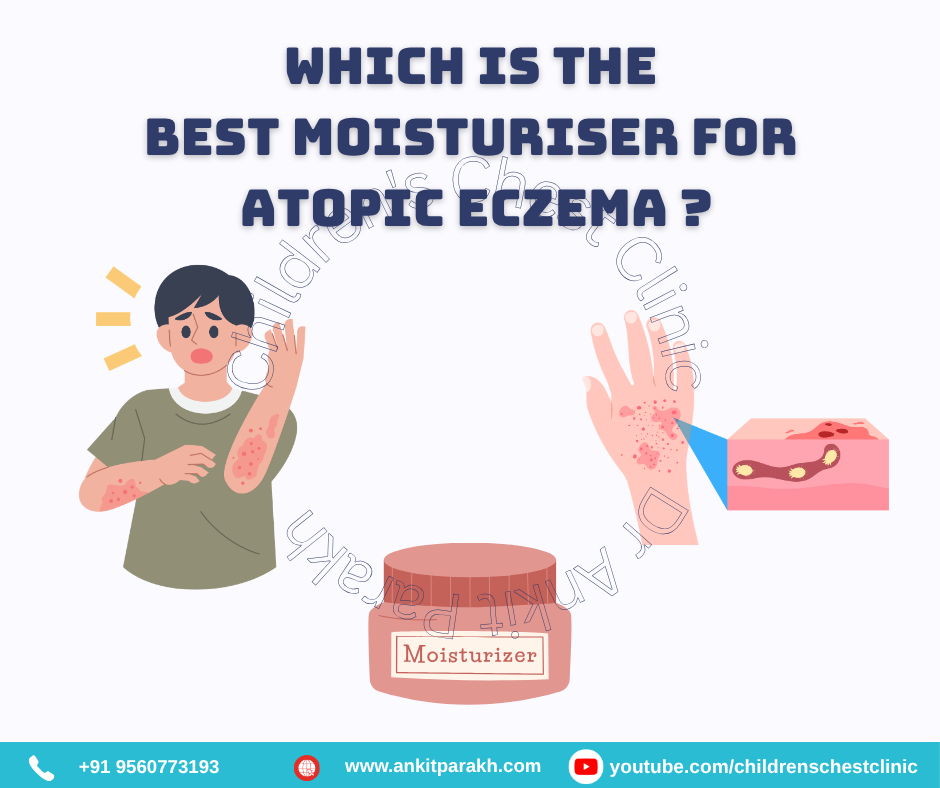
If your child has Atopic Dermatitis or Eczema, one of the most common questions parents ask is: “Which is the best moisturiser for my child?”.
Walk into any pharmacy or search online, and you will find hundreds of creams, lotions, ointments and “eczema-friendly” products. It can be confusing to decide which one is actually best. The good news is that you usually do not need an expensive or fancy moisturiser. For most children with Atopic Dermatitis or Eczema, the best moisturiser is one that is fragrance-free, well tolerated, sufficiently thick, and used regularly and generously. Current guidance strongly recommends moisturisers as an important part of the treatment of childhood atopic dermatitis.
Why Is Moisturiser So Important in Atopic Dermatitis or Eczema?
Children with Atopic Dermatitis or Eczema have an impaired skin barrier. Their skin loses water more easily, resulting in:
-
Dry skin
-
Itching
-
Scaling
-
Cracking
-
Increased sensitivity to irritants
-
Frequent eczema flares
A good moisturiser helps restore and protect the skin barrier, reduces water loss and keeps the skin hydrated. Regular moisturisation is therefore not just a cosmetic step—it is an important part of eczema management.
So, Which Is the Best Moisturiser for a Child with Eczema?
There is no single brand or product that is best for every child. Instead, look for a moisturiser with the following characteristics:
1. Choose a fragrance-free moisturiser
This is one of the most important rules. Choose products labelled “fragrance-free” rather than simply “unscented.” Fragrances can irritate sensitive skin and may trigger eczema flares in some children.
2. Prefer a cream or ointment over a lotion
For children with Atopic Dermatitis or Eczema, thick creams and ointments are generally more effective at reducing water loss than light lotions. Think of it this way: Ointment → Cream → Lotion. As you move towards lighter formulations, they generally become less effective at trapping moisture in very dry skin. For children with significantly dry or cracked eczema, an ointment may therefore be particularly useful.
What Is the Difference Between a Lotion, Cream and Ointment?
Lotion
Lotions are light and spread easily.
Advantages:
-
Easy to apply
-
Less greasy
-
Convenient during the day
Disadvantages:
-
May not provide enough moisturisation for very dry eczema
-
May need to be applied more frequently
Cream
Creams are thicker than lotions and are often a good balance between effectiveness and ease of use. They are suitable for many children with mild to moderate eczema.
Ointment
Ointments are the thickest formulation and contain more oil.
They are particularly useful for:
-
Very dry skin
-
Thickened eczema
-
Cracked skin
-
Night-time application
Petroleum jelly is a simple, inexpensive, fragrance-free option that works well for many children.
Does the Moisturiser Need to Be “Specially Made for Eczema”?
Not necessarily. Parents sometimes assume that the most expensive product or a product specifically marketed for eczema must be the best. This is not always true. A simple fragrance-free cream or ointment may work extremely well. The most important factors are: Safe ingredients + good moisturising effect + child tolerates it + regular use. If a product causes burning, stinging, redness or worsening of the eczema, it may not be suitable for your child.
What Ingredients Should Parents Look For?
There isn’t one “magic ingredient” that every child needs. Depending on the severity and dryness of the skin, useful moisturising formulations may contain ingredients such as: Petrolatum, Ceramides, Gly
How Often Should You Apply Moisturiser?
Regular application is more important than finding a “perfect” product. For most children with Atopic Dermatitis or Eczema, moisturiser should be applied at least twice daily and whenever the skin becomes dry. Think of moisturiser as part of your child’s daily skin-care routine, rather than something to use only during an eczema flare.
A simple routine:
Morning → Moisturiser
After bathing → Moisturiser
Bedtime → Moisturiser
Additional applications can be made when the skin feels dry.
When Should You Apply Moisturiser After a Bath?
This is particularly important.
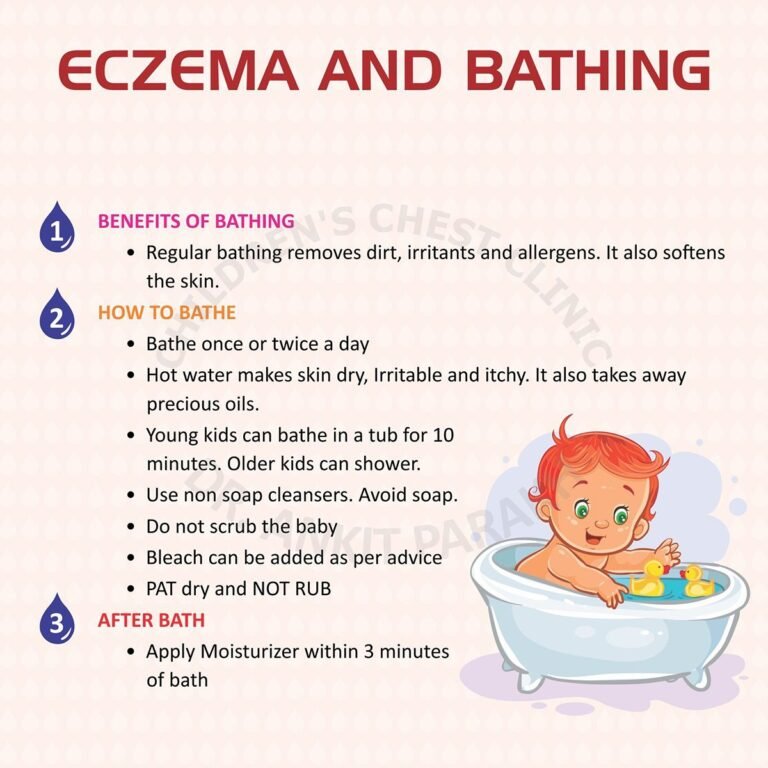
After bathing:
-
Use lukewarm water.
-
Keep the bath relatively short.
-
Gently pat the skin dry.
-
Leave the skin slightly damp.
-
Apply moisturiser generously within a few minutes.
The American Academy of Dermatology recommends applying an eczema-friendly moisturiser within about 3 minutes of bathing. (American Academy of Dermatology). This helps trap water in the skin and prevents excessive drying.
How Much Moisturiser Should You Apply?
One of the most common mistakes parents make is using too little moisturiser. Children with eczema often need generous amounts of emollient applied over the whole body, not just over visible red patches. NICE recommends using emollients in larger amounts and more frequently than other topical treatments, including on the whole body even when eczema is clear. (Nice)
A useful principle is: Don’t just moisturise the rash—moisturise the skin.
Should You Stop Moisturiser When the Eczema Looks Better?
No.
This is another common mistake. When the redness and itching improve, many parents stop the moisturiser. However, the underlying tendency towards dry, sensitive skin can persist even when the eczema looks normal. Regular moisturisation helps maintain the skin barrier and can help reduce dryness and flares.
Therefore:
Flare → moisturiser + prescribed treatment
Clear skin → continue moisturiser
What About Ceramide-Based Moisturisers?
Ceramides are naturally occurring components of the skin barrier and are included in many eczema moisturisers. New generation ceramide-containing moisturizers can be a reasonable option for a child with Atopic Dermatitis or Eczema, especially when they are not improving. They are quite expensive. However, you do not have to use a ceramide-containing product if another simple fragrance-free cream or ointment works well for your child. The goal is effective and consistent moisturisation—not choosing the most sophisticated ingredient list.
A Simple Rule for Choosing the Best Moisturiser
When standing in front of a pharmacy shelf, remember:
FRAGRANCE-FREE + THICK + WELL-TOLERATED + REGULARLY USED
That’s often more important than the brand name. If your child has very dry eczema, consider a thick cream or ointment rather than a light lotion.
Can Moisturiser Prevent Eczema Flares?
Regular moisturisation can help maintain the skin barrier and reduce dryness. It is an important component of eczema management. The 2026 American Academy of Dermatology pediatric atopic dermatitis guidelines strongly recommend moisturisers for reducing the severity of dry, itchy skin and conditionally recommend their use for prevention of atopic dermatitis in certain high-risk infants. (American Academy of Dermatology)
However, moisturiser may not be enough during a significant eczema flare. If the skin remains very red, inflamed or itchy despite regular moisturisation, your child may require additional treatment.
When Should You See a Doctor?
Consult your pediatrician allergist if your child’s eczema:
-
Is moderate or severe
-
Is not improving with regular moisturisation
-
Causes significant itching or sleep disturbance
-
Is frequently flaring
-
Becomes painful
-
Develops oozing, crusting or signs of infection
-
Requires frequent use of prescription medicines
Moderate-to-severe eczema often requires a structured treatment plan in addition to regular skin care.
Key Take-Home Message
So, which is the best moisturiser for a child with Atopic Dermatitis or Eczema?
There is no single “best brand.” For most children, choose a thick, fragrance-free cream or ointment that your child tolerates well. Apply it generously and regularly—ideally at least twice a day and particularly soon after bathing.
Remember the 4 golden rules:
1. Fragrance-free
Avoid perfumes and unnecessary fragrances.
2. Cream or ointment
Prefer thicker formulations, especially for very dry skin.
3. Generous application
Moisturise the whole body, not just the visible eczema.
4. Regular application
Continue moisturising even when the skin looks clear.
The best moisturiser is ultimately the one that works for your child’s skin and that you can use consistently every day.
Frequently Asked Questions (FAQs)
Frequently Asked Questions
Which moisturiser is best for a child with Atopic Dermatitis or Eczema?
There is no single best brand. A fragrance-free cream or ointment is generally preferred over a lotion for children with eczema. Petroleum jelly is also an effective, inexpensive option for many children.
Is cream or lotion better for children's eczema?
Creams and ointments are generally more effective than lotions at reducing water loss from very dry eczema-prone skin. Ointments are particularly useful for very dry or thickened skin, while creams may be easier to use during the day.
How many times a day should I apply moisturiser to my child's eczema?
Moisturiser should generally be applied at least twice a day and whenever the skin becomes dry. It should also be applied soon after bathing while the skin is still slightly damp.
Should I continue moisturizing when my child's eczema gets better?
Yes. Regular moisturisation should generally continue even when the skin looks clear because it helps maintain the skin barrier and prevent excessive dryness.
Can I use coconut oil or other natural oils instead of an eczema moisturiser?
Coconut oil can be used as a moisturiser in some children with eczema, but it is not necessarily better than a good fragrance-free cream or ointment. The most important thing is regular, generous moisturisation with a product that your child’s skin tolerates well. Choose plain, virgin coconut oil without fragrance or added ingredients. Remember that “Not all natural oils are suitable for eczema-prone skin”. It is recommended to avoid “Olive oil” and “Mustard oil”.
Related conditions & services
Medical Advice & Clinical Disclaimer
The educational medical guidance provided in this guide is for informational purposes only. It should not be used as a substitute for direct pediatric consultation, physical diagnosis, or clinical prescription. For individualized medical assessment of your child, schedule an appointment with Dr. Ankit Parakh.