On this page 7 sections
- How Does Cigarette Smoke Affect Asthma in Children?
- What Is Secondhand Smoke?
- How Can Parents Protect Children With Asthma From Cigarette Smoke?
- Does Cigarette Smoke Exposure Mean My Child Will Develop Asthma?
- When Should You Consult a Child Pulmonologist?
- Conclusion
- Frequently Asked Questions (FAQs)
Does your child frequently cough, wheeze, or experience difficulty breathing despite taking asthma medications regularly? One important factor that parents may overlook is cigarette smoke exposure.
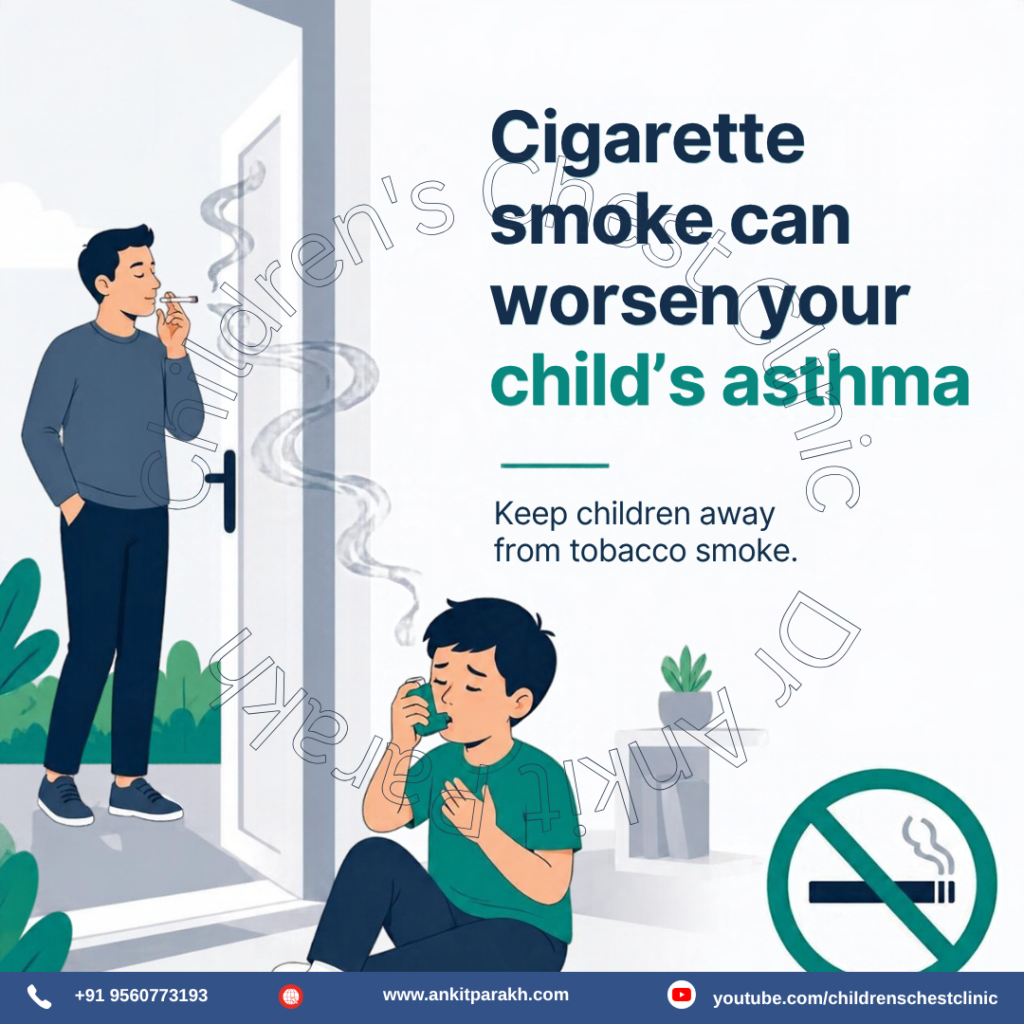
Cigarette smoke is a significant indoor air pollutant that can irritate a child’s airways, trigger asthma symptoms, and increase the risk of asthma attacks. Children with asthma are particularly vulnerable because their airways are already inflamed and sensitive. Even if you never smoke directly in front of your child, exposure to smoke from other family members, visitors, or the surrounding environment can affect your child’s respiratory health.
Understanding the link between cigarette smoke and asthma in children is an important step towards protecting your child’s lungs and achieving better asthma control.
How Does Cigarette Smoke Affect Asthma in Children?
Cigarette smoke contains thousands of chemicals, including irritants and toxic substances that can damage the respiratory system. When children inhale cigarette smoke, these substances can affect their airways in several ways.
1. Increases airway inflammation
Children with asthma have sensitive, inflamed airways. Cigarette smoke further irritates the lining of the respiratory tract, increasing inflammation and making breathing more difficult.
This may result in:
- Persistent coughing, particularly at night.
- Wheezing or a whistling sound while breathing.
- Chest tightness.
- Breathlessness during play or physical activity.
2. Triggers asthma attacks
Cigarette smoke is a recognised asthma trigger. Exposure can cause the muscles surrounding the airways to tighten, resulting in bronchoconstriction. Combined with airway inflammation and mucus production, this can lead to an asthma exacerbation.
Some children may develop symptoms soon after exposure, while others may experience worsening symptoms over the following hours.
3. Makes asthma more difficult to control
Repeated exposure to cigarette smoke can contribute to poor asthma control. Children may experience more frequent symptoms, nighttime awakenings, and asthma flare-ups requiring additional medical attention.
Smoke exposure may also be associated with a poorer response to inhaled corticosteroids, which are commonly used to control airway inflammation in asthma.
If your child’s asthma remains poorly controlled despite regular treatment, identifying and eliminating cigarette smoke exposure is an important part of the assessment.
4. Increases respiratory infections
Children exposed to tobacco smoke are more vulnerable to respiratory infections, including infections that can trigger asthma exacerbations. Viral respiratory infections are common asthma triggers in childhood. Smoke exposure can add to this risk, creating a cycle of repeated coughing, wheezing, and worsening asthma symptoms.
5. May affect lung growth and development
Childhood is a critical period for lung growth. Exposure to tobacco smoke can adversely affect lung function and respiratory development. Protecting children from cigarette smoke is therefore important not only for immediate asthma control but also for their long-term respiratory health.
What Is Secondhand Smoke?
Secondhand smoke is the smoke released from a burning cigarette and the smoke exhaled by a person who is smoking. Children may inhale this smoke when someone smokes in their presence.
Common situations include:
- A parent smoking inside the house.
- A grandparent smoking in the same room as the child.
- Someone smoking inside a car while travelling with children.
- Exposure to smoke in enclosed or poorly ventilated spaces.
Opening windows, using exhaust fans, or smoking in another room does not reliably eliminate exposure. Smoke can spread throughout indoor spaces and remain in the environment. There is no established safe level of secondhand tobacco smoke exposure for children.
Can Smoking Outside the House Still Harm Your Child?
Smoking outside is preferable to smoking indoors, but it does not eliminate all exposure. Smoke can drift back through doors and windows.
In addition, thirdhand smoke refers to tobacco residues that remain on clothing, hair, furniture, carpets, car seats, and other surfaces after smoking. Children may come into contact with these residues through their hands, skin, and the objects they put in their mouths. Although thirdhand smoke exposure is harder to measure and its specific contribution to asthma outcomes is less clearly established than that of secondhand smoke, avoiding tobacco residue is a sensible precaution.
If a parent smokes, quitting completely is the best way to protect the child’s health.
How Can Parents Protect Children With Asthma From Cigarette Smoke?
Creating a smoke-free environment is an essential part of asthma management.
1. Make your home completely smoke-free
Do not allow smoking anywhere inside the house, including balconies connected to indoor areas, bathrooms, or rooms with open windows.
A smoke-free home protects children and other family members from repeated exposure.
2. Keep your car smoke-free
Never smoke inside a car carrying a child, even when the windows are open. Smoke can accumulate rapidly in the confined space of a vehicle.
Make a firm rule that nobody smokes inside the family car.
3. Ask family members and visitors not to smoke around children
Grandparents, relatives, caregivers, and visitors should understand that cigarette smoke can worsen asthma.
Explain that smoking in another room or near an open window is not sufficient protection.
4. Encourage family members to quit smoking
Quitting tobacco is the most effective way to eliminate a smoker’s contribution to secondhand smoke exposure.
Family members can seek help from their doctor or a tobacco cessation service. Nicotine replacement therapy and other evidence-based cessation treatments may be appropriate for adults after medical assessment.
Parents should approach this conversation supportively rather than blame themselves or other family members. The goal is to create a healthier environment for the child.
5. Continue your child’s prescribed asthma treatment
Avoiding cigarette smoke does not replace asthma medication.
Continue prescribed controller treatment, use inhalers with the correct technique, and follow your child’s written asthma action plan. Discuss persistent symptoms with your child’s doctor rather than increasing or stopping medication independently.
Does Cigarette Smoke Exposure Mean My Child Will Develop Asthma?
Not every child exposed to cigarette smoke develops asthma. However, exposure to tobacco smoke is associated with an increased risk of respiratory problems, and exposure before and after birth can contribute to childhood wheezing and asthma risk.
For a child who already has asthma, cigarette smoke is an avoidable environmental trigger that can worsen symptoms and increase the risk of exacerbations.
The good news is that reducing and eliminating exposure is a practical step parents can take to support better respiratory health.
When Should You Consult a Child Pulmonologist?
Consider consulting a child pulmonologist if your child:
- Has frequent coughing or wheezing.
- Wakes up at night because of cough or breathing difficulty.
- Needs their reliever inhaler more often than recommended in their asthma action plan.
- Experiences repeated asthma attacks or emergency visits.
- Has persistent symptoms despite prescribed controller medication.
- Has suspected smoke exposure and worsening respiratory symptoms.
A child pulmonologist can assess asthma control, review inhaler technique and adherence, identify environmental triggers, and determine whether treatment needs adjustment.
Seek urgent medical care if your child has severe breathing difficulty, marked chest retractions, difficulty speaking or drinking because of breathlessness, blue or grey lips, unusual drowsiness, or symptoms that are not improving with the prescribed emergency treatment.
Conclusion
Cigarette smoke is more than an unpleasant smell. It is a harmful respiratory irritant that can worsen airway inflammation, trigger asthma attacks, and make asthma in children more difficult to control. Parents can make a meaningful difference by keeping their homes and cars smoke-free, encouraging family members to quit smoking, and ensuring that children receive appropriate asthma treatment. Protecting your child from cigarette smoke is an important step towards healthier lungs and better asthma control.
Frequently Asked Questions (FAQs)
1. Can cigarette smoke trigger an asthma attack in children?
Yes. Cigarette smoke can irritate sensitive airways, increase inflammation, and cause bronchoconstriction. In children with asthma, exposure may trigger coughing, wheezing, breathlessness, or an acute asthma exacerbation.
2. Is secondhand cigarette smoke harmful to a child with asthma?
Yes. Secondhand smoke exposure is associated with increased asthma symptoms, exacerbations, and respiratory infections. Children with asthma should be protected from tobacco smoke at home, in cars, and in other environments.
3. Is it safe to smoke outside if my child has asthma?
Smoking outside reduces indoor exposure compared with smoking inside, but it may not eliminate exposure completely. Smoke can drift indoors, and tobacco residues may remain on clothing and other surfaces. Quitting smoking is the best way to reduce exposure.
4. Can cigarette smoke make asthma medicines less effective?
Tobacco smoke exposure may contribute to poorer asthma control and a reduced response to inhaled corticosteroids in some children. If symptoms persist, a doctor should assess smoke exposure alongside inhaler technique, medication adherence, diagnosis, and other triggers.
5. What should I do if my child’s asthma worsens after exposure to cigarette smoke?
Move your child away from the smoke and follow their prescribed asthma action plan, including their reliever medication as directed. Seek medical advice if symptoms persist or worsen. Severe breathlessness, blue or grey lips, or difficulty speaking requires emergency medical attention.
Related conditions & services
Medical Advice & Clinical Disclaimer
The educational medical guidance provided in this guide is for informational purposes only. It should not be used as a substitute for direct pediatric consultation, physical diagnosis, or clinical prescription. For individualized medical assessment of your child, schedule an appointment with Dr. Ankit Parakh.

Related articles
 Feb 20, 2026
Pediatric Asthma Clinics in Delhi: When Should You Visit a Specialist?
Read article
 Oct 16, 2026
House Dust Mite Sublingual Immunotherapy for Allergic Asthma in Children: A Clear Guide for Parents
Read article
 Mar 2, 2026
What Tests Can Be Done to Diagnose Asthma in Children?
Read article