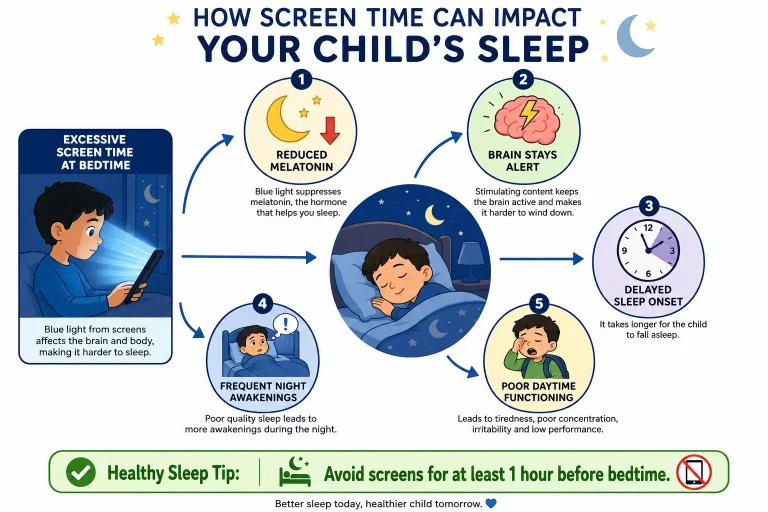
Is it difficult to get your child to bed? Is your child having bedtime problems like sleep onset troubles and bedtime resistance?
Getting a young child to go to bed is a common problem experienced by many parents. Bedtime problems can occur at any age but are most common between ages 3 and 6 years. Bedtime problems include children resisting going to bed by stalling and/or making excuses or initially going to bed but refuse to stay in bed, or lie awake, alert and restless. For many families, bedtime problems are a regular feature of daily life. Common examples of excuses are “one more story please”, “water please”, “I need to go to washroom” etc.

What is the cause of bedtime problems in children?
Bedtime problems are usually caused by inadequate enforcement of bedtime limits by family and parents. Inconsistent response by parents gives intermittent reinforcement, which is responsible for maintaining child’s inappropriate behavior. Examples of limit-setting problems include irregular sleep schedule like inconsistent bedtime and waketime, significant discrepancies in the bedtime during weekdays and weekends, sleeping while watching electronic devices like TV or a mobile phone, sleeping in different areas sometimes drawing room vs bedroom, etc.
Bedtime problems can also be a result of chronic medical disorders like asthma, allergic rhinitis, chronic atopic eczema, gastro-esophageal reflux disease etc. Some sleep disorders like restless legs syndrome and child’s nighttime anxieties/fears can also lead to bedtime problems.
What should we do when our children fail to fall asleep at bedtime, or protest that they aren’t sleepy? Or engage in stalling tactics? Or throw a tantrum?
A consistent bedtime routine helps in reducing bedtime problems. Setting and sticking to firm bedtime limits is in everyone’s best interest, especially your child’s. Setting limits is an important part of parenting. The new rules should be gently but firmly explained to the child during the day. Children’s sleep time needs to be consistent on all days including weekends.
Soothing activities like by bathing, brushing teeth, gentle massage, putting on pajamas, having a cuddle and reading a bedtime story at bedtime as very helpful in reducing bedtime problems. Such routines make bedtime feel less stressful, and hence can reduce bedtime problems. Avoid stimulating high-energy activities, such as playing outside, running around, or watching exciting television shows or videos. All electronic items should be avoided near to the bedtime.
Related conditions & services
Medical Advice & Clinical Disclaimer
The educational medical guidance provided in this guide is for informational purposes only. It should not be used as a substitute for direct pediatric consultation, physical diagnosis, or clinical prescription. For individualized medical assessment of your child, schedule an appointment with Dr. Ankit Parakh.