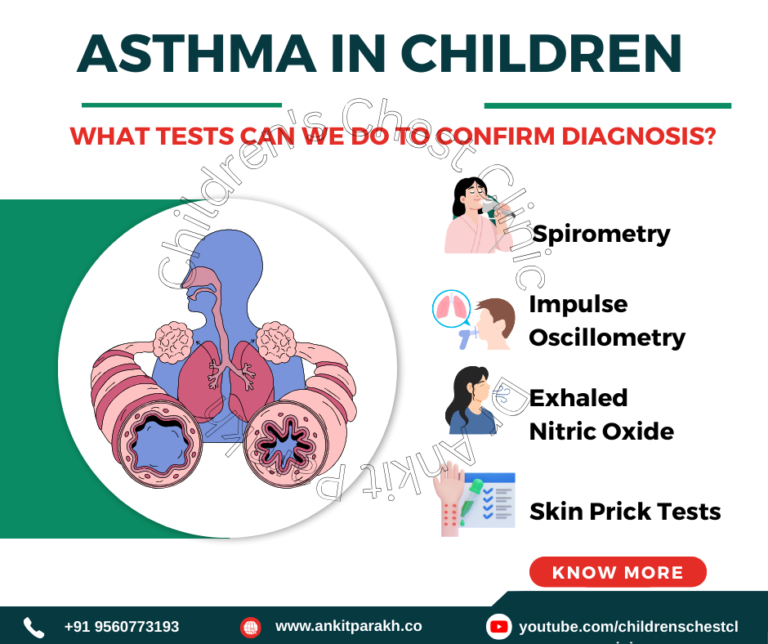
Impulse Oscillometry: A Child-Friendly Lung Function Test for Young Children
Many parents struggle to get an accurate diagnosis when their young child has recurrent cough, wheezing, or asthma symptoms. Traditional lung function tests like spirometry require a child to take a deep breath and blow forcefully into a machine—a task that is difficult for many children below 6 years of age.
This is where Impulse Oscillometry (IOS) has transformed pediatric respiratory care. Impulse Oscillometry is a simple, painless, and child-friendly lung function test that evaluates how well your child’s airways are working during normal, relaxed breathing. It has become one of the most useful diagnostic tools for preschool children and is now increasingly available across pediatric pulmonary and allergy clinics.
What is Impulse Oscillometry?
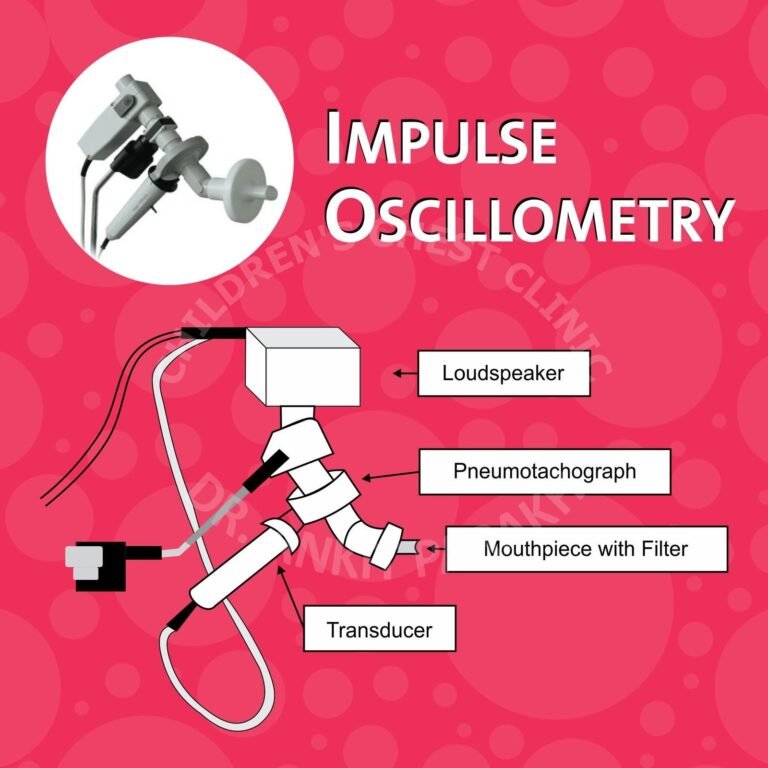
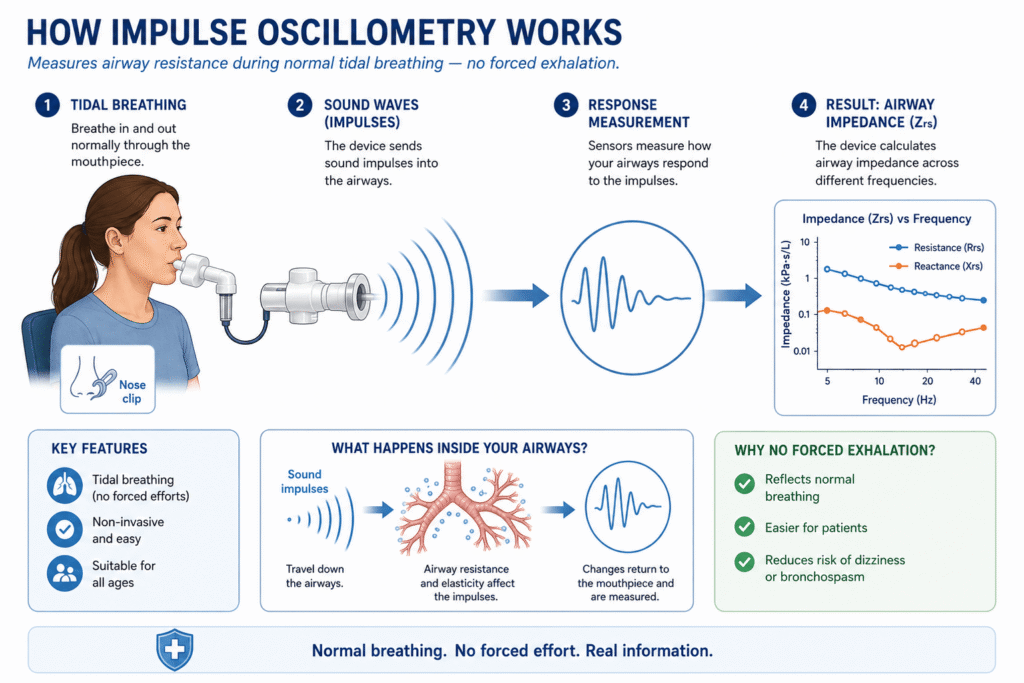
Impulse Oscillometry (IOS) is an advanced lung function test that measures airway resistance and lung mechanics while your child breathes normally through a mouthpiece. Unlike spirometry, there is no forceful blowing involved.
During the test:
- Your child sits comfortably.
- A nose clip is placed.
- They breathe normally through a mouthpiece for about 20–30 seconds.
- Gentle sound waves (pressure impulses) travel into the lungs.
- The machine measures how easily these waves move through the airways.
The test is completely non-invasive, painless, and radiation-free.
Why is Impulse Oscillometry Ideal for Young Children?
Young children often cannot understand or perform the complicated breathing maneuvers required for spirometry. Impulse Oscillometry overcomes this problem because it only requires quiet tidal breathing.
Advantages include:
- Suitable for children as young as 3–4 years
- No forceful exhalation required
- Quick test (usually less than 5 minutes)
- Comfortable and child-friendly
- Highly reproducible
- Can detect early airway obstruction
- Useful even when spirometry cannot be performed
Because of these advantages, IOS has become an increasingly preferred lung function test in pediatric practice.
When is Impulse Oscillometry Recommended?
Your doctor may advise Impulse Oscillometry if your child has symptoms suggestive of airway disease.
Common indications include:
1. Asthma
Impulse Oscillometry is particularly valuable for:
- Diagnosing asthma in preschool children
- Monitoring asthma control
- Assessing response to inhaled medications
- Detecting small airway involvement
- Evaluating children unable to perform spirometry
2. Recurrent Wheezing
Children with repeated episodes of wheezing may benefit from IOS to identify persistent airway obstruction and monitor improvement over time.
3. Chronic Cough
When a cough persists for more than four weeks without a clear cause, Impulse Oscillometry can help determine whether airway inflammation or narrowing is contributing to symptoms.
4. Persistent Shortness of Breath
Children who experience breathlessness during play or exercise may have underlying airway disease that IOS can help evaluate.
5. Allergic Airway Diseases
Children with:
- Allergic rhinitis
- Dust mite allergy
- Eczema with respiratory symptoms
may develop asthma, and IOS helps assess airway function even before severe symptoms develop.
6. Follow-up After Treatment
Impulse Oscillometry is useful for monitoring improvement after:
- Inhaled corticosteroids
- Bronchodilators
- Allergen immunotherapy
- Other asthma medications
Objective measurements help determine whether treatment is working effectively.
Is the Test Safe?
Yes.
Impulse Oscillometry is extremely safe because:
- No injections
- No radiation
- No pain
- No sedation
- No significant risks
Children usually tolerate the procedure very well.
Is Impulse Oscillometry Widely Available?
Yes. Over the past decade, Impulse Oscillometry has become increasingly available in specialized pediatric pulmonary, allergy, and respiratory clinics across India and around the world. As awareness grows about the limitations of spirometry in younger children, more centers are incorporating IOS into routine evaluation of asthma and other respiratory disorders. Choosing a center experienced in pediatric lung function testing ensures accurate results and proper interpretation.
Key Takeaway
Impulse Oscillometry has revolutionized lung function testing in young children. It is quick, painless, and requires only normal breathing, making it an excellent option for preschool children who cannot perform spirometry.
Whether your child has asthma, recurrent wheezing, chronic cough, or unexplained breathlessness, IOS provides valuable information that helps your pediatric pulmonologist diagnose and manage respiratory conditions with greater confidence.
Early diagnosis leads to better treatment, improved symptom control, and healthier lungs for the future.
Frequently Asked Questions (FAQs)
Frequently Asked Questions
At what age can a child undergo Impulse Oscillometry?
Most children can successfully perform Impulse Oscillometry from around 3–4 years of age, provided they can breathe calmly through a mouthpiece for a short period.
Is Impulse Oscillometry better than spirometry?
Neither test is universally better. Impulse Oscillometry is particularly useful in younger children and those unable to perform forceful breathing, while spirometry remains the standard test for older cooperative children.
Can Impulse Oscillometry diagnose asthma?
IOS cannot diagnose asthma by itself, but when combined with your child’s symptoms, examination, and medical history, it provides valuable objective evidence of airway obstruction and helps support the diagnosis.
Does my child need to stop asthma medicines before the test?
Some inhalers may need to be withheld before testing, depending on the purpose of the evaluation. Always follow your doctor’s instructions and do not stop medications without medical advice.
How long does an Impulse Oscillometry test take?
The actual breathing measurement usually takes 20–30 seconds, and the complete appointment is generally finished within 5–10 minutes.
Related conditions & services
Medical Advice & Clinical Disclaimer
The educational medical guidance provided in this guide is for informational purposes only. It should not be used as a substitute for direct pediatric consultation, physical diagnosis, or clinical prescription. For individualized medical assessment of your child, schedule an appointment with Dr. Ankit Parakh.