On this page 8 sections
- What Is House Dust Mite Allergy in Children?
- What Causes House Dust Mite Allergy?
- Symptoms of House Dust Mite Allergy in Children
- How Is House Dust Mite Allergy Diagnosed?
- Treatment of House Dust Mite Allergy in Children
- When Should You Consult a Child Pulmonologist or Allergy Specialist?
- Conclusion
- Frequently Asked Questions (FAQs)
What Is House Dust Mite Allergy in Children?
Does your child frequently sneeze in the morning, have a blocked nose, rub their eyes, or experience persistent coughing at night? These symptoms may be related to House dust Mite allergy, one of the common causes of year-round allergic symptoms in children.
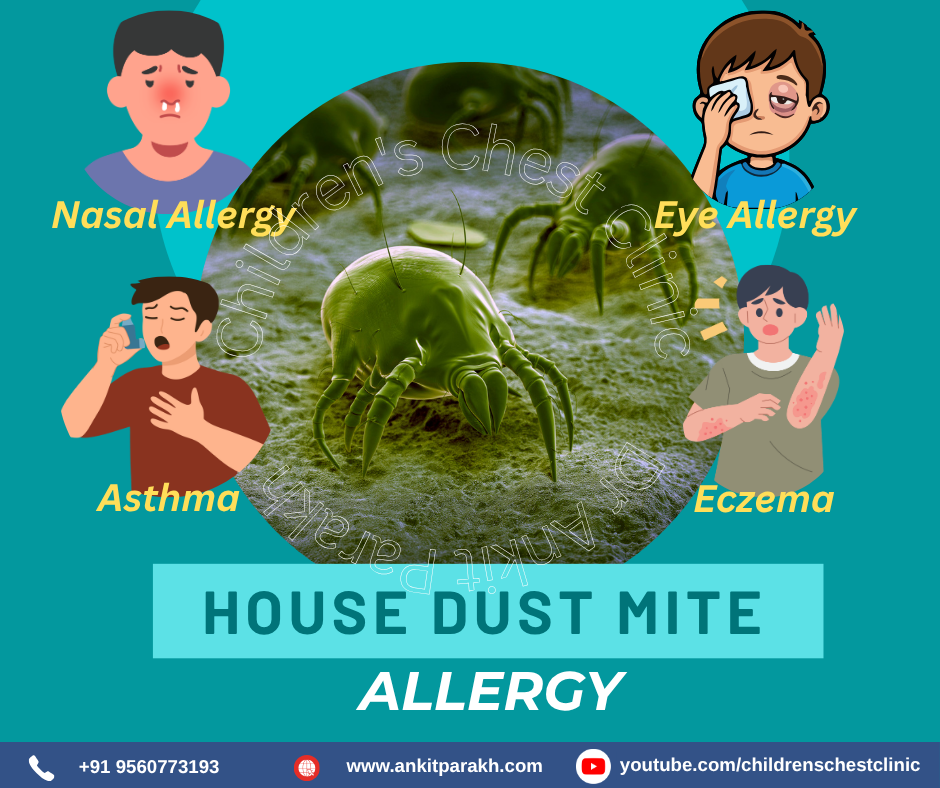
House dust mites are microscopic organisms that thrive in indoor environments, particularly in mattresses, pillows, carpets, upholstered furniture and bedding. They feed mainly on shed human skin flakes and flourish in warm, humid conditions. In children who are sensitised to house dust mites, exposure to mite allergens can trigger an allergic reaction. This may lead to Allergic Rhinitis, Allergic Conjunctivitis and Asthma, affecting the child’s sleep, school performance, physical activity and overall quality of life.
The good news is that appropriate diagnosis, practical environmental measures and evidence-based treatment can help control symptoms and improve a child’s well-being.
What Causes House Dust Mite Allergy?
House dust mites are not insects that bite children. Instead, allergic reactions are triggered by proteins found in their faecal particles and body fragments. These allergens become airborne when bedding, mattresses, carpets or soft furnishings are disturbed. Children may inhale them or come into contact with them through their eyes and nasal passages.
House dust mites commonly thrive in:
- Mattresses, pillows and blankets
- Bed linen and soft toys
- Carpets and rugs
- Upholstered sofas and curtains
- Dust-collecting furnishings in bedrooms
Exposure may occur throughout the year, although symptoms can vary with indoor humidity, ventilation, cleaning practices and the child’s sensitivity.
An important point for parents: House dust Mite allergy is different from an allergy to ordinary household dust. Household dust contains a mixture of particles, including dust mite allergens, pollen, mould spores and animal allergens. Identifying the specific allergen responsible for a child’s symptoms is important for effective treatment.
Symptoms of House Dust Mite Allergy in Children
Symptoms depend on which parts of the respiratory tract and eyes are affected.
1. Allergic Rhinitis
House dust mite allergy is an important trigger of perennial allergic rhinitis, in which symptoms occur throughout the year rather than only during a particular pollen season.
Common symptoms include:
- Frequent sneezing, especially on waking up
- Runny nose with clear discharge
- Persistent nasal blockage
- Itching of the nose and palate
- Mouth breathing and frequent nose rubbing
- Snoring or disturbed sleep
Children may experience the characteristic allergic salute, in which they repeatedly push their nose upwards with the palm of the hand. Untreated Allergic Rhinitis can interfere with sleep, concentration and daily activities. It may also coexist with asthma.
2. Asthma
House dust mite allergy can contribute to asthma symptoms in sensitised children. Exposure may trigger airway inflammation and worsen existing asthma.
Look out for:
- Recurrent coughing, particularly at night
- Wheezing or a whistling sound while breathing
- Breathlessness during play or exercise
- Chest tightness
- Recurrent episodes of cough following indoor allergen exposure
3. Allergic Conjunctivitis
When house dust mite allergens affect the eyes, children may develop allergic conjunctivitis.
Typical symptoms include:
- Itching of both eyes
- Redness and watering
- Puffy eyelids
- Frequent eye rubbing
- A burning or gritty sensation
Persistent eye rubbing can worsen discomfort. Parents should seek medical advice if symptoms are recurrent or troublesome.
How Is House Dust Mite Allergy Diagnosed?
A correct diagnosis is essential because not every child with sneezing, cough or nasal blockage has an allergy to house dust mites. A child pulmonologist or allergy specialist will usually assess the following:
1. Detailed clinical history
The doctor will ask about the child’s symptoms, their timing, bedroom environment, exposure to soft furnishings, sleep quality, family history of allergic disease and possible seasonal triggers.
2. Allergy testing
Two commonly used tests are:
- Skin prick test: A small amount of allergen extract is introduced into the superficial skin, and the reaction is assessed after approximately 15–20 minutes.
- Specific IgE blood test: Measures IgE antibodies against house dust mite allergens in the blood.
3. Lung function testing
For children with suspected asthma, spirometry with bronchodilator testing may help demonstrate variable airflow obstruction. FeNO testing or other investigations may be useful in selected cases. The aim is to identify clinically relevant allergy, assess associated respiratory disease and develop an individualised treatment plan.
Treatment of House Dust Mite Allergy in Children
Treatment depends on the severity of symptoms, the organs involved and the child’s age.
1. House Dust Mite Avoidance Measures
Reducing exposure may help some children, particularly when measures are targeted at their main sources of exposure. Complete elimination of house dust mites from a home is usually not realistic.
Practical measures include:
- Wash bed linen regularly using a hot wash, ideally around 60°C when the fabric permits.
- Consider allergen-impermeable covers for mattresses and pillows.
- Reduce unnecessary soft toys, heavy carpets and dust-collecting furnishings in the bedroom.
- Washable soft toys can be cleaned regularly according to their care instructions.
- Use damp dusting rather than dry dusting to reduce the dispersal of particles.
- Vacuum regularly, ideally with a well-sealed vacuum cleaner fitted with an effective HEPA filter.
- Maintain good ventilation and address dampness or excessive indoor humidity where feasible.
Avoidance measures should be practical, affordable and tailored to the child’s environment. A single measure, such as changing bedding alone, may not provide sufficient relief.
2. Medicines for Symptom Control
Medication can provide effective relief when environmental measures alone are insufficient.
For Allergic Rhinitis:
- Intranasal corticosteroid sprays are often the most effective treatment for persistent or moderate-to-severe nasal symptoms.
- Second-generation oral antihistamines may help with sneezing, itching and a runny nose.
- Intranasal antihistamines may be considered in selected children.
For Allergic Conjunctivitis:
- Mast-cell stabiliser eye drops may be prescribed depending on symptoms and age.
- Lubricant eye drops are very effective in reducing symptoms and preventing eye damage.
For Asthma:
- Inhaled corticosteroid-containing treatment is central to controlling persistent asthma, with the regimen selected according to the child’s age, symptoms and current asthma guidelines.
- Reliever treatment should be used according to the child’s prescribed asthma action plan.
3. Allergen Immunotherapy for House Dust Mite Allergy
For selected children with clinically relevant house dust mite allergy, allergen immunotherapy (AIT) may be an additional treatment option. Unlike medicines that mainly control symptoms, allergen immunotherapy aims to modify the immune response to the allergen over time.
Two principal approaches are:
Subcutaneous Immunotherapy (SCIT): The allergen is administered through injections under medical supervision.
Sublingual Immunotherapy (SLIT): The allergen is administered under the tongue, using an appropriate tablet or liquid formulation depending on the product and its availability.
Immunotherapy may be considered when symptoms remain troublesome despite appropriate standard treatment, when the clinical history and allergy testing support the diagnosis, and when the child is suitable for the chosen treatment. The treatment commonly requires around three years for a disease-modifying course, although the exact regimen depends on the product and clinical circumstances. In appropriately selected patients, house dust mite immunotherapy may improve allergic rhinitis symptoms and reduce medication requirements. Evidence and eligibility for asthma-related benefits vary by age, product and clinical setting.
Safety is essential: Immunotherapy must be prescribed by an allergy specialist. Uncontrolled asthma is an important contraindication to initiating allergen immunotherapy because of the risk of serious allergic reactions.
When Should You Consult a Child Pulmonologist or Allergy Specialist?
Consider specialist evaluation if your child has:
- Sneezing, nasal blockage or a runny nose throughout the year
- Persistent nasal symptoms despite appropriate treatment
- Recurrent night-time cough, wheezing or exercise-related breathlessness
- Recurrent itchy, red or watery eyes
- Poor sleep, snoring or difficulty concentrating due to allergy symptoms
- Asthma that remains poorly controlled despite prescribed treatment
- Symptoms suggesting allergy for which targeted testing or immunotherapy may be appropriate
A child pulmonologist and allergy specialist can assess the relationship between upper airway allergy, eye symptoms and asthma, helping to create a coordinated management plan.
Conclusion
House dust Mite allergy is a common and potentially troublesome cause of allergic symptoms in children. It may contribute to Allergic Rhinitis, Allergic Conjunctivitis and asthma, affecting sleep, school attendance and quality of life. Early recognition, appropriate allergy testing, practical exposure reduction and evidence-based medication can help control symptoms. For selected children, allergen immunotherapy may offer longer-term benefits.
If your child has persistent sneezing, nasal blockage, itchy eyes or recurrent respiratory symptoms, consult a qualified child pulmonologist or allergy specialist to determine the underlying cause and discuss appropriate treatment.
Frequently Asked Questions (FAQs)
1. What are the common symptoms of House dust Mite allergy in children?
Common symptoms include recurrent sneezing, a runny or blocked nose, nasal itching, itchy and watery eyes, and sometimes coughing or wheezing. In sensitised children, house dust mite exposure may worsen Allergic Rhinitis, Allergic Conjunctivitis or Asthma.
2. How can I reduce House dust Mite allergy in my child’s bedroom?
Wash bed linen regularly, consider allergen-impermeable mattress and pillow covers, reduce dust-collecting furnishings, damp-dust surfaces and vacuum regularly. Keeping indoor humidity under control may also help where feasible. These measures can reduce exposure but may not eliminate all allergens.
3. Can House dust Mite allergy cause asthma in children?
House dust mite sensitisation is associated with asthma in some children, and exposure can trigger symptoms or worsen existing asthma. However, not every child with house dust mite sensitisation develops asthma, and a positive allergy test alone does not diagnose asthma.
4. Which tests diagnose House dust Mite allergy?
The main tests are the skin prick test and a blood test for allergen-specific IgE. The doctor interprets these results alongside the child’s symptoms and exposure history. Spirometry may also be recommended when asthma is suspected.
5. Can House dust Mite allergy be treated permanently?
There is no guaranteed permanent cure for every child. Symptoms can often be controlled with appropriate medicines and targeted exposure reduction. Allergen immunotherapy, including subcutaneous or sublingual treatment in suitable children, may provide sustained improvement after a properly completed course, although the response varies between individuals.
Medical disclaimer: This article is for general educational purposes and does not replace an individual medical consultation. Diagnosis and treatment should be guided by a qualified healthcare professional.
Related conditions & services
Medical Advice & Clinical Disclaimer
The educational medical guidance provided in this guide is for informational purposes only. It should not be used as a substitute for direct pediatric consultation, physical diagnosis, or clinical prescription. For individualized medical assessment of your child, schedule an appointment with Dr. Ankit Parakh.

Related articles
 Sep 15, 2025
SENSIMUNE or ACARIZAX: Standardised Dust Mite Immunotherapy
Read article
 Oct 16, 2026
House Dust Mite Sublingual Immunotherapy for Allergic Asthma in Children: A Clear Guide for Parents
Read article
 Oct 2, 2026
Bermuda Grass or दूब (Doob) Grass Allergy in Children: Symptoms, Diagnosis and Treatment
Read article