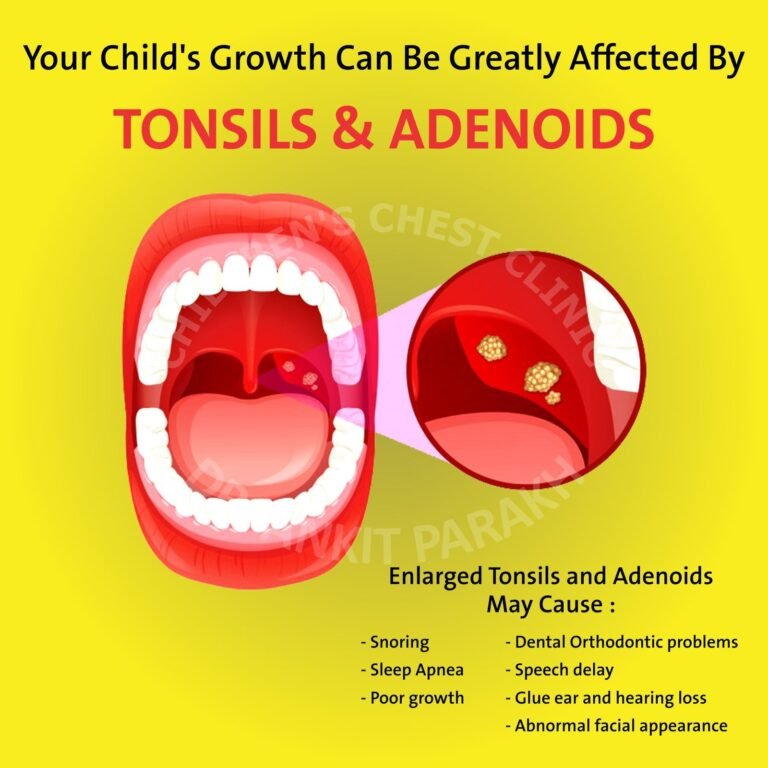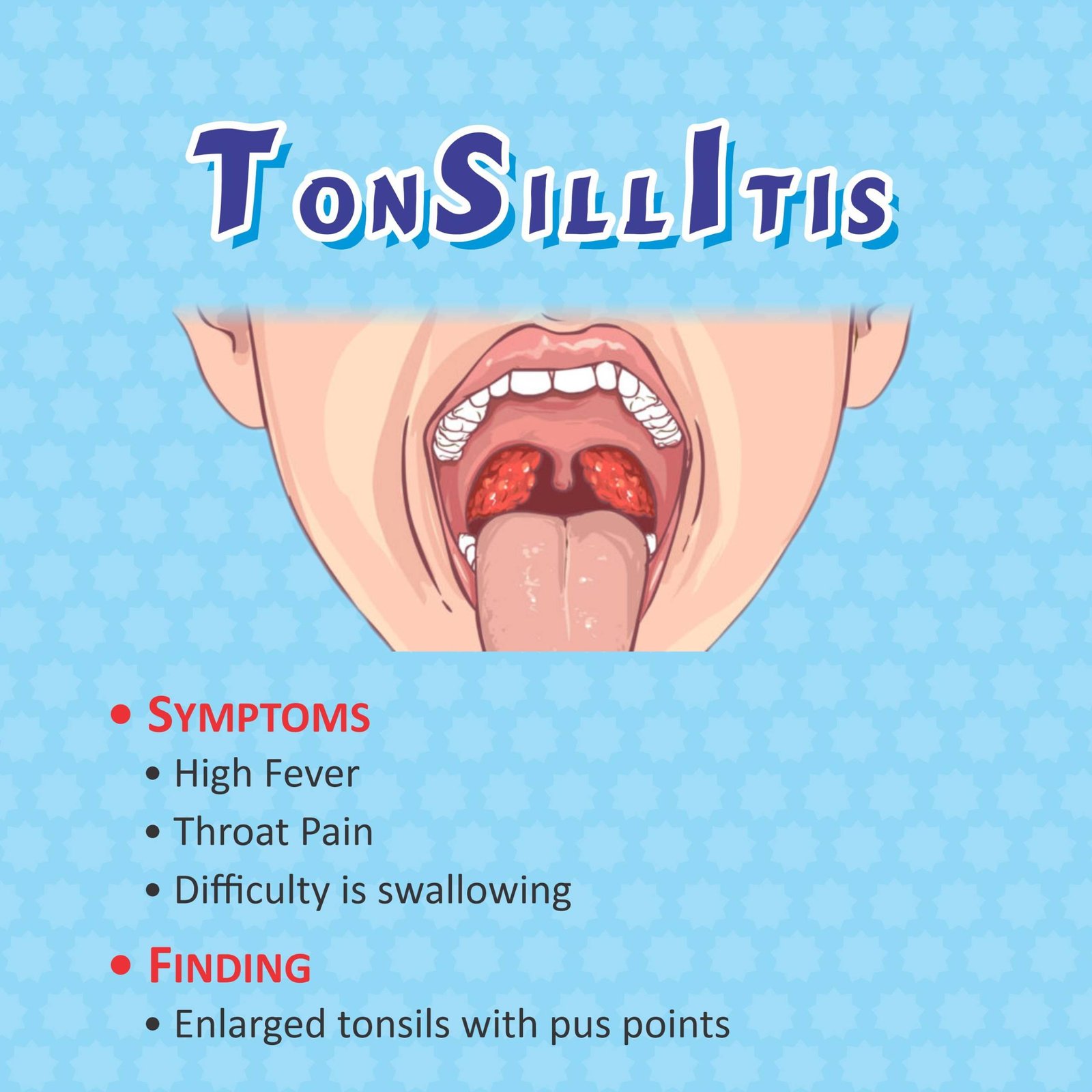
Adenoids are like lymph nodes at the back of the nose and are thought to help the body in fighting infections. Adenoid hypertrophy or enlarged adenoids is the unusual growth of the adenoids. Adenoid hypertrophy can cause an obstruction of the nasal airways. Persistent enlargement of the adenoids leads to dentofacial growth anomaly that is called as “adenoid facies”
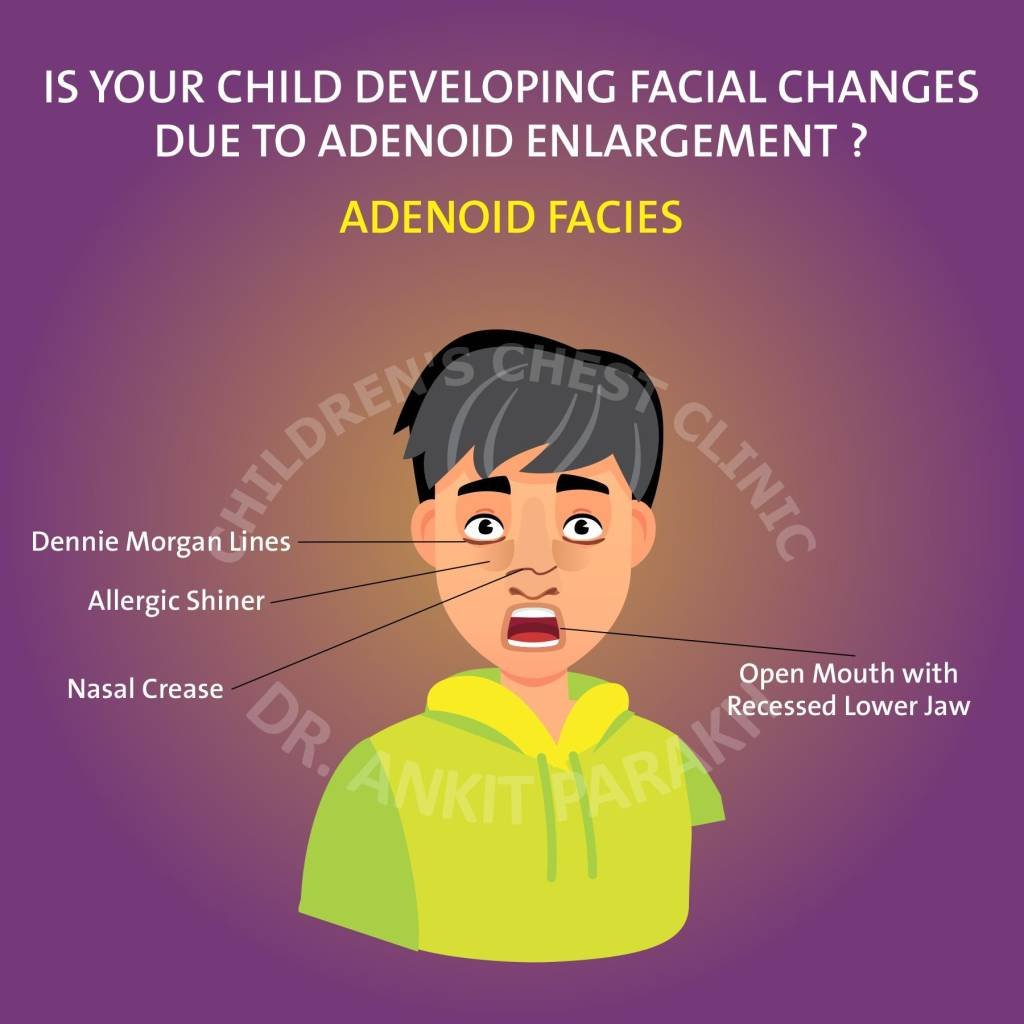
What are adenoid facies?
The characteristic facial appearance which develops due to prolonged and untreated adenoid enlargement is described as adenoid facies. The changes which develop in adenoid facies are persistent mouth opening, long facies, underdeveloped thin nostrils, short upper lip, prominent upper teeth with crowding, dental malocclusion, high-arched palate and small maxilla bone.

What are the other problems if adenoids are not treated?
Persistent and untreated enlargement of the adenoids can lead to many problems. Enlarged adenoids can lead to blockage of the eustachian tube (tube which connects ears to nose & helps drain fluid from the middle ear). Blockage of the eustachian tube leads to build-up of fluid in the ear leading to ear infections and hearing loss. This condition is described as “glue ear” or serous otitis media. Enlarged adenoids can obstruct the breathing passage during sleep leading to snoring, difficulty in breathing, mouth breathing, gasping and pauses during breathing. This condition is called obstructive sleep apnea or OSA.
Can adenoid facies be corrected?
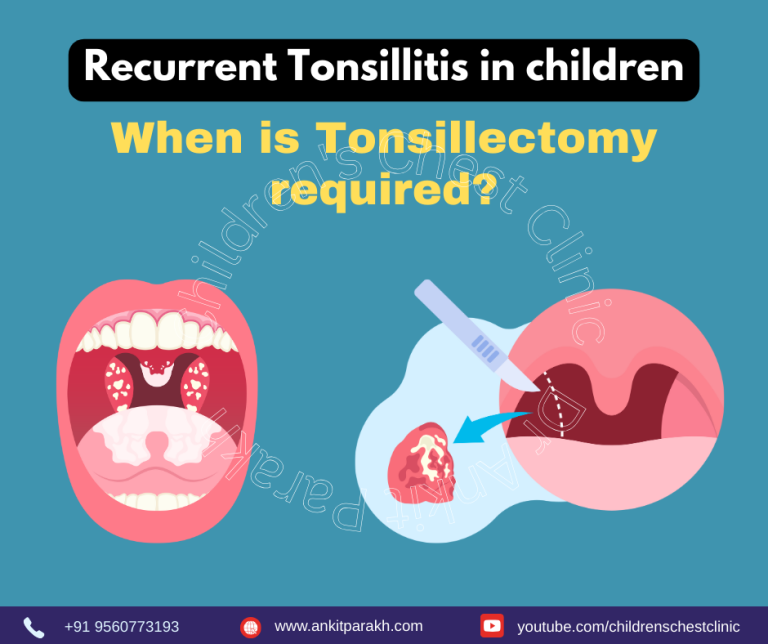
The ideal treatment for persistently enlarged and obstructing adenoids to remove them surgically is a procedure called “Adeno-tonsillectomy”. It is important to understand that the surgery should be performed early to avoid further complications. Adenoid facies occur due to anatomical changes in the facial structures because of a persistently enlarged adenoid. “Adeno-tonsillectomy” might not revert the changes of adenoid facies. In many cases by the time a child develops adenoid facies the adenoids have shrunk substantially often negating the need for surgery. Adenoid facies once established require surgical correction including effective orthodontic treatment. This needs to be dealt with by a pediatric dentist.
If your child having any symptoms suggestive of adenoid hypertrophy or developing adenoid facies you need to consult a pediatric pulmonologist for proper evaluation and management.
Related conditions & services
Medical Advice & Clinical Disclaimer
The educational medical guidance provided in this guide is for informational purposes only. It should not be used as a substitute for direct pediatric consultation, physical diagnosis, or clinical prescription. For individualized medical assessment of your child, schedule an appointment with Dr. Ankit Parakh.