On this page 8 sections
- When Do We Say That Urticaria Is Not Controlled?
- Why Is My Child’s Urticaria Not Controlled?
- Treatment Options When Urticaria Is Not Controlled
- What About Steroids?
- Does My Child Need Blood Tests?
- A Simple Checklist When Your Child’s Urticaria Is Not Controlled
- Key Take-Home Message
- Frequently Asked Questions
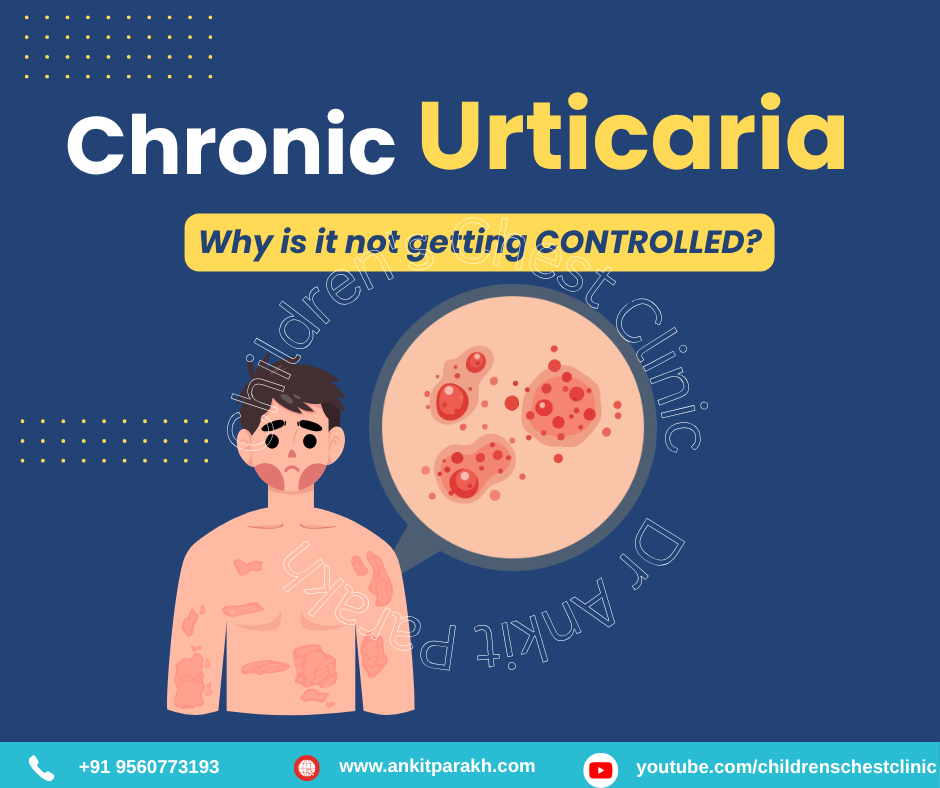
Urticaria, commonly known as hives, is characterised by itchy, raised wheals that can appear anywhere on the body. Individual hives usually disappear within 24 hours, although new hives may continue to appear elsewhere. The child is taking an antihistamine, but the itching and hives keep coming back. Some days the rash disappears, only to reappear a few hours later or the next morning. Naturally, parents begin to worry:
Why is my child’s Urticaria Not Controlled?
Is it because of a food allergy?
Does my child need more tests?
Are there other treatment options?
When Urticaria is Not Controlled, it is important to look beyond simply changing medicines. The first step is to confirm the diagnosis, identify the type of urticaria, look for relevant triggers and then follow an appropriate stepwise treatment plan.
When Do We Say That Urticaria Is Not Controlled?
Urticaria may be considered inadequately controlled when a child continues to have:
-
Frequent or daily hives
-
Significant itching
-
Sleep disturbance
-
Recurrent swelling of the lips, eyelids or other body parts
-
Symptoms affecting school, sports or daily activities
-
Recurrent symptoms despite regular treatment
It is also important to determine whether the child has:
Acute Urticaria
Symptoms lasting less than 6 weeks.
Chronic Urticaria
Symptoms recurring on most days for more than 6 weeks.
This distinction is important because the causes, investigations and treatment approach may differ.
Why Is My Child’s Urticaria Not Controlled?
There are several possible reasons.
1. Is It Really Urticaria?
The first step is to confirm the diagnosis.
Typical urticaria lesions:
-
Are raised
-
Are usually itchy
-
Can change shape and location
-
Usually disappear within 24 hours at one location
If a rash remains fixed in the same place for more than 24 hours, is painful rather than itchy, leaves bruising or pigmentation, or is associated with other unusual symptoms, other conditions may need to be considered.
These can include:
-
Urticarial vasculitis
-
Viral or other skin rashes
-
Insect bite reactions
-
Eczema or contact dermatitis
-
Other inflammatory or autoinflammatory disorders
2. Is There an Ongoing Trigger?
Some children have inducible urticaria, where hives occur in response to a specific physical trigger.
Common triggers include:
-
Cold exposure
-
Heat
-
Pressure
-
Exercise
-
Sweating
-
Emotional stress
-
Scratching of the skin (dermographism)
-
Vibration
-
Sunlight in rare cases
For example, a child with Cold Urticaria may continue to have symptoms despite treatment if they are repeatedly exposed to cold water or cold temperatures. Keeping a simple symptom diary can sometimes help identify a pattern.
3. Is a Viral Infection Triggering the Hives?
In Children, viral infections are a common cause of acute urticaria.
A child may develop hives during or shortly after:
-
A common cold
-
Fever
-
Viral throat infection
-
Gastrointestinal infection
The hives may continue for several days even after the child otherwise appears well. However, repeated or chronic Urticaria should not automatically be attributed to an infection without considering other possibilities.
4. Is a Medication Causing or Worsening the Urticaria?
Some medicines can trigger or worsen urticaria in susceptible individuals.
Examples may include:
-
Certain antibiotics
-
Non-steroidal anti-inflammatory drugs such as ibuprofen
-
Other medicines, depending on the individual history
However, it is important not to label a child as “allergic” to a medicine without an appropriate clinical assessment. Sometimes the infection for which the antibiotic was prescribed—not the antibiotic itself—may have been responsible for the hives.
5. Is Food Allergy Really the Cause?
This is one of the most common concerns among parents.
In acute Urticaria, food allergy may occasionally be responsible.
However, in chronic spontaneous urticaria, an underlying food allergy is much less commonly the cause. If the hives occur repeatedly for weeks or months without a clear and reproducible relationship with a particular food, broad food allergy testing may lead to unnecessary dietary restrictions.
A food allergy is more likely when:
-
Hives occur soon after eating a specific food
-
The same food repeatedly causes similar symptoms
-
Other allergic symptoms occur, such as vomiting, wheezing or swelling
-
There is a clear and consistent history
Therefore, allergy testing should be guided by the child’s clinical history rather than performed as a broad screening test.
6. Is Antihistamine Being Taken Regularly?
Some children receive an antihistamine only after the hives become severe.
In chronic Urticaria, regular use of a prescribed second-generation, non-sedating antihistamine is generally more effective than repeatedly treating symptoms after they have already become troublesome.
Commonly used medicines may include:
-
Cetirizine
-
Levocetirizine
-
Fexofenadine
-
Loratadine
-
Desloratadine
The choice of medicine and dose should be determined by the child’s age, symptoms and treating physician.
7. Does the Treatment Need to Be Stepped Up?
If standard-dose treatment does not adequately control symptoms, the next step is not simply to keep changing antihistamines randomly.
International urticaria guidelines recommend a stepwise approach, beginning with a modern second-generation H1-antihistamine. In patients whose symptoms remain uncontrolled, the treating specialist may consider increasing the dose of a second-generation antihistamine, within guideline-based recommendations and with appropriate attention to the child’s age and local prescribing approvals.
Parents should not independently increase the dose of an antihistamine without medical advice.
Treatment Options When Urticaria Is Not Controlled
Step 1: A Second-Generation Antihistamine
A modern, non-sedating second-generation H1-antihistamine is usually the first-line treatment.
The goals are to:
-
Reduce itching
-
Prevent new hives
-
Improve sleep
-
Allow normal school and daily activities
Unlike older sedating antihistamines, newer medicines are generally preferred for regular management because they have fewer effects on alertness and daytime functioning.
Step 2: Optimise the Antihistamine Treatment
If the child’s Urticaria is Not Controlled despite standard treatment, the doctor may review:
-
Whether the diagnosis is correct
-
Whether medication is being taken regularly
-
Whether there are identifiable triggers
-
Whether the dose needs adjustment
-
Whether a guideline-supported step-up approach is appropriate
In chronic urticaria, specialist-supervised up-dosing of second-generation antihistamines may be considered in selected patients. The approach in Children should be individualised, particularly in younger age groups.
Step 3: Consider Specialist Treatment for Chronic Urticaria
For children with chronic spontaneous urticaria that remains uncontrolled despite optimised antihistamine treatment, referral to a pediatric allergist, dermatologist or another clinician experienced in urticaria may be appropriate.
Additional treatment options may include omalizumab, depending on:
-
The child’s age
-
The type of urticaria
-
Severity of symptoms
-
Previous treatment response
-
Local regulatory approval and prescribing guidance
Omalizumab is a biologic treatment that can be highly effective in appropriately selected patients with chronic spontaneous urticaria.
Step 4: Other Specialist-Directed Treatments
In difficult cases, other treatments may occasionally be considered by specialists.
These may include:
-
Alternative biologic therapies where appropriate
-
Immunomodulatory treatment such as cyclosporine in carefully selected refractory cases
-
Investigation and treatment of an associated condition when clinically indicated
These treatments are not first-line therapies and should be managed by clinicians experienced in treating difficult or refractory urticaria.
What About Steroids?
Short courses of oral corticosteroids may occasionally be used for a severe flare, but they are generally not a long-term solution for chronic urticaria. Repeated or prolonged steroid use can cause significant adverse effects in children. Therefore, if your child repeatedly needs steroids because the hives return as soon as treatment is stopped, it is important to reassess the diagnosis and develop a longer-term management strategy.
Does My Child Need Blood Tests?
Not always. The investigations required depend on the history and examination. A child with typical chronic spontaneous urticaria and no unusual symptoms may require only limited investigations.
Additional tests may be considered when there are clues suggesting:
-
Thyroid disease
-
Autoimmune disease
-
Infection
-
An inflammatory condition
-
Another diagnosis
More tests are not necessarily better. A focused evaluation is usually more useful than a large panel of unrelated investigations.
A Simple Checklist When Your Child’s Urticaria Is Not Controlled
Ask your doctor:
1. Is this definitely Urticaria?
Could another skin condition be mimicking hives?
2. Is it acute or chronic?
Has it continued for more than 6 weeks?
3. Is there a physical trigger?
Could cold, heat, pressure, exercise or sweating be involved?
4. Is food or medicine really responsible?
Is there a clear and reproducible relationship?
5. Is the treatment optimised?
Is the child receiving the appropriate medicine, dose and treatment strategy?
6. Does my child need specialist treatment?
Should a pediatric allergist be involved?
Key Take-Home Message
If your child’s Urticaria is Not Controlled, don’t simply keep changing foods, restricting the diet or switching from one medicine to another without a clear plan.
The key steps are to:
-
Confirm that the rash is truly Urticaria
-
Determine whether it is acute or chronic
-
Identify inducible triggers
-
Avoid unnecessary food restrictions
-
Use an appropriate second-generation antihistamine treatment plan
-
Optimise treatment when symptoms persist
-
Consider specialist therapies such as omalizumab in appropriately selected cases
With a systematic approach, most children with urticaria can achieve significantly better symptom control and quality of life.
Frequently Asked Questions
1. Why is my child’s Urticaria Not Controlled despite taking antihistamines?
Possible reasons include an incorrect diagnosis, an ongoing physical trigger, inconsistent medication use, an inadequate treatment strategy or chronic urticaria requiring step-up treatment. Your child’s doctor can review these factors and decide whether the treatment needs to be optimised.
2. Does persistent Urticaria mean my child has a food allergy?
Not necessarily. While food allergy can cause acute hives, it is an uncommon cause of chronic spontaneous urticaria. Testing should be guided by a clear clinical history rather than broad food allergy screening.
3. Can the antihistamine dose be increased if Urticaria is Not Controlled?
In some cases, doctors may use a guideline-based step-up approach involving higher doses of second-generation antihistamines. However, this should only be done under medical supervision, especially in children.
4. What is omalizumab, and when is it used for Urticaria?
Omalizumab is a biologic treatment that may be considered for appropriately selected patients with chronic spontaneous urticaria that remains uncontrolled despite optimised antihistamine treatment. Its use depends on the child’s age and local prescribing approvals.
5. Should my child take steroids for chronic Urticaria?
Steroids may occasionally be used for a short period during a severe flare, but repeated or long-term steroid treatment is generally not recommended because of potential adverse effects. A child needing frequent steroids should have the diagnosis and long-term treatment plan reassessed.
Related conditions & services
Medical Advice & Clinical Disclaimer
The educational medical guidance provided in this guide is for informational purposes only. It should not be used as a substitute for direct pediatric consultation, physical diagnosis, or clinical prescription. For individualized medical assessment of your child, schedule an appointment with Dr. Ankit Parakh.