On this page 4 sections
Restless legs syndrome is an increasingly recognized problem in children, which was previously recognized only in adults. The diagnosis of restless legs syndrome in children has been challenging due to vague symptoms that are poorly described by children and unawareness of the treating physicians. Untreated restless legs syndrome can result in many problems like impaired daytime functioning, poor school performance etc.
What are the symptoms of restless legs syndrome in children?
Children with restless legs syndrome have a prominent urge to move their legs which is accompanied by uncomfortable and unpleasant sensations in the legs. The urge to move the legs and the uncomfortable sensations are usually worse during periods of rest such as lying down and sitting. The timing of these symptoms is mostly during the evening around the bedtime or at night. These symptoms tend to get relieved (at least partially) by walking, running, rubbing, stretching, or kicking the legs.
Restless legs syndrome is more common if the sibling or the parent has similar problems. Many children with restless legs syndrome have associated periodic limb movements during sleep (also called as PLMD).

What triggers restless leg syndrome in children?
There can be many identifiable triggers of restless legs syndrome in children. Stress, anxiety, caffeine, nicotine, alcohol and certain drugs are the common triggers.
How is a diagnosis of restless legs syndrome made in children?
The diagnosis of restless legs syndrome is usually based on the symptoms although sometimes young children may not be able to describe the problem in their own words. All children with restless legs syndrome should be evaluated for anaemia and iron deficiency. A complete blood count and serum iron studies including a serum ferritin should be done.
Usually a sleep study or a polysomnography is not required for diagnosis of restless legs syndrome made in children. A sleep study or a polysomnography might be required if a diagnosis of periodic limb movements during sleep (also called as PLMD) is considered. A sleep study or a polysomnography may also be required if children have additional suspicion of underlying obstructive sleep apnea.
Furthermore, many conditions and disorders can mimic restless legs syndrome like growing pains, motor tics and leg cramps.
How do you treat restless leg syndrome in children?
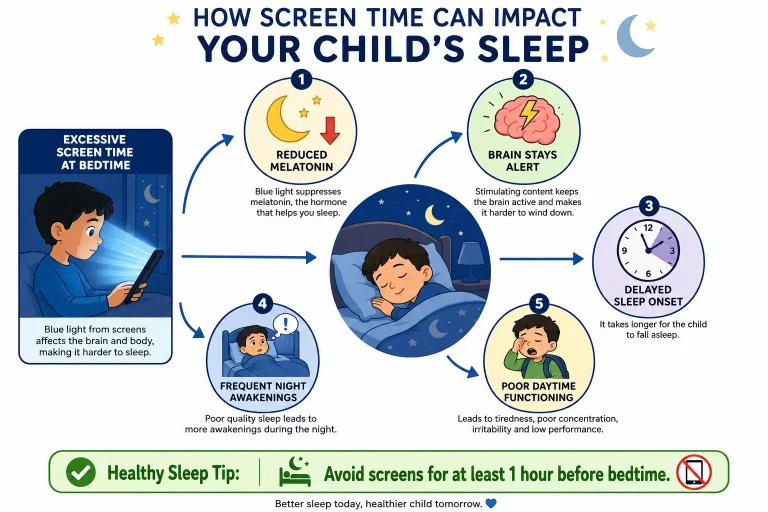
Reducing factors and conditions which are known to worsen restless legs syndrome is the first step towards treatment. Iron deficiency should be considered in children with restless legs syndrome and iron supplement should be initiated if deficiency is found. It sometimes takes a few weeks with iron supplementation to improve symptoms of restless legs syndrome. Maintaining good sleep hygiene is essential and can reduce symptoms of restless legs syndrome. A regular sleep-wake schedule, good physical activity during the daytime and limited screen time especially near bedtime are very useful. Occasionally children with restless legs syndrome require medications. Levodopa/carbidopa, dopamine agonists (eg, ropinirole, pramipexole), benzodiazepines (eg, clonazepam), and alpha-adrenergics (eg, clonidine) have been used in children with restless legs syndrome.
In case your child is having symptoms suggestive of restless legs syndrome do get in touch with a child sleep specialist for proper diagnosis and management.
Related conditions & services
Medical Advice & Clinical Disclaimer
The educational medical guidance provided in this guide is for informational purposes only. It should not be used as a substitute for direct pediatric consultation, physical diagnosis, or clinical prescription. For individualized medical assessment of your child, schedule an appointment with Dr. Ankit Parakh.