On this page 5 sections
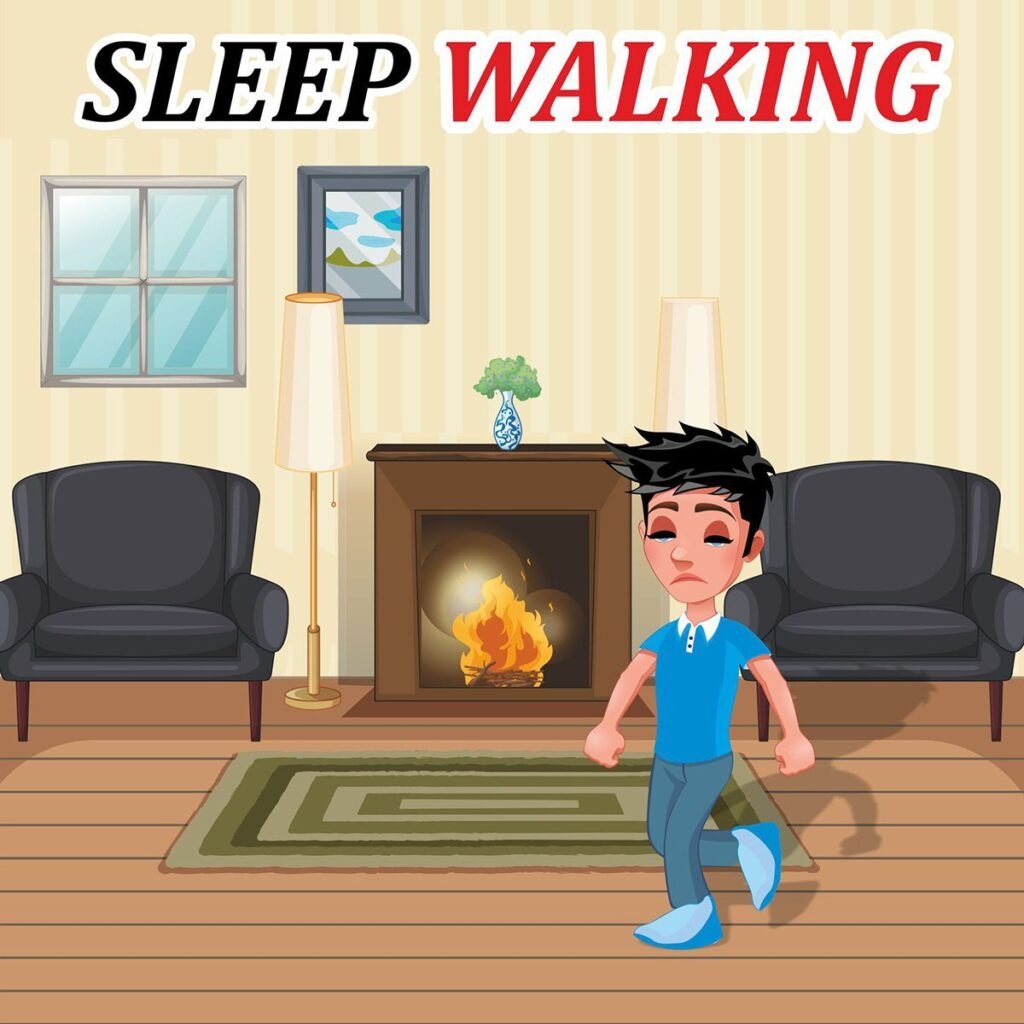
 Night walking or somnambulism, also called as Parasomnias are night-time events seen in young children which can be disturbing and frightening to parents. Other parasomnias are confusional arousals and sleep terrors.
What is night walking or somnambulism?
Night walking or somnambulism is usually seen 2-3 hours after the child goes to sleep [around midnight]. The child wakes up confused but sometimes can be agitated. The child gets out of the bed which has potential safety concerns. The sleepwalking may range from walking calmly to the parents’ bedroom, to walking downstairs, to leaving the house or stepping out onto a balcony or rooftop. Injuries can be common during sleepwalking, ranging from bruises to more serious injuries as a result of falling down stairs, heading outside, or engaging in other risky behaviors. Sleepwalking can occur infrequently or on a nightly basis.
Does my child any investigations for night walking or somnambulism?
Investigations are not required routinely in children having night walking or somnambulism. Home video taping is very helpful. Sleep study or polysomnography is required for children when there is a concern about another underlying sleep disorder (e.g., sleep apnea, periodic limb movements, etc) or there is a doubt of a seizure.
What should I do at the time of the night walking or somnambulism?
Night walking or somnambulism could be very frightening for parents. Usually the parents would try to wake-up and soothe the child. As child is totally unaware of his or her behaviour during night walking or somnambulism, so avoid awakening the child. The child should be guided back to bed. Next-day discussions should be avoided with the child.
What is the treatment for night walking or somnambulism?
Treatment is not needed in majority of children with night walking or somnambulism. Medicines might be needed in children having frequent or severe episodes, high risk of injury or violent behaviors.
Will my child grow out of night walking or somnambulism?
Most children naturally stop experiencing night walking or somnambulism in childhood. By age 8 years, 50% of children with night walking or somnambulism no longer experience episodes, and most cases resolve spontaneously following puberty. However, about 10% of children continue to experience night walking or somnambulism in adulthood.
Click here for more detail: https://www.youtube.com/watch?v=hDKZbftN7-U
Related conditions & services
Medical Advice & Clinical Disclaimer
The educational medical guidance provided in this guide is for informational purposes only. It should not be used as a substitute for direct pediatric consultation, physical diagnosis, or clinical prescription. For individualized medical assessment of your child, schedule an appointment with Dr. Ankit Parakh.