Screen Time and Sleep: How Gadgets Affect Your Child’s Rest?
Introduction: The Growing Concern About Screen Time and Sleep
In today’s digital world, Screen time has become an integral part of children’s lives. From online classes and educational apps to video games and social media, children are spending more hours in front of screens than ever before. While technology offers many benefits, excessive Screen time can have a significant impact on a child’s Sleep, physical health, emotional well-being, and academic performance.
Research has consistently shown that increased screen exposure—especially before bedtime—is associated with shorter sleep duration, poor sleep quality, delayed bedtime, and increased daytime sleepiness. As a child sleep specialist, one of the most common concerns I hear from parents is, “Why is my child finding it so difficult to fall asleep?” In many cases, the answer lies in excessive screen use.
This article explains how screen time affects children’s sleep and provides practical strategies to help families develop healthier digital habits.
Why Is Sleep So Important for Children?
Sleep is essential for every aspect of a child’s growth and development. During sleep, the brain processes new information, strengthens memory, repairs tissues, and releases growth hormone.
Healthy Sleep contributes to:
-
Better learning and memory
-
Improved concentration
-
Stronger immunity
-
Healthy emotional regulation
-
Normal growth and development
-
Better physical performance
Insufficient sleep can affect not only health but also behavior and school performance.
How Screen Time Affects Sleep
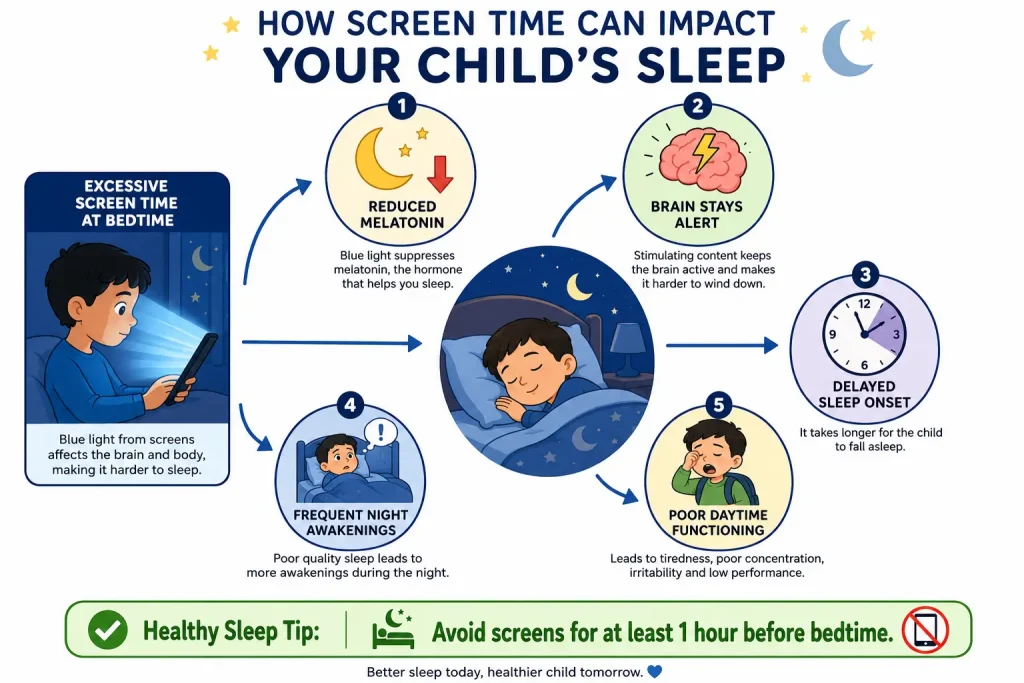
1. Blue Light Suppresses Melatonin
One of the biggest reasons Screen time affects Sleep is exposure to blue light emitted from phones, tablets, televisions, laptops, and gaming devices. Blue light suppresses the production of melatonin, the hormone that signals the brain it is time to sleep. As a result children fall asleep later, bedtime becomes inconsistent and total sleep duration decreases. Even 30–60 minutes of screen exposure before bedtime can delay sleep onset.
2. Screen Time Keeps the Brain Alert
Watching exciting videos, scrolling social media, or playing video games stimulates the brain rather than allowing it to relax. Interactive content increases mental alertness, emotional excitement and stress hormone levels. Instead of preparing the brain for sleep, screen use keeps children awake and engaged.
3. Reduced Total Sleep Time
Children who spend excessive time on digital devices often delay bedtime, wake up at the usual school time and lose valuable hours of sleep. Studies show that children with more than two hours of recreational Screen time daily are more likely to have inadequate sleep.
4. Frequent Night-time Awakenings
Notifications, messages, or checking devices during the night interrupt normal sleep cycles. Poor-quality Sleep may result in morning fatigue, difficulty waking up, poor school performance and irritability.
5. Increased Risk of Sleep Disorders
Excessive Screen time has been linked with several pediatric sleep problems, including Delayed Sleep-Wake Phase Disorder, insomnia, poor sleep quality and daytime sleepiness. Children who already have ADHD, anxiety, or autism may be even more vulnerable.
How Poor Sleep Affects Children
When children do not get enough quality Sleep, the effects extend beyond feeling tired.
Poor sleep may cause Hyperactivity, Difficult
How Much Screen Time Is Too Much?
The American Academy of Pediatrics (AAP) recommends:
- Under 18 months: Avoid screen exposure except for video calls.
- 18–24 months: Limited high-quality educational content with parental supervision.
- 2–5 years: Limit recreational screen time to about one hour per day.
- 6 years and older: Establish consistent limits that do not interfere with sleep, physical activity, schoolwork, or family time. Quality of content is just as important as the amount of screen use.
Practical Tips to Reduce Screen Time Before Bed
Create a Digital Curfew
Turn off all electronic devices at least 1–2 hours before bedtime.
Keep Screens Out of the Bedroom
Children sleep better when televisions, tablets, and smartphones are not kept in the bedroom. Consider charging devices outside the bedroom overnight.
Establish a Consistent Bedtime Routine
Replace evening Screen time with calming activities such as Reading books, Storytelling, Gentle music, Drawing, Meditation or breathing exercises. A predictable bedtime routine signals the brain that it is time to sleep.
Encourage Outdoor Play
Regular physical activity improves nighttime Sleep and naturally reduces time spent on digital devices. Aim for at least one hour of outdoor play every day.
Be a Role Model
Children imitate adults. Parents who reduce their own screen use during family time are more likely to raise children with healthy digital habits.
Signs That Screen Time Is Affecting Your Child’s Sleep
Your child may have excessive screen-related sleep problems if they:
-
Take more than 30 minutes to fall asleep
-
Need screens to fall asleep
-
Wake up tired every morning
-
Struggle to wake for school
-
Feel sleepy during the day
-
Become irritable when devices are removed
-
Snore or sleep poorly despite adequate bedtime
If these symptoms persist, a consultation with a child sleep specialist is recommended.
When Should You Seek Professional Help?
Consult a pediatric sleep specialist if your child has:
-
Persistent insomnia
-
Loud snoring
-
Excessive daytime sleepiness
-
Behavioral problems related to poor sleep
-
Difficulty reducing screen dependence
-
Sleep issues lasting more than a few weeks despite lifestyle changes
Early intervention can prevent long-term health and developmental consequences.
Conclusion
Screen time has become an unavoidable part of modern childhood, but excessive or poorly timed screen use can significantly disrupt a child’s Sleep. From delaying bedtime and reducing melatonin production to increasing daytime fatigue and affecting learning, the consequences of excessive screen exposure are substantial.
The good news is that small, consistent changes—such as establishing a screen-free bedtime routine, keeping devices out of the bedroom, and encouraging outdoor play—can dramatically improve sleep quality. Healthy sleep habits are one of the greatest gifts parents can give their children, supporting better growth, learning, emotional well-being, and overall health.
If your child continues to have sleep problems despite reducing screen time, consult a child sleep specialist.
FAQs About Screen Time and Sleep
Frequently Asked Questions
1. How does screen time affect my child's sleep?
Screen time exposes children to blue light, suppresses melatonin production, stimulates the brain, and delays sleep onset, leading to poorer sleep quality.
2. How long before bedtime should my child stop using screens?
Children should ideally stop using phones, tablets, computers, and televisions 1–2 hours before bedtime.
3. Does watching television affect sleep as much as mobile phones?
Yes. Although handheld devices are usually held closer to the eyes and may have a greater effect, all screens can interfere with sleep if used before bedtime.
4. Can poor sleep caused by screen time affect school performance?
Absolutely. Poor sleep is associated with reduced attention, memory problems, lower academic performance, mood changes, and behavioral difficulties.
5. What is the ideal amount of recreational screen time for children?
Children aged 2–5 years should have no more than about one hour of high-quality recreational screen time daily. Older children should have balanced limits that do not interfere with sleep, exercise, or family activities.
Related conditions & services
Medical Advice & Clinical Disclaimer
The educational medical guidance provided in this guide is for informational purposes only. It should not be used as a substitute for direct pediatric consultation, physical diagnosis, or clinical prescription. For individualized medical assessment of your child, schedule an appointment with Dr. Ankit Parakh.