Cold Induced Urticaria in Children: What Parents Need to Know?
Have you ever noticed your child developing itchy, red, raised rashes after touching something cold, playing in cold water, eating ice cream, or going out on a cold day?
It may be Cold Urticaria.
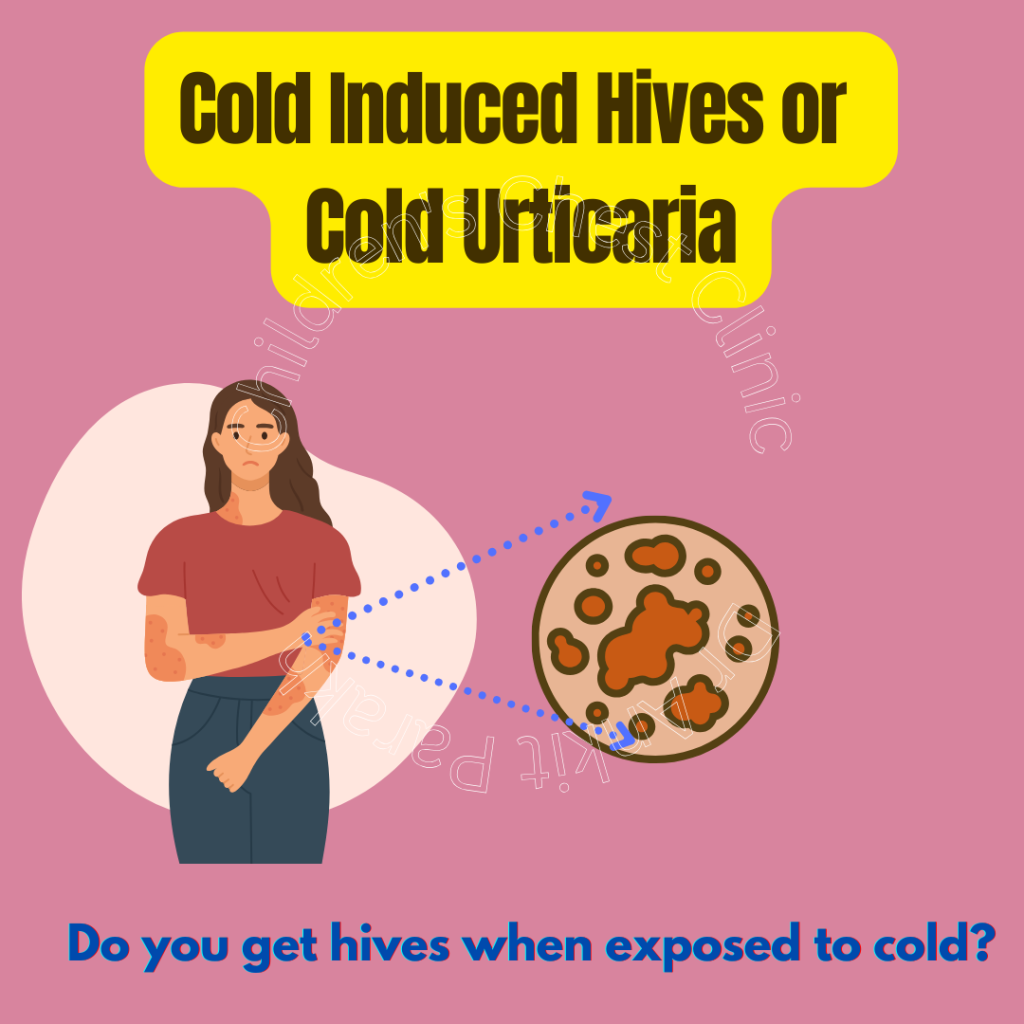
Cold Urticaria is a type of physical or inducible urticaria in which exposure to a cold stimulus triggers itching, redness, hives and sometimes swelling. In most cases, symptoms are limited to the areas exposed to cold, but extensive exposure—particularly immersion in cold water—can occasionally cause a more serious systemic reaction. For parents, understanding the triggers and taking appropriate precautions can help Children with Cold Urticaria remain active while reducing the risk of severe reactions.
What Is Cold Urticaria?
Cold Urticaria, also called cold contact urticaria, is a form of chronic inducible urticaria. The symptoms occur after exposure of the skin to cold temperatures or cold objects.
A child may develop hives after:
-
Exposure to cold weather
-
Cold wind
-
Rain
-
Cold water
-
Swimming in a cold pool, lake or sea
-
Holding cold objects
-
Touching refrigerated items
-
Eating ice cream
-
Drinking cold beverages
The rash may appear during cold exposure or, quite commonly, as the skin starts to rewarm.
What Are the Symptoms of Cold Urticaria in Children?
The typical symptoms include:
-
Itching or burning
-
Redness of the skin
-
Raised, itchy wheals or hives
-
Swelling of the exposed area
For example, a child may develop swelling of the hands after holding a cold bottle or hives on the legs after entering cold water. Some Children may also experience swelling of the lips, tongue or throat after consuming very cold foods or drinks. In most cases, the hives disappear within a relatively short period, although symptoms may recur with further cold exposure.
Why Is Swimming Important in Cold Urticaria?
This is one of the most important issues to discuss with families. Children with suspected or confirmed Cold Urticaria should discuss swimming and water activities with their doctor or allergist before participating.
Sudden immersion of a large part of the body in cold water can trigger a widespread reaction. Extensive cold exposure may occasionally lead to symptoms such as generalised hives, dizziness, weakness, breathing difficulty, a fall in blood pressure and fainting. Cold-water immersion is therefore potentially more dangerous than simply touching a cold object. The risk is particularly concerning because dizziness or loss of consciousness in water can also lead to drowning.
What Causes Cold Urticaria?
In many Children, there is no identifiable underlying cause. This is often referred to as primary acquired Cold Urticaria. Less commonly, cold-induced symptoms may occur in association with other medical conditions or unusual underlying disorders. The need for additional investigations depends on the child’s history, examination findings and the overall clinical picture. It is important to remember that not every child with Cold Urticaria requires extensive blood tests.
How Is Cold Urticaria Diagnosed?
The diagnosis is usually based on a careful clinical history.
Your doctor may ask:
-
What triggers the rash?
-
Does the rash appear after cold air or cold water?
-
Does the child react to cold foods or drinks?
-
Has the child ever developed dizziness or breathing difficulty?
-
Has there been a reaction while swimming?
-
How quickly do symptoms develop?
-
Is there a family history of similar symptoms?
Cold Provocation Testing
A cold provocation test may be used to support the diagnosis and determine the child’s sensitivity to cold exposure. International urticaria guidelines list cold provocation and threshold testing as the diagnostic approach for Cold Urticaria. These tests should be performed or supervised appropriately by a healthcare professional. Parents should not attempt extensive cold-water challenges at home, especially if a child has had a significant reaction in the past.
How Is Cold Urticaria Treated?
The treatment of Cold Urticaria has two important components:
1. Avoid or Reduce Important Cold Triggers
Children do not necessarily have to live indoors or avoid all outdoor activity.
Instead, identify and reduce significant triggers.
Useful precautions include:
-
Wearing warm clothing in cold weather
-
Using gloves when touching cold objects
-
Avoiding sudden exposure to very cold water
-
Being cautious with ice cream and very cold drinks if these trigger symptoms
-
Drying off and warming up promptly after exposure to cold and wind
-
Avoiding unsupervised swimming when there is a significant risk of a reaction
2. Antihistamines
Second-generation, non-sedating H1-antihistamines are commonly used to control urticaria symptoms. For chronic urticaria, international guidelines recommend modern second-generation H1-antihistamines as first-line treatment, with treatment adjusted by the treating clinician when symptoms remain uncontrolled.
Depending on the severity and pattern of symptoms, we may recommend:
-
Regular antihistamine treatment, or
-
Antihistamine treatment before predictable cold exposure
The choice should be individualised, especially in Children. Do not increase the dose or start regular medication without discussing the treatment plan with your child’s doctor.
Will Every Child Need an Adrenaline Auto-Injector?
No.
The need for an adrenaline auto-injector should be based on an individual’s history and risk of severe systemic reactions.
A child who has experienced symptoms such as: breathing difficulty, significant throat swelling, dizziness or fainting, low blood pressure or a severe generalised reaction, particularly during cold-water exposure may require an emergency action plan and adrenaline, as advised by their treating doctor.
What Should Parents Tell Schools and Caregivers?
If your child has significant Cold Urticaria, it is important to inform: School teachers, Sports coaches, Swimming instructors, Camp supervisors and Other caregivers. They should understand the child’s important triggers and know what to do if symptoms occur. If the child has been prescribed emergency medication, caregivers should know:
-
Where it is kept
-
When it should be used
-
How to follow the child’s written emergency action plan
When Should You Seek Emergency Medical Help?
Seek urgent medical attention if a child develops hives along with:
-
Difficulty breathing
-
Wheezing or persistent coughing
-
Throat tightness
-
Difficulty swallowing
-
Swelling of the tongue
-
Severe dizziness
-
Collapse or fainting
These symptoms may indicate a serious systemic allergic reaction and require urgent treatment.
Can Cold Urticaria Go Away?
Yes. Cold Urticaria may improve or resolve over time in some patients, although the duration is variable and it can persist for years. Long-term follow-up is therefore important, particularly in Children with frequent symptoms or significant reactions. The severity can also vary between individuals and may change over time.
Practical Tips for Parents of Children with Cold Urticaria
Remember these simple steps:
Identify
Know what cold exposures trigger your child’s symptoms.
Avoid sudden cold-water immersion
This is particularly important in children with a history of significant reactions.
Protect
Use appropriate warm clothing, gloves and other protection during cold weather.
Inform
Tell schools, coaches and caregivers.
Medicate appropriately
Use antihistamines or emergency medicines exactly as prescribed.
Plan ahead
Discuss swimming, travel to cold climates and other high-risk activities with your child’s allergist or doctor.
Key Take-Home Message
Cold Urticaria can cause itchy hives and swelling when children are exposed to cold temperatures, cold objects, cold foods or cold water. For many children, symptoms can be managed effectively by identifying triggers, avoiding sudden intense cold exposure and using antihistamines when prescribed. However, cold-water immersion deserves special attention because exposure of a large body surface area can occasionally trigger a serious systemic reaction.
If your child develops repeated hives after cold exposure, especially if there has been dizziness, breathing difficulty or a reaction while swimming, consult a pediatric allergist for assessment and an individualised management plan.
Frequently Asked Questions About Cold Urticaria in Children
Frequently Asked Questions
1. What is Cold Urticaria in Children?
Cold Urticaria is a condition in which exposure to cold triggers itching, redness, raised hives or swelling. Common triggers include cold air, cold water, cold objects and sometimes cold foods or drinks.
2. Is Cold Urticaria dangerous?
Most episodes are mild and involve localised hives. However, widespread exposure to cold, especially sudden immersion in cold water, can occasionally cause a serious systemic reaction.
3. Can a child with Cold Urticaria go swimming?
Swimming should be discussed with the child’s doctor or allergist. Cold-water immersion can trigger widespread symptoms and, in susceptible individuals, systemic reactions. The risk depends on the child’s previous reactions and cold sensitivity.
4. How is Cold Urticaria diagnosed?
Diagnosis is based on the child’s history and may be supported by medically supervised cold provocation or threshold testing.
5. Can Cold Urticaria go away on its own?
Yes. Cold Urticaria can improve or resolve over time in some children, although the duration is variable and symptoms may persist for years.
Related conditions & services
Medical Advice & Clinical Disclaimer
The educational medical guidance provided in this guide is for informational purposes only. It should not be used as a substitute for direct pediatric consultation, physical diagnosis, or clinical prescription. For individualized medical assessment of your child, schedule an appointment with Dr. Ankit Parakh.