On this page 12 sections
- What Is Severe Childhood Asthma?
- What Are Biologicals?
- When Should Biologicals Be Considered?
- Omalizumab for Severe Childhood Asthma
- Mepolizumab for Severe Childhood Asthma
- Are There Other Biologicals for Severe Childhood Asthma?
- How Do Doctors Choose the Right Biological?
- Are Biologicals a Replacement for Inhalers?
- Are Biologicals Safe in Children?
- The Importance of a Severe Asthma Assessment
- Key Take-Home Message
- Frequently Asked Questions
For most children, asthma can be controlled effectively with inhaled medications and appropriate management of triggers. However, a small group of children continue to experience frequent symptoms, repeated severe attacks, emergency visits or hospital admissions despite intensive treatment. This is where Biologicals may play an important role.
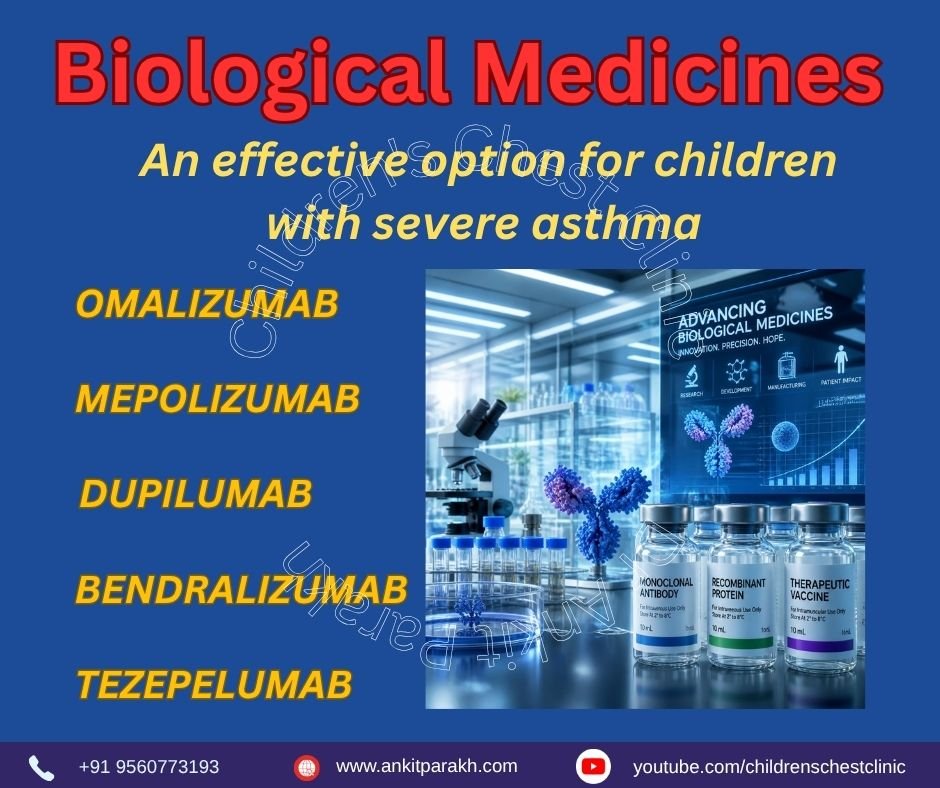
Biological therapies have transformed the management of selected children with Severe Childhood Asthma. Instead of broadly treating airway inflammation, these medicines target specific pathways involved in the child’s asthma. Two of the most important biological treatments used in pediatric severe asthma are Omalizumab and Mepolizumab.
However, biologicals are not suitable for every child with poorly controlled asthma. Before considering these treatments, it is essential to confirm that the child truly has severe asthma and to optimise standard asthma care. Current GINA guidance recommends careful assessment of diagnosis, inhaler technique, adherence, comorbidities and modifiable risk factors before labelling asthma as severe.
What Is Severe Childhood Asthma?
Severe Childhood Asthma does not simply mean that a child has severe symptoms on a particular day. A child may have severe asthma when asthma remains uncontrolled despite appropriate treatment with high-intensity therapy, or when high-level treatment is required to prevent asthma from becoming uncontrolled.
These children may experience:
- Frequent Asthma Attacks
- Repeated courses of oral steroids
- Emergency department visits
- Asthma hospitalisations
- Night-time symptoms
- Reduced school attendance
- Exercise limitation
- Significant impact on family life
However, many children with apparently “severe” asthma actually have difficult-to-treat asthma due to factors such as incorrect inhaler technique, poor adherence, incorrect diagnosis, ongoing allergen exposure or untreated comorbidities. This distinction is extremely important because Biologicals should usually be considered only after these issues have been addressed. (Global Initiative for Asthma – GINA)
What Are Biologicals?
Biologicals are targeted medicines, usually monoclonal antibodies, designed to block specific molecules or immune pathways involved in asthma. Many children with severe asthma have Type 2 inflammation, involving pathways related to:
- IgE-mediated allergy
- Eosinophils
- Interleukin-5
- Interleukin-4 and Interleukin-13
- Other inflammatory pathways
By identifying the child’s asthma phenotype and biomarkers, doctors can select a biological that is most likely to help.
The choice may depend on:
- Allergic sensitisation
- Total IgE level
- Blood eosinophil count
- Number of severe exacerbations
- Previous oral steroid use
- Other allergic diseases
- Age
- Local regulatory approval and availability
When Should Biologicals Be Considered?
A child should not be started on a biological simply because asthma is “not controlled.”
Before considering Biologicals, the treating team should review:
1. Is the diagnosis definitely asthma?
Conditions such as airway abnormalities, chronic infection, aspiration, dysfunctional breathing and other respiratory disorders can sometimes mimic or complicate asthma.
2. Is inhaler technique correct?
Even the best medicine will not work if it is not reaching the lungs properly.
3. Is the child taking medication regularly?
Poor adherence is a common cause of apparently difficult asthma.
4. Are triggers and comorbidities being addressed?
Important factors may include:
- Allergic rhinitis
- Exposure to tobacco smoke
- Air pollution
- Obesity
- Environmental allergens
- Sleep problems
- Gastroesophageal reflux in selected cases
Only after a systematic review should a child be considered for treatment escalation with a biological.
Omalizumab for Severe Childhood Asthma
What Is Omalizumab?
Omalizumab is an anti-IgE monoclonal antibody. IgE plays an important role in allergic asthma. When a sensitised child is exposed to an allergen, IgE-related immune pathways can contribute to airway inflammation and asthma symptoms. Omalizumab binds to free IgE and reduces its ability to activate allergic inflammatory pathways. (Global Initiative for Asthma – GINA)
Which Children May Benefit from Omalizumab?
Omalizumab is generally considered as an add-on option for severe allergic asthma in children aged 6 years and above who have evidence of IgE-mediated sensitisation and persistent severe exacerbations despite optimised standard treatment.
Eligibility commonly includes consideration of:
- Age
- Severe asthma despite appropriate controller therapy
- Evidence of sensitisation to relevant inhaled allergens
- Total serum IgE and body weight within the applicable dosing range
- A significant history of exacerbations
How Is Omalizumab Given?
Omalizumab is given as a subcutaneous injection.
The dose and dosing interval are based on factors including:
- Body weight
- Total serum IgE
Depending on the regimen, it may be given every 2 to 4 weeks. (Global Initiative for Asthma – GINA)
What Are the Benefits of Omalizumab?
In appropriately selected patients, Omalizumab can:
- Reduce severe asthma exacerbations
- Improve asthma-related quality of life
- Reduce the burden of uncontrolled allergic asthma
- Potentially reduce the need for repeated oral corticosteroids
Mepolizumab for Severe Childhood Asthma
What Is Mepolizumab?
Mepolizumab is a monoclonal antibody that targets interleukin-5, commonly known as IL-5. IL-5 plays an important role in the development and survival of eosinophils. Eosinophils are a type of inflammatory cell involved in many children with severe Type 2 asthma. By blocking IL-5, Mepolizumab reduces eosinophilic inflammation.
Which Children May Benefit from Mepolizumab?
Mepolizumab may be considered for children above age of 6 years with:
- Severe eosinophilic asthma
- Persistent exacerbations despite optimised treatment
- Elevated blood eosinophils, according to applicable eligibility criteria
How Is Mepolizumab Given?
Mepolizumab is administered by subcutaneous injection, usually every 4 weeks.
Current GINA guidance lists:
- Children aged 6–11 years: 40 mg every 4 weeks
- Patients aged 12 years and above: 100 mg every 4 weeks
What Are the Benefits of Mepolizumab?
For appropriately selected children with severe eosinophilic asthma, Mepolizumab can:
- Reduce severe exacerbations
- Improve asthma control
- Reduce eosinophilic inflammation
- Help reduce the need for repeated systemic corticosteroids in appropriate patients
Are There Other Biologicals for Severe Childhood Asthma?
Yes. Depending on the child’s age, asthma phenotype and local approvals, other biological therapies may be available.
Examples include therapies targeting:
- IL-4 receptor alpha, such as dupilumab
- IL-5 receptor pathways, such as benralizumab
- Other inflammatory pathways in older age groups
The rapidly evolving field of asthma biologics means that treatment availability and approved age groups may change over time.
How Do Doctors Choose the Right Biological?
Choosing a biological involves a process known as phenotyping.
The doctor may evaluate:
Clinical history
- Frequency of Asthma Attacks
- Previous hospital admissions
- Oral steroid requirement
- Response to previous treatments
Allergy testing
This may include:
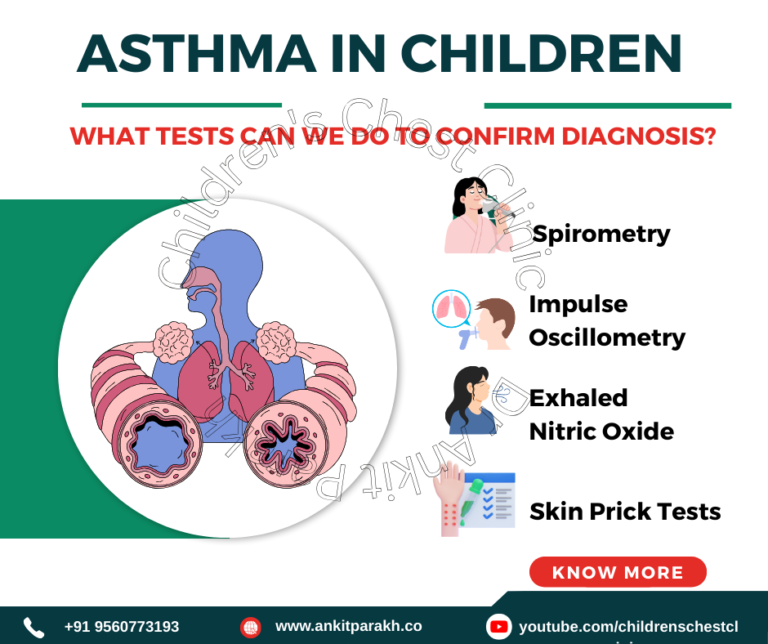
- Skin prick testing
- Specific IgE testing
Blood tests
A blood eosinophil count may help identify eosinophilic inflammation.
Total IgE
This may be relevant when considering Omalizumab.
FeNO or Exhaled Nitric Oxide levels
Fractional exhaled nitric oxide (FeNO) levels measure the amount of nitric oxide gas in your breath, which helps doctors detect inflammation in your airways.
Other conditions
Some biologicals may also benefit children with associated allergic diseases.
The goal is to choose the treatment most likely to target the underlying inflammatory pathway driving the child’s asthma.
Are Biologicals a Replacement for Inhalers?
No.
This is an important point.
Biologicals are add-on treatments for appropriately selected children with severe asthma.
They do not automatically replace:
- Inhaled corticosteroids
- Other prescribed controller medications
- Reliever medication
- Trigger management
- Regular asthma follow-up
Any reduction in standard asthma medication should be supervised by the treating doctor. A biological is one part of a comprehensive severe asthma management plan.
Are Biologicals Safe in Children?
Biological therapies are generally well tolerated, but no medication is completely free of adverse effects.
Possible side effects can include:
- Injection-site reactions
- Headache
- Mild systemic symptoms
Rare but important reactions can occur, including hypersensitivity or anaphylaxis with some biologics. Appropriate precautions and monitoring should therefore be followed.
The Importance of a Severe Asthma Assessment
Before starting Biologicals, children with suspected Severe Childhood Asthma should ideally undergo a structured assessment.
This may include:
- Confirming the asthma diagnosis
- Reviewing inhaler technique
- Assessing medication adherence
- Checking environmental exposures
- Evaluating allergy and eosinophilic markers
- Identifying comorbidities
- Assessing lung function where appropriate
- Reviewing previous exacerbations and hospitalisations
This approach helps ensure that the child receives the right treatment for the right type of asthma.
Key Take-Home Message
Severe Childhood Asthma can have a major impact on a child’s health, education, physical activity and quality of life.
Fortunately, the treatment landscape has changed significantly.
Biologicals, including Omalizumab for severe allergic asthma and Mepolizumab for severe eosinophilic asthma, offer targeted treatment options for appropriately selected children. Both are used as add-on therapy and should be considered only after careful evaluation and optimisation of standard asthma treatment.
The most important step is not simply asking:
“Which biological should my child receive?”
Instead, the right question is:
“What type of severe asthma does my child have, and which treatment is most likely to help?”
With careful phenotyping and specialist management, many children with severe asthma can experience fewer exacerbations, fewer hospital visits and a better quality of life.
Frequently Asked Questions
1. What is Severe Childhood Asthma?
Severe Childhood Asthma refers to asthma that remains uncontrolled despite appropriate high-intensity treatment, or requires high-level treatment to prevent it from becoming uncontrolled. Before diagnosing severe asthma, doctors should review adherence, inhaler technique, triggers, comorbidities and whether the diagnosis is correct.
2. What are Biologicals for asthma?
Biologicals are targeted medicines that block specific immune pathways involved in asthma. Examples include Omalizumab, which targets IgE, and Mepolizumab, which targets IL-5 and eosinophilic inflammation.
3. What is the difference between Omalizumab and Mepolizumab?
Omalizumab is primarily used for appropriately selected patients with severe allergic asthma and targets IgE. Mepolizumab targets IL-5 and is used for appropriately selected patients with severe eosinophilic asthma. The choice depends on the child’s asthma phenotype, biomarkers and clinical history.
4. At what age can children receive Omalizumab or Mepolizumab?
In major regulatory regions, Omalizumab and Mepolizumab are available for appropriately selected children from 6 years of age for relevant severe asthma phenotypes. Exact eligibility, dosing and access depend on local regulatory approvals and prescribing criteria.
5. Do Biologicals cure Severe Childhood Asthma?
No. Biologicals do not cure asthma. They are add-on treatments that can reduce exacerbations and improve control in appropriately selected children. Children should continue their prescribed asthma management plan unless their treating specialist advises otherwise.
Related conditions & services
Medical Advice & Clinical Disclaimer
The educational medical guidance provided in this guide is for informational purposes only. It should not be used as a substitute for direct pediatric consultation, physical diagnosis, or clinical prescription. For individualized medical assessment of your child, schedule an appointment with Dr. Ankit Parakh.