On this page 15 sections
- What Is Cynodon or Dhoob Grass?
- What Is Dhoob Grass Allergy?
- Symptoms of Cynodon Grass Allergy in Children
- Can Dhoob Grass Allergy Cause Asthma?
- When Should You Suspect Dhoob Grass Allergy?
- How Is Cynodon Grass Allergy Diagnosed?
- Can a Child Be Allergic to More Than One Grass?
- How Can Parents Reduce Cynodon Pollen Exposure?
- Practical Tips
- How Is Allergic Rhinitis Treated?
- What About Asthma Treatment?
- Can Allergy Immunotherapy Help?
- Why Should Parents Not Ignore Grass Allergy?
- Key Take-Home Message
- Frequently Asked Questions About Cynodon or Dhoob Grass Allergy in Children
Does your child develop repeated sneezing, a blocked or runny nose, itchy eyes, coughing or wheezing when playing outdoors, walking on grass or during certain months of the year?
One possible cause is Cynodon grass allergy, commonly known as Dhoob grass allergy or Bermuda grass pollen allergy.
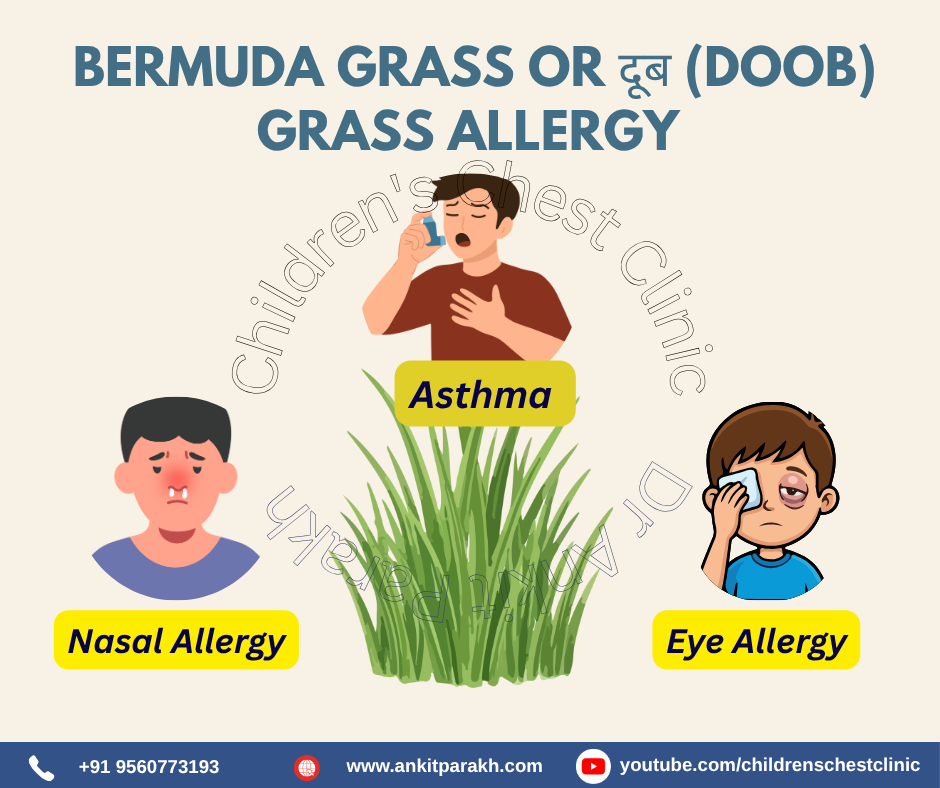
Cynodon dactylon is a common grass found in lawns, parks, gardens, roadsides and open spaces. Its pollen can become airborne and trigger allergic symptoms in sensitised children. Grass pollen is an important cause of seasonal Allergic Rhinitis, and pollen exposure can also worsen Asthma symptoms in susceptible children. In this blog article we shall discuss about cynodon allergy in children, its symptoms, how we diagnose and treatment options.
What Is Cynodon or Dhoob Grass?
Cynodon dactylon, commonly called:
- Dhoob grass
- Doob grass
- Bermuda grass
- Durva grass
is a grass species commonly found in India and many other parts of the world. Cynodon is commonly found in the Northern Part of India. It is frequently used in lawns and is also found growing naturally in gardens, parks, playgrounds, fields and open areas. The major concern is the pollen released by the grass, which can become airborne and enter the nose and eyes or be inhaled into the lower airways.
What Is Dhoob Grass Allergy?
Dhoob grass allergy occurs when a child’s immune system becomes sensitised to proteins present in grass pollen. When the sensitised child inhales the pollen, the immune system may release inflammatory mediators such as histamine.
This can result in:
- Sneezing
- Runny nose
- Nasal blockage
- Itchy nose
- Itchy or watery eyes
- Throat irritation
- Cough
- Wheezing
- Breathing difficulty in children with asthma
Grass pollen is a recognised seasonal trigger of Allergic Rhinitis, and pollen exposure can also aggravate Asthma.
Symptoms of Cynodon Grass Allergy in Children
The symptoms can vary from child to child.
Nose Symptoms
A child may develop:
- Repeated sneezing
- Clear watery nasal discharge
- Blocked nose
- Itchy nose
- Postnasal drip
- Mouth breathing
These are typical features of Allergic Rhinitis.
Eye Symptoms
Grass pollen can also cause allergic conjunctivitis, leading to:
- Itchy eyes
- Red eyes
- Watery eyes
- Swelling around the eyes
Children may repeatedly rub their eyes because of the intense itching.
Throat Symptoms
Some children experience:
- Itchy throat
- Throat clearing
- Dry cough
- Sensation of mucus in the throat
Can Dhoob Grass Allergy Cause Asthma?
Yes.
This is particularly important for parents of children who already have Asthma.
Grass pollen can trigger or worsen asthma symptoms in sensitised children.
A child may develop:
- Coughing
- Wheezing
- Chest tightness
- Shortness of breath
- Reduced exercise tolerance
Pollen exposure is a recognised trigger for asthma flare-ups, and children with asthma may experience worsening symptoms during periods of increased pollen exposure. For some children, the first clue to pollen allergy may actually be recurrent cough or wheezing during outdoor activities.
When Should You Suspect Dhoob Grass Allergy?
Parents should consider grass pollen allergy if symptoms:
- Occur mainly outdoors
- Increase when the child plays on lawns or grass
- Become worse during particular seasons
- Occur after mowing or being near freshly cut grass
- Improve when the child moves away from the exposure
- Are associated with itchy eyes and repeated sneezing
- Are accompanied by cough or wheezing
Keeping a simple symptom diary can be extremely useful.
Record:
- Date
- Weather
- Outdoor exposure
- Playing on grass
- Symptoms
- Asthma symptoms
- Medicines used
A clear seasonal or exposure-related pattern can help your child’s doctor decide whether pollen allergy is likely.
How Is Cynodon Grass Allergy Diagnosed?
Diagnosis involves combining the child’s symptoms with evidence of sensitisation.
1. Detailed Clinical History
Your doctor may ask:
- When do symptoms occur?
- Are they seasonal?
- Does the child play outdoors?
- Does exposure to grass trigger symptoms?
- Are there symptoms of Allergic Rhinitis?
- Does the child have Asthma?
- Are symptoms worse after lawn mowing?
- Are other pollen or environmental allergens likely to be involved?
A positive allergy test alone does not necessarily mean that an allergen is responsible for symptoms. The test result needs to match the child’s clinical history.
2. Skin Prick Testing
A skin prick test can be used to assess sensitisation to relevant aeroallergens. A grass pollen panel may be considered depending on the child’s history and local pollen exposure. Importantly, Bermuda/Cynodon grass can have different allergenic characteristics from several commonly tested northern pasture grasses. Therefore, when Cynodon exposure is clinically relevant, it may need to be included specifically in allergy testing rather than assuming that a negative test to another grass represents absence of Cynodon sensitisation.
3. Specific IgE Blood Testing
Blood testing for allergen-specific IgE can also be used when appropriate. Again, test results should always be interpreted together with the clinical history.
Can a Child Be Allergic to More Than One Grass?
Yes.
Grass pollens can share some allergens, and cross-reactivity can occur. However, cross-reactivity is not complete between all grass species. This is particularly relevant when interpreting allergy tests for a child who appears to react specifically to Dhoob/Bermuda grass.
A child may also be sensitised to several other outdoor allergens, such as:
- Other grasses
- Trees
- Weeds
- Moulds
Therefore, testing should be guided by the child’s environment and symptoms rather than relying on a very broad, indiscriminate allergy panel.
How Can Parents Reduce Cynodon Pollen Exposure?
It is not always practical—or necessary—to remove every blade of grass from a child’s environment. Instead, focus on reducing significant exposure during periods when symptoms are most troublesome.
Practical Tips
1. Avoid prolonged outdoor activity when pollen exposure is high
If your child has a predictable seasonal pattern, discuss strategies for high-pollen periods with your doctor.
2. Avoid playing directly on grass during symptom periods
Children who develop symptoms after playing on lawns may benefit from alternative play areas.
3. Be cautious around lawn mowing
Mowing can disturb grass and increase exposure to airborne particles and pollen.
A child with significant pollen-triggered symptoms should ideally stay away from the area while grass is being cut.
4. Change clothes after outdoor activities
Changing clothes after prolonged outdoor exposure may reduce continued contact with pollen brought indoors.
5. Wash the face and hands
This can help remove pollen from exposed skin.
6. Consider showering after significant outdoor exposure
A shower and hair wash can reduce pollen carried on the hair and skin.
How Is Allergic Rhinitis Treated?
Treatment depends on the severity and frequency of symptoms.
Options may include:
- Non-sedating antihistamines
- Intranasal corticosteroids
- Saline nasal irrigation
- Other nasal treatments when appropriate
- Allergen avoidance strategies
For children with persistent or moderate-to-severe symptoms, an intranasal corticosteroid is often an important part of treatment.
Treatment should be individualised according to the child’s age and symptoms.
What About Asthma Treatment?
If the child has Asthma, pollen avoidance alone is not enough.
Asthma should be managed according to an appropriate asthma treatment plan.
This may include:
- Controller inhalers
- Reliever treatment when indicated
- Correct inhaler technique
- Spacer use when appropriate
- Trigger management
- Regular asthma reviews
A child who repeatedly develops cough or wheezing during the grass pollen season should have their asthma control reviewed.
Pollen can aggravate asthma symptoms, particularly in sensitised children.
Can Allergy Immunotherapy Help?
In selected children, yes.
For children with clinically important pollen allergy and persistent symptoms despite appropriate conventional treatment, allergen immunotherapy may be considered.
Immunotherapy aims to gradually modify the immune response to the relevant allergen.
It may be given as:
- Subcutaneous allergen immunotherapy (allergy shots)
- Sublingual immunotherapy in selected circumstances
However, the choice of allergen preparation is important. Immunotherapy should be considered only after confirming clinically relevant sensitisation and should be prescribed and supervised by an appropriately trained allergy specialist. Grass-pollen immunotherapy is an established treatment approach for selected patients with significant seasonal pollen allergy.
Why Should Parents Not Ignore Grass Allergy?
What appears to be “just sneezing” may actually represent significant allergic airway disease. Untreated or poorly controlled Allergic Rhinitis can affect: Sleep, School performance, Concentration, Exercise and Quality of life And in a child with Asthma, pollen exposure can contribute to worsening cough, wheezing and asthma exacerbations.
Therefore, recurrent seasonal symptoms deserve proper evaluation.
Key Take-Home Message
Cynodon or Dhoob grass allergy is an important cause of pollen-related allergy in children.
It can present with:
- Sneezing
- Runny or blocked nose
- Itchy eyes
- Allergic Rhinitis
- Cough
- Wheezing
- Worsening Asthma
If your child repeatedly develops symptoms during outdoor exposure or around grass, consider discussing grass pollen allergy testing with a pediatric allergist.
The goal is not simply to keep the child away from grass. The goal is to identify the relevant allergen, control Allergic Rhinitis and Asthma effectively, reduce unnecessary exposure and consider allergen immunotherapy when appropriate. With the right diagnosis and treatment, children with grass pollen allergy can continue to enjoy school, outdoor activities and an active childhood.
Frequently Asked Questions About Cynodon or Dhoob Grass Allergy in Children
1. What is Cynodon or Dhoob grass allergy?
Cynodon dactylon, commonly called Dhoob or Bermuda grass, can produce pollen that triggers allergic symptoms in sensitised children. It may cause sneezing, runny nose, nasal blockage, itchy eyes, cough and worsening Asthma.
2. Can Dhoob grass allergy cause Asthma in children?
Grass pollen can trigger or worsen Asthma in children who are sensitised to the pollen. Symptoms may include coughing, wheezing, chest tightness and breathlessness, particularly during periods of high exposure.
3. How do I know if my child’s Allergic Rhinitis is due to Dhoob grass?
A clear relationship between symptoms and outdoor/grass exposure can raise suspicion. Skin prick testing or allergen-specific IgE testing can demonstrate sensitisation, but the results must be interpreted together with the child’s symptoms and exposure history.
4. Should my child avoid playing on grass completely?
Not necessarily. The objective is to reduce significant pollen exposure rather than unnecessarily restrict normal childhood activities. During periods when symptoms are severe, reducing direct grass exposure and avoiding areas during or immediately after mowing may be helpful.
5. Can immunotherapy help a child with Dhoob grass allergy?
In selected children with confirmed clinically relevant grass pollen allergy and significant symptoms, allergen immunotherapy may be considered. The appropriate allergen preparation and route of treatment should be determined by an allergy specialist after proper evaluation.
Related conditions & services
Medical Advice & Clinical Disclaimer
The educational medical guidance provided in this guide is for informational purposes only. It should not be used as a substitute for direct pediatric consultation, physical diagnosis, or clinical prescription. For individualized medical assessment of your child, schedule an appointment with Dr. Ankit Parakh.

Related articles
 Oct 16, 2026
House Dust Mite Sublingual Immunotherapy for Allergic Asthma in Children: A Clear Guide for Parents
Read article
 Oct 9, 2026
House Dust Mite Allergy in Children: Symptoms, Diagnosis and Treatment
Read article
 Sep 15, 2025
SENSIMUNE or ACARIZAX: Standardised Dust Mite Immunotherapy
Read article