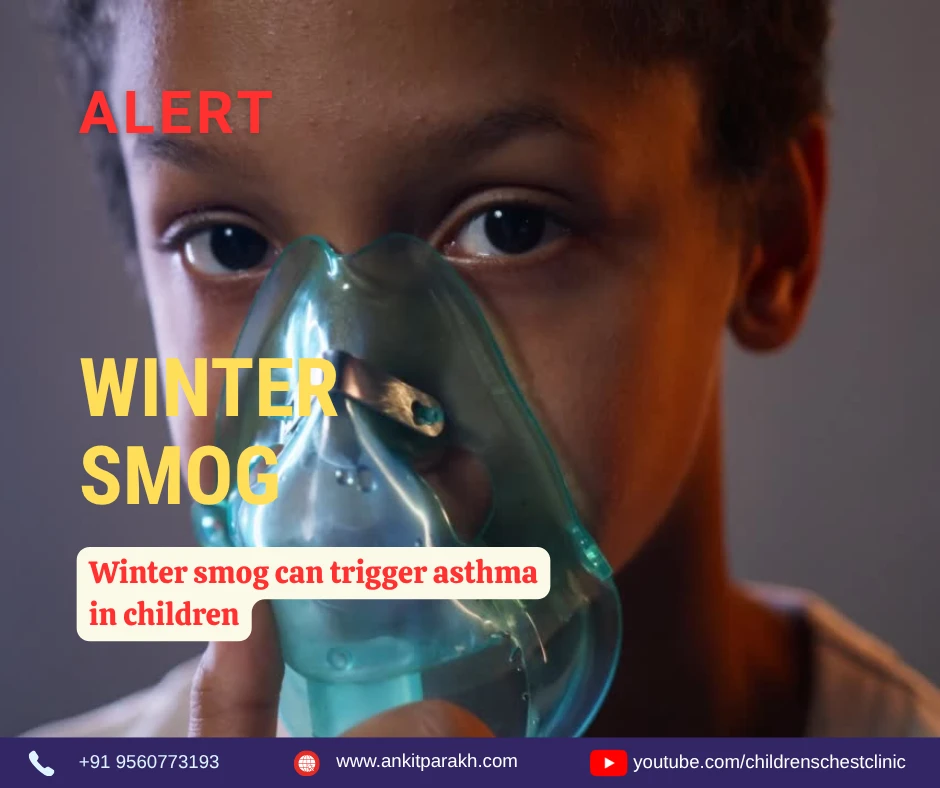
Children are far more vulnerable to Air Pollution than adults. Their lungs and immune systems are still developing, they breathe faster per kilogram of body weight, and their narrower bronchial tubes swell and clog much more easily when irritated.
During winter, three factors combine to amplify respiratory risk:
- Thermal Inversion Traps Pollutants: Cold, dense winter air settles near the ground beneath a layer of warmer air above. Instead of dispersing upward, exhaust fumes, industrial emissions, crop-burning smoke, and construction dust become trapped at breathing level as thick winter smog.
- Deep Penetration of Fine Particulate Matter (PM2.5): Microscopic particles (PM2.5 and PM10), along with nitrogen dioxide (NO2) and sulfur dioxide (SO2), bypass the nose’s natural filtering system and lodge deep inside the small airways, triggering oxidative stress, mucus hypersecretion, and bronchospasm.
- Cold, Dry Air and Viral Infections: Breathing cold, dry air directly dries out the airway lining, causing immediate airway narrowing. Simultaneously, winter brings a spike in respiratory viruses (like rhinovirus and influenza), which act alongside Air Pollution to double the risk of severe exacerbations of Asthma in children.
Early Warning Signs of a Winter Asthma Flare-Up
Catching a flare-up early allows you to intervene before your child develops severe respiratory distress. Watch closely for these subtle cues:
- Nocturnal or Early-Morning Cough: A dry, persistent cough that wakes your child up or worsens in the early morning hours.
- Wheezing or Whistling Sounds: High-pitched whistling during exhalation, sometimes audible only when leaning close to your child’s chest.
- Reduced Exercise Tolerance: Getting tired, breathless, or coughing quickly during routine play, laughing, or climbing stairs.
- Chest Tightness: Younger children may complain that their “tummy hurts” or “chest feels heavy” rather than describing shortness of breath.
When to Seek Emergency Care: If your child is breathing very fast, has visible pulling-in of the skin around the ribs or neck (retractions), struggles to speak in full sentences, shows bluish discoloration around the lips or fingernails, or does not improve after using their rescue inhaler as directed, seek urgent medical attention immediately.
Practical Steps to Protect Your Child During High-Smog Days
You cannot control outdoor air quality, but you can create a protective shield around your child’s daily routine:
1. Never Skip Daily Controller Medications
The most common reason for severe winter hospitalizations is stopping daily preventer (inhaled corticosteroid) inhalers when a child feels fine in autumn. Consistent use of controller medication reduces underlying airway inflammation so the lungs do not overreact when exposed to winter smog. Always ensure your child uses a spacer (and mask, if under 5–6 years) with metered-dose inhalers so the medicine reaches the lungs rather than coating the throat.
2. Track the Air Quality Index (AQI) Before Outdoor Activities
Check real-time local AQI readings every morning before sending your child outside:
- AQI under 100 (Good to Satisfactory): Safe for normal outdoor play.
- AQI 101–200 (Moderate): Limit prolonged, strenuous outdoor exertion for children with sensitive airways.
- AQI greater than 200 (Poor to Severe): Shift physical education and playtime indoors. Avoid early morning and late evening outdoor exposure, when winter smog settles lowest to the ground.
3. Upgrade Indoor Air Hygiene
Indoor air can become nearly as polluted as outdoor air if windows are left open during peak smog hours:
- Keep windows and doors closed during high-pollution periods, ventilating briefly only during sunny mid-afternoon hours when pollutant levels temporarily dip.
- Run a True HEPA air purifier in your child’s bedroom, keeping the door closed so the unit can maintain clean air while they sleep.
- Avoid indoor smoke sources completely, including tobacco smoke, incense sticks (agarbatti), mosquito coils, wood fireplaces, and strong aerosol sprays.
4. Use Properly Fitted N95/N99 Masks Outdoors
Cloth masks and standard surgical masks do not filter out PM2.5. When stepping out on high-AQI days, have children aged 5 and older wear a child-sized N95 or FFP2 respirator with a snug seal around the nose and chin.
5. Stay Up to Date on Annual Vaccinations
Because viral infections are the #1 trigger of Asthma in children alongside Air Pollution, ensure your child receives their annual influenza (flu) vaccine ahead of winter, along with pneumococcal vaccination if recommended by your pediatrician.
Frequently Asked Questions (FAQs)
1. Why does winter smog trigger Asthma in children more severely than in adults?
Children breathe more rapidly than adults, inhaling a higher volume of pollutants relative to their body weight. Additionally, their airways are much narrower—so even a small amount of pollution-induced swelling significantly blocks airflow—and their lungs and immune defenses are still maturing.
2. What AQI level is unsafe for a child with asthma to play outdoors?
When the Air Quality Index (AQI) exceeds 200 (Poor), children with asthma should avoid outdoor vigorous play and sports. If the AQI crosses 300 (Very Poor or Severe), keep your child indoors as much as possible, run a HEPA air purifier at home, and use a well-fitted pediatric N95 mask for unavoidable travel.
3. Should I increase my child’s asthma inhaler dose automatically when pollution rises?
No—never adjust medication doses on your own. Instead, ensure your child takes their prescribed daily controller inhaler consistently without missing doses, and follow the step-up instructions written in your child’s personalized Asthma Action Plan. If your child needs their rescue inhaler (such as salbutamol/levosalbutamol) more than twice a week, consult your pediatric pulmonologist to review their maintenance therapy.
4. Do air purifiers actually help children with asthma during winter smog?
Yes. Portable air cleaners equipped with True HEPA (H13 or H14) filters effectively trap fine PM2.5 particles, dust, and allergens indoors. Placing a properly sized HEPA purifier in your child’s bedroom—where they spend 8 to 10 continuous hours sleeping—helps reduce nighttime coughing and airway inflammation.
5. Can steam inhalation or nebulized normal saline replace an asthma inhaler during smog episodes?
No. Steam inhalation and plain saline nebulization only moisten the upper airways; they do not open constricted bronchial tubes or treat airway inflammation. In fact, very hot steam can occasionally irritate hyperreactive airways further. Always rely on prescribed inhaled bronchodilators and anti-inflammatory preventer medications to treat Asthma in children.
If your child is experiencing frequent winter coughs, nighttime wheezing, or reduced stamina on high-pollution days, consult a qualified pediatric pulmonologist to update their Winter Asthma Action Plan and optimize their inhaler technique.
To discuss your child’s care, meet Dr. Ankit Parakh or get in touch with the clinic.
Related conditions & services
Medical Advice & Clinical Disclaimer
The educational medical guidance provided in this guide is for informational purposes only. It should not be used as a substitute for direct pediatric consultation, physical diagnosis, or clinical prescription. For individualized medical assessment of your child, schedule an appointment with Dr. Ankit Parakh.

Related articles
 Oct 16, 2026
House Dust Mite Sublingual Immunotherapy for Allergic Asthma in Children: A Clear Guide for Parents
Read article
 Mar 2, 2026
What Tests Can Be Done to Diagnose Asthma in Children?
Read article
 Feb 20, 2026
Pediatric Asthma Clinics in Delhi: When Should You Visit a Specialist?
Read article