On this page 6 sections
- Understanding House Dust Mite Allergy and the “Allergic March”
- What is Subcutaneous Immunotherapy (SCIT)?
- What Makes Acaroids Unique? (Hypoallergenic Depot Allergoid Technology)
- Clinical Benefits for Children with Allergic Rhinitis and Asthma
- How Acaroids SCIT is Administered: Treatment Phases & Safety
- Frequently Asked Questions (FAQs)
For many parents, managing a child’s chronic sneezing, nasal congestion, or nighttime coughing feels like an endless cycle of antihistamines, nasal sprays, and inhalers. When a House Dust Mite Allergy is the underlying trigger, symptoms persist year-round because microscopic mites (Dermatophagoides pteronyssinus and Dermatophagoides farinae) thrive in mattresses, pillows, carpets, and soft furnishings.
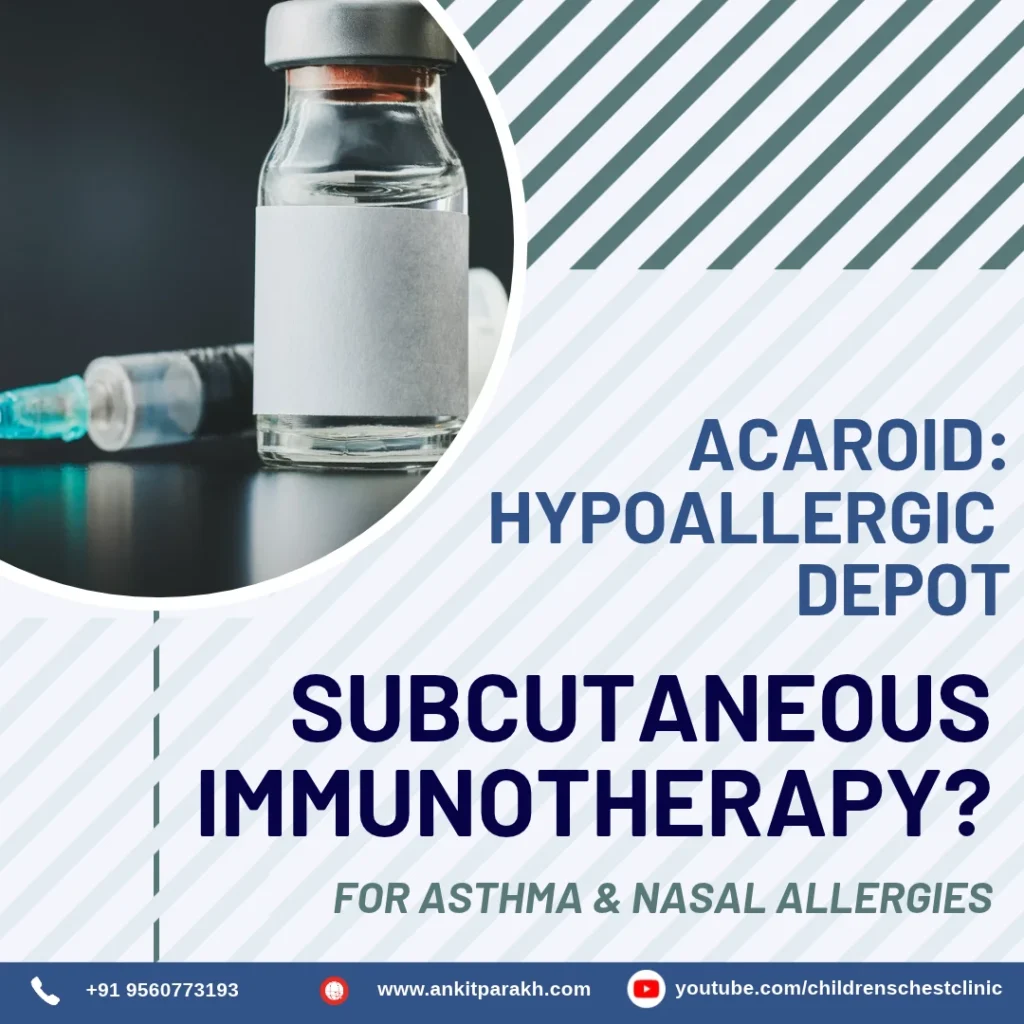
While medications temporarily mask symptoms, Subcutaneous Immunotherapy (SCIT) is one of the few disease-modifying treatments capable of retraining a child’s immune system to tolerate allergens. Recently launched in India, Acaroids—manufactured by Allergopharma GmbH & Co. KG (a German allergy specialist and part of the Dermapharm Group)—is a high-dose, hypoallergenic depot allergoid preparation that brings internationally established, targeted immunotherapy to children suffering from dust mite-driven Allergic Rhinitis and Asthma.
Understanding House Dust Mite Allergy and the “Allergic March”
House dust mites are microscopic arachnids that feed on shed human skin cells. The proteins found in their droppings and body fragments are potent airborne allergens. In sensitized children, inhaling these proteins triggers an immunoglobulin E (IgE)-mediated immune response, leading to chronic airway inflammation.
Uncontrolled House Dust Mite Allergy rarely stays confined to the nose:
- Allergic Rhinitis: Persistent nasal blockage, watery rhinorrhea, sneezing, and itchy eyes that disrupt sleep and school concentration.
- Allergic Asthma: Lower airway hyperresponsiveness causing wheezing, chest tightness, exercise-induced breathlessness, and nocturnal coughing.
- Progression of Disease: Children with untreated dust mite allergic rhinitis face a significantly higher risk of developing bronchial asthma later in childhood—a clinical progression often referred to as the “allergic march.”
What is Subcutaneous Immunotherapy (SCIT)?
Subcutaneous Immunotherapy (SCIT), commonly known as allergy shots, involves administering gradually increasing doses of a specific allergen extract just beneath the skin of the upper arm. Over time, this controlled exposure shifts the immune system away from an allergic response toward a tolerant state.
Unlike daily symptom-relieving drugs, Subcutaneous Immunotherapy (SCIT) addresses the root immunological cause of the allergy, providing long-term relief that persists for years even after the treatment course is completed.
What Makes Acaroids Unique? (Hypoallergenic Depot Allergoid Technology)
Acaroids overcomes the safety and dosing limitations of traditional native allergen extracts. Traditional aqueous extracts contain unmodified proteins that readily bind to IgE antibodies on mast cells, carrying a higher risk of local or systemic allergic reactions during injections.
Acaroids utilizes two key pharmaceutical innovations:
- Hypoallergenic Allergoid Modification: The native house dust mite proteins (D. pteronyssinus and/or D. farinae) are chemically modified with aldehydes to form allergoids. This process alters the three-dimensional IgE-binding epitopes—dramatically reducing the risk of immediate allergic reactions—while preserving the linear T-cell epitopes required to stimulate long-term immune tolerance.
- Aluminum Hydroxide Depot Formulation: The allergoids are adsorbed onto aluminum hydroxide, creating a depot effect. Once injected subcutaneously, the allergen is released slowly and steadily into the tissue rather than entering the bloodstream all at once. This sustained release enhances safety and acts as an adjuvant to boost the protective immune response.
Because of this high-dose hypoallergenic depot design, children can reach effective therapeutic maintenance doses faster and with fewer injections compared to conventional unmodified extracts.
Clinical Benefits for Children with Allergic Rhinitis and Asthma
Extensive European clinical trials and real-world pediatric studies evaluating house dust mite allergoid Subcutaneous Immunotherapy (SCIT) demonstrate substantial benefits:
- Significant Reduction in Rhinitis and Asthma Symptoms: Both physician-assessed and patient-reported symptom scores drop markedly within the first 6 to 9 months of therapy.
- Medication-Sparing Effect: Children require significantly fewer daily antihistamines, intranasal corticosteroids, and inhaled asthma controller or rescue medications.
- Prevention of Asthma Onset and New Sensitizations: Real-world evidence shows that house dust mite SCIT reduces the risk of new-onset asthma in children with allergic rhinitis and helps prevent sensitization to additional airborne allergens.
- Durable Long-Term Remission: Completing a standard 3-year course induces sustained immunological memory, protecting the child well into adolescence and adulthood.
How Acaroids SCIT is Administered: Treatment Phases & Safety
Now available for pediatric allergy care following its recent launch in India, Subcutaneous Immunotherapy (SCIT) with Acaroids is typically considered for children aged 5 years and older who have confirmed House Dust Mite Allergy (via skin prick test or specific IgE blood test) and whose Allergic Rhinitis or mild-to-moderate Asthma is not adequately controlled by environmental measures and standard pharmacotherapy.
1. Up-Dosing (Build-Up) Phase
Treatment begins with a low concentration and gradually increases to the maintenance concentration. The protocol follows weekly injections over ~8 weeks.
2. Maintenance Phase
Once the optimal target dose is reached, injections are spaced out—typically to once every 4 to 8 weeks—for a total treatment duration of 3 years.
Safety Precautions in Pediatric Care
- 30-Minute Observation: Children must remain in the clinic for at least 30 minutes after every injection so medical staff can monitor for and immediately treat any reactions.
- Asthma Control Check: Before each injection, the child’s asthma status is assessed; if the child is actively wheezing or has an acute respiratory infection, the dose is postponed.
- Expected Side Effects: Mild, temporary redness, itching, or swelling at the injection site is common and easily managed with a cold compress or oral antihistamine. Because Acaroids is a hypoallergenic depot formulation, systemic reactions in pediatric patients are rare.
Note: Decisions regarding allergen immunotherapy should always be made in consultation with a qualified pediatric pulmonologist or allergist who can tailor the protocol to your child’s specific clinical profile.
Frequently Asked Questions (FAQs)
1. Who manufactures Acaroids, and is it available in India?
Acaroids is manufactured in Germany by Allergopharma GmbH & Co. KG (a subsidiary of the Dermapharm Group), a global leader in allergen-specific immunotherapy. The product has been recently launched in India, giving pediatricians, allergists, and families access to standardized European depot allergoid therapy for house dust mite allergies.
2. At what age can a child start Acaroids Subcutaneous Immunotherapy (SCIT)?
Acaroids SCIT is generally initiated in children aged 5 years and older. At this age, children can reliably communicate early symptoms of any reaction during the post-injection observation window and cooperate comfortably with upper-arm injections.
3. How long does it take to see improvement in my child’s House Dust Mite Allergy symptoms?
Most children begin experiencing noticeable relief in their Allergic Rhinitis and Asthma symptoms within 6 to 9 months of starting therapy. However, completing the full 3-year course is essential to lock in long-term immune tolerance and prevent symptoms from returning after stopping treatment.
4. Is Acaroids safe for children who already have Asthma?
Yes, provided the child’s Asthma is well-controlled with standard maintenance inhalers before each injection. Clinical data show that high-dose house dust mite allergoid SCIT is well-tolerated in children with controlled allergic asthma and significantly reduces bronchial hyperresponsiveness and asthma exacerbations over time. Uncontrolled or severe unstable asthma is a contraindication until stability is achieved.
5. What is the difference between a native allergy shot and a hypoallergenic depot allergoid like Acaroids?
Native allergy shots use unmodified allergen extracts, which carry a higher potential for triggering allergic side effects and require a longer build-up schedule. Acaroids chemically modifies the dust mite allergens into allergoids and binds them to an aluminum hydroxide depot (slowing release into the body). This improves safety, reduces injection frequency, and allows children to reach protective maintenance doses faster.
To discuss your child’s care, meet Dr. Ankit Parakh or get in touch with the clinic.
Related conditions & services
Medical Advice & Clinical Disclaimer
The educational medical guidance provided in this guide is for informational purposes only. It should not be used as a substitute for direct pediatric consultation, physical diagnosis, or clinical prescription. For individualized medical assessment of your child, schedule an appointment with Dr. Ankit Parakh.

Related articles
 Sep 15, 2025
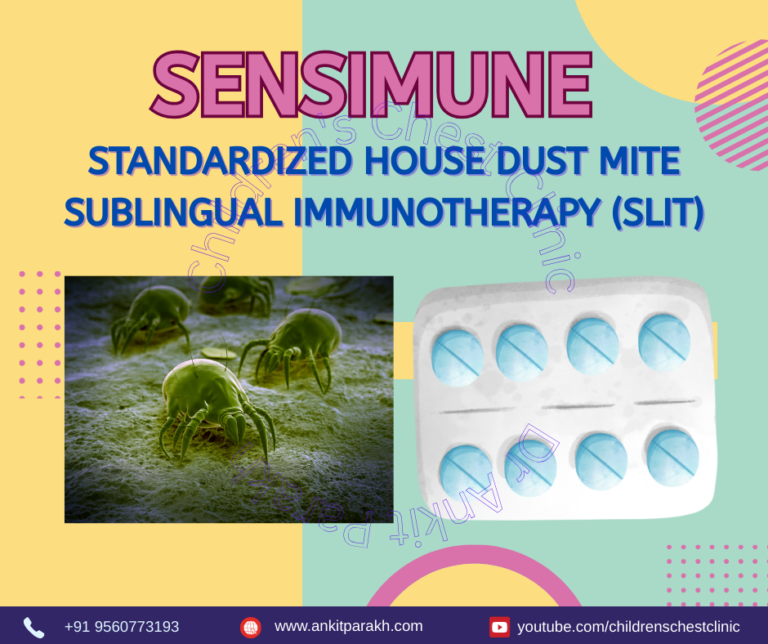
SENSIMUNE or ACARIZAX: Standardised Dust Mite Immunotherapy
Read article
 Oct 16, 2026
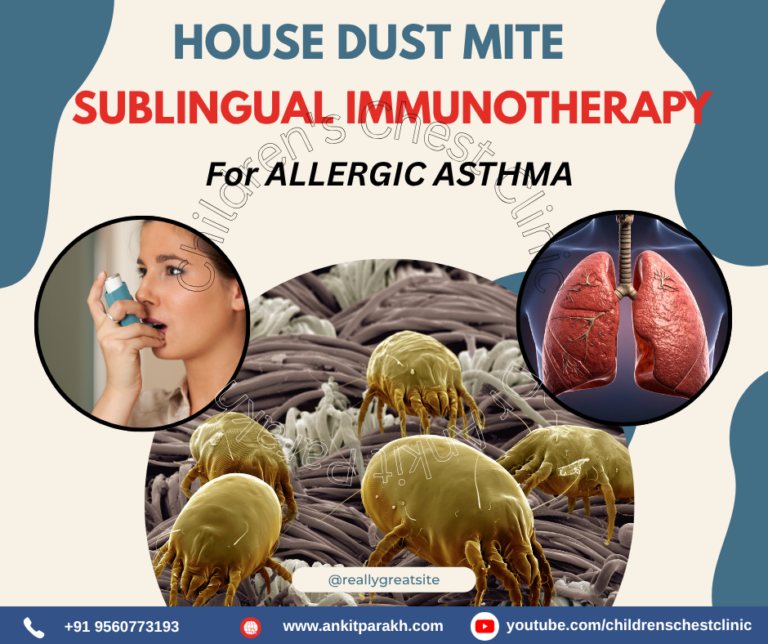
House Dust Mite Sublingual Immunotherapy for Allergic Asthma in Children: A Clear Guide for Parents
Read article
 Sep 18, 2023
Sublingual Immunotherapy (SLIT) for Allergic Rhinitis or Nasal Allergy in Children!
Read article