Overview
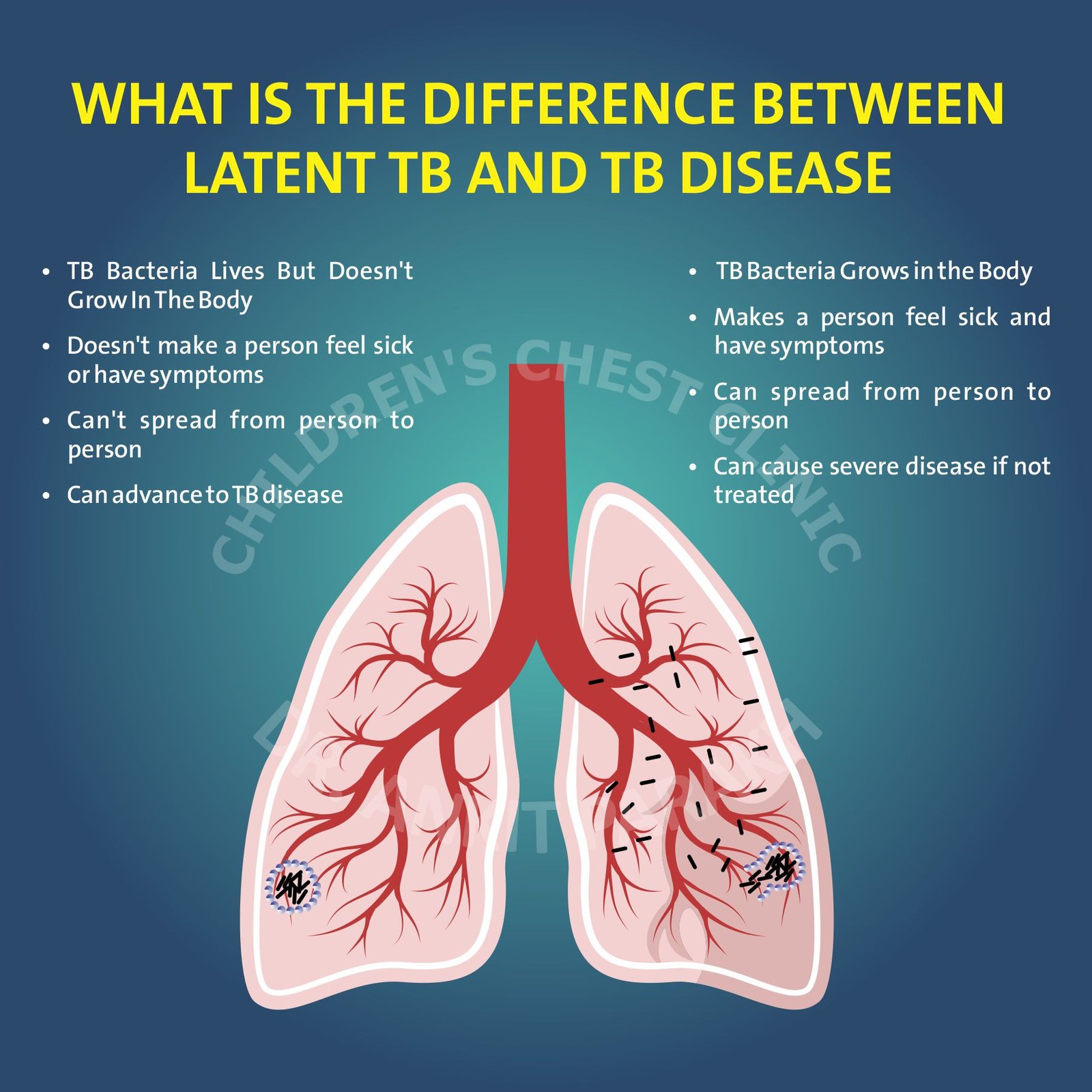
Latent Tuberculosis in Children
Tuberculosis (TB) is a significant health concern, particularly in regions where it is endemic. While active TB presents with clear symptoms, latent tuberculosis (latent TB) is a silent condition in which children are infected with Mycobacterium tuberculosis but do not show any symptoms. Understanding latent TB and its implications is essential, especially for children who have been in contact with a tuberculosis patient.
What is Latent Tuberculosis?
Latent TB occurs when the TB bacteria remain inactive in the body without causing illness. Unlike active TB, latent TB is not contagious, but it has the potential to progress to active TB if left untreated, especially in children with weakened immune systems.
Causes of Latent Tuberculosis in ChildrenPossible reasons and triggers
- Contact with a Tuberculosis PatientClose and prolonged exposure to an individual with active TB increases the risk of latent TB.
- Immature Immune SystemChildren are more susceptible to TB infections due to their developing immune systems.
Symptoms of Latent TBCommon signs to look for
Latent TB does not cause any symptoms because the bacteria remain dormant. However, the infection can be detected through diagnostic tests.
Tuberculin Skin Test (TST)
- A small amount of tuberculin is injected under the skin, and the reaction is measured after 48–72 hours.
- A raised bump indicates TB infection but does not differentiate between latent and active TB.
Interferon-Gamma Release Assays (IGRAs):
- Blood tests, such as QuantiFERON-TB Gold, measure the immune response to TB proteins.
- Preferred in children who have received the BCG vaccine.
Chest X-Ray
- Performed to rule out active TB if the skin or blood test is positive.
Contact Tracing:
- Testing children who have been in close contact with a tuberculosis patient is crucial for early identification.
Management of Latent Tuberculosis in ChildrenMedications and therapies
The primary goal of treating latent TB is to prevent progression to active disease.
Medication:Medications and therapies
- Isoniazid (INH)Given daily for 6–9 months.
- Rifapentine and IsoniazidA shorter, 12-week regimen for eligible patients.
- RifampicinUsed in some cases, particularly when INH is not suitable.
Importance of Treating Latent TB in Children
While latent TB itself does not cause illness, children with the condition are at higher risk of developing active TB later in life. Early treatment not only protects the child but also helps in controlling TB at the community level.
Latent TB in children requires proactive diagnosis and treatment to prevent its progression to active TB. If your child has been in contact with a tuberculosis patient, consult a pediatric specialist for early screening and appropriate care.
Conclusion
1. What is latent TB?
Latent TB occurs when TB bacteria are present in the body but remain inactive, causing no symptoms and not being contagious.
2. How is latent TB diagnosed in children?Tests and evaluation methods
Latent TB is diagnosed using the tuberculin skin test (TST), interferon-gamma release assays (IGRAs), and chest X-rays to rule out active TB.
3. Can latent TB progress to active TB?
Yes, latent TB can develop into active TB, especially in children with weakened immune systems.
4. How is latent TB treated in children?
Treatment typically involves medications like isoniazid for 6 months to prevent progression to active TB.
5. What should I do if my child has been in contact with a TB patient?
Consult a pediatric specialist immediately for testing and potential preventive treatment if latent TB is diagnosed.