On this page 5 sections
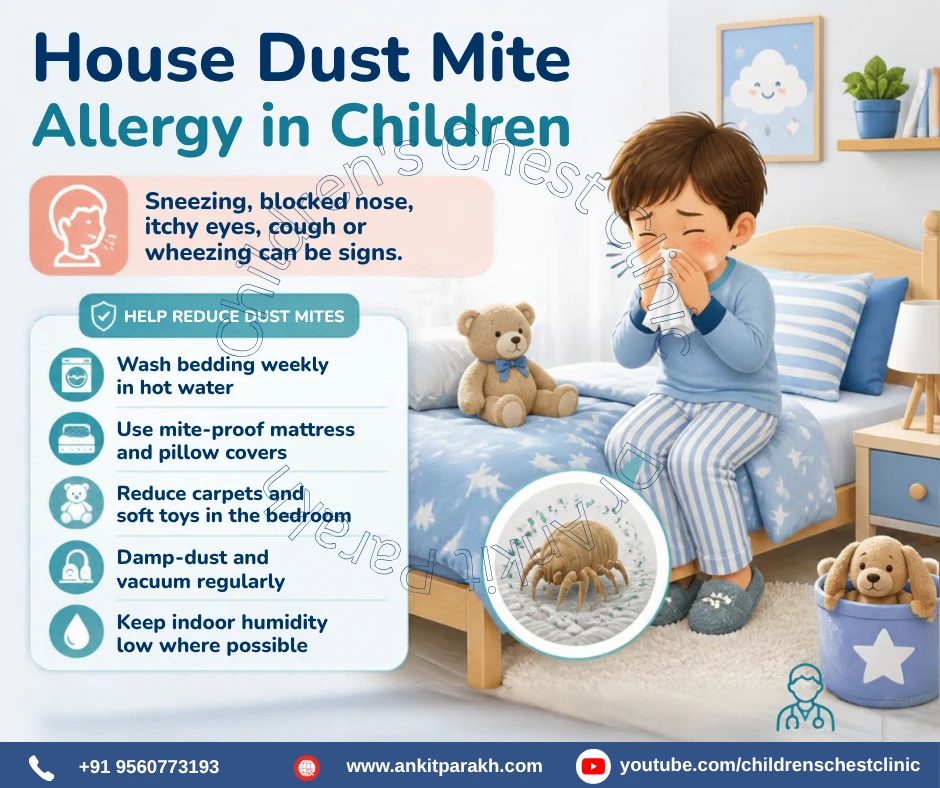
If your child wakes up every morning with a blocked nose, bouts of sneezing, watery eyes, or a nagging nighttime cough, the culprit may be hiding right inside their bed. House Dust Mite Allergy is the single most common indoor trigger of year-round allergic rhinitis and bronchial asthma in children across India and worldwide.
While medications and allergen immunotherapy play a central role in treatment, reducing your child’s daily exposure to mite allergens is an essential foundation of care. Implementing targeted, science-backed Environmental Control Measures in your home—especially in your child’s bedroom—can significantly lower symptom flare-ups and reduce the need for daily medicines.
What Are House Dust Mites and Why Do They Trigger Allergies?
House dust mites (Dermatophagoides pteronyssinus and Dermatophagoides farinae) are microscopic, eight-legged creatures measuring roughly 0.2 to 0.3 millimeters—invisible to the naked eye. Unlike bedbugs or mosquitoes, dust mites do not bite or spread infectious diseases. Instead, they feed on the tiny flakes of dead skin that humans and pets naturally shed every day.
The allergic reaction is caused by specific proteins found in dust mite fecal pellets and decaying body fragments. When disturbed by movement on a bed or sofa, these microscopic particles become airborne and are inhaled, triggering an immune response in sensitized children:
- Allergic Rhinitis: Chronic nasal congestion, clear runny nose, itchy nose and eyes, and frequent sneezing.
- Allergic Asthma: Airway inflammation leading to wheezing, chest tightness, shortness of breath, and persistent nocturnal coughing.
- Atopic Dermatitis (Eczema): Flare-ups of dry, itchy, inflamed skin in children with underlying eczema.
Because mites thrive in warm temperatures (20°C–25°C) and high relative humidity (above 60%), Indian homes—particularly during humid summer and monsoon months—provide an ideal breeding ground.
Core Environmental Control Measures: A Room-by-Room Guide
Effective Environmental Control Measures focus on two principles: creating physical barriers between your child and existing mites, and eliminating the warm, humid micro-environments where mites multiply. Since children spend 8 to 10 continuous hours in bed every night, the bedroom is the top priority.
1. Encase Mattresses, Pillows, and Comforters
Standard cotton bedsheets have weaves wide enough for microscopic mite allergens to pass through easily.
- Action: Zip your child’s mattress, box spring, and pillows inside certified allergen-proof (micro-pore) encasements with a pore size smaller than 6 microns.
- Tip: If your child shares a bed or sleeps in a bunk bed, encase all mattresses in that bedroom.
2. Wash Bedding Weekly in Hot Water
Cold water washing removes surface dust and allergen proteins temporarily, but it does not kill live dust mites.
- Action: Wash all bedsheets, pillowcases, and blankets once a week in hot water at 55–60 degrees Celsius and dry them thoroughly in a hot dryer or direct sunlight.
- Tip: Avoid heavy wool blankets or feather pillows; opt for washable synthetic microfiber pillows and quilts.
3. Control Indoor Humidity
Dust mites absorb moisture directly from the air and cannot survive when indoor humidity drops below 50%.
- Action: Use an air conditioner or dehumidifier in your child’s bedroom to keep relative humidity between 40% and 50%.
- Tip: Avoid using room humidifiers or evaporative coolers in the bedroom of a child with House Dust Mite Allergy, as excess moisture fuels rapid mite proliferation.
4. Simplify Bedroom Furnishings and Soft Toys
Fabric-covered surfaces trap skin scales and hold humidity, acting as reservoirs for dust mites.
- Action: Replace wall-to-wall carpets and heavy rugs with bare tile, wood, or stone flooring that can be wet-mopped easily. Swap heavy fabric curtains for washable cotton blinds or roller shades.
- Soft Toys: Keep stuffed animals off the bed. Allow your child to keep only one or two washable plush toys, and wash them weekly in hot water or place them inside a sealed plastic bag in the freezer for 24 hours every couple of weeks (freezing kills mites, though washing is still needed to remove allergen proteins).
5. Dust and Vacuum Strategically
Dry sweeping or feather dusting merely launches settled dust mite allergens back into the air where your child breathes them in.
- Action: Clean hard floors and furniture surfaces with a damp microfiber cloth or wet mop rather than a dry broom.
- Vacuuming: Use a vacuum cleaner fitted with a True HEPA filter and double-thickness bags so microscopic allergens are trapped rather than exhausted back into the room. Ideally, have someone else clean while your child is out of the room for at least 20–30 minutes.
Summary Checklist: Do’s and Don’ts for Parents
| Do This | Avoid This |
|---|---|
| Use zippered allergen-proof mattress and pillow covers | Relying on regular cotton sheets alone to block allergens |
| Wash bedding weekly in hot water (55-60 degrees Celsius) | Washing bedding exclusively in cold water |
| Maintain indoor humidity below 50% using AC/dehumidifiers | Using mist humidifiers or keeping damp towels in the bedroom |
| Wet-mop hard floors and wipe surfaces with a damp cloth | Dry-sweeping, dry-dusting, or keeping heavy carpets |
| Freeze or hot-wash stuffed toys regularly | Piling dozens of plush toys on the child’s bed |
Do Environmental Control Measures Work on Their Own?
Research shows that single isolated steps—such as buying an air purifier without encasing the mattress—rarely produce enough allergen reduction to relieve symptoms. However, a comprehensive bundle of Environmental Control Measures significantly lowers bedroom allergen loads and improves symptom control.
For children with moderate-to-severe House Dust Mite Allergy, environmental hygiene works best alongside medical therapies prescribed by your pediatric specialist—such as intranasal corticosteroid sprays, inhaled asthma controllers, or disease-modifying allergen immunotherapy (like sublingual tablets/drops or subcutaneous allergy shots).
If your child continues to experience frequent nasal blockage, snoring, or wheezing despite rigorous home dust-mite control, consult a qualified pediatric allergist or pulmonologist for formal allergy testing and a personalized treatment plan.
Frequently Asked Questions (FAQs)
1. Does a HEPA air purifier eliminate House Dust Mite Allergy triggers?
A True HEPA air purifier can capture airborne dust particles while someone is vacuuming or making the bed, which helps reduce inhalation exposure. However, because house dust mite allergens are relatively heavy and settle quickly back into mattresses, pillows, and carpets, an air purifier alone cannot replace mattress encasements and hot-water bedding washes.
2. Can freezing stuffed toys really kill house dust mites?
Yes. Placing a stuffed toy inside a sealed zip-lock bag in the freezer for 24 hours kills live dust mites. However, dead mites and their fecal pellets still carry allergenic proteins, so the toy should be rinsed or washed afterward to remove the allergen residue.
3. Does direct sunlight kill dust mites in mattresses and pillows?
Exposing pillows, quilts, and mattresses to strong, direct sunlight for several hours dries out the fabric and kills live mites through heat and dehydration. While helpful in sunny weather, sunlight does not remove accumulated allergenic droppings deep inside the mattress—making allergen-proof zippered encasements essential for long-term protection.
4. How often should allergen-proof mattress and pillow covers be washed?
You do not need to wash the zippered allergen-proof encasements every week. Wash your regular bedsheets and pillowcases weekly in hot water (55-60 degrees Celsius), and wash the underlying allergen-proof encasements once every 2 to 3 months (or wipe them down with a damp cloth when changing sheets).
5. If we follow all environmental control measures, will my child still need allergy medicines or immunotherapy?
Strict Environmental Control Measures reduce the allergen burden and often allow doctors to lower medication doses, but it is impossible to remove 100% of dust mites from a home—especially since children also encounter mites at school, relatives’ homes, and hotels. Children with persistent House Dust Mite Allergy often still benefit from targeted nasal sprays, asthma inhalers, or allergen-specific immunotherapy to build lasting immune tolerance.
To discuss your child’s care, meet Dr. Ankit Parakh or get in touch with the clinic.
Related conditions & services
Medical Advice & Clinical Disclaimer
The educational medical guidance provided in this guide is for informational purposes only. It should not be used as a substitute for direct pediatric consultation, physical diagnosis, or clinical prescription. For individualized medical assessment of your child, schedule an appointment with Dr. Ankit Parakh.

Related articles
 Nov 1, 2026
Acaroids: Hypoallergenic Depot Subcutaneous Immunotherapy (SCIT) for Children
Read article
 Oct 9, 2026
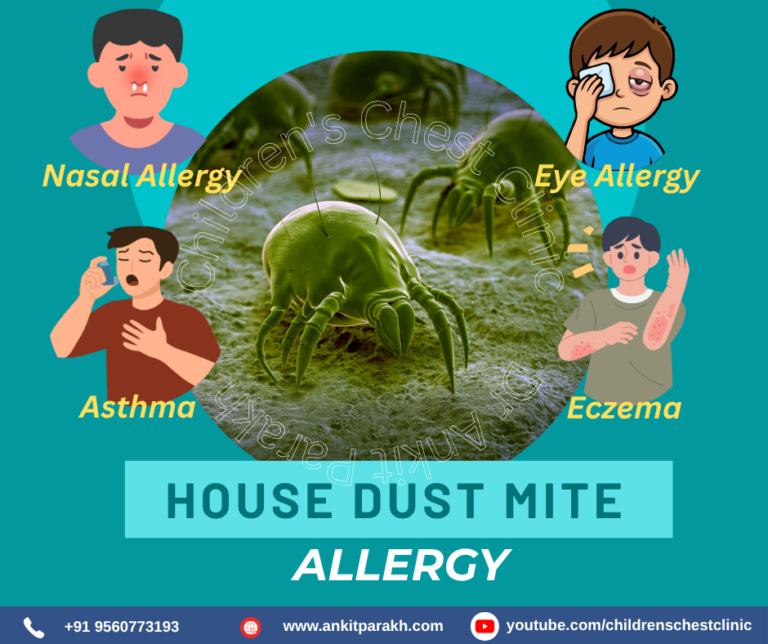
House Dust Mite Allergy in Children: Symptoms, Diagnosis and Treatment
Read article
 Oct 2, 2026
Bermuda Grass or दूब (Doob) Grass Allergy in Children: Symptoms, Diagnosis and Treatment
Read article